
Wheat Straw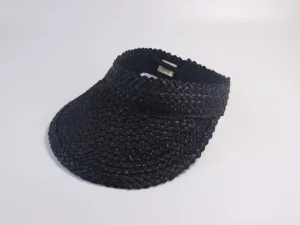
Japan is a market where seasonal precision, packaging discipline and quality consistency are treated as baseline expectations, not premium extras. For a China-based woven bag manufacturer, that means the brief is rarely simply “make us a straw tote.” It is a bundle of specifications tied to department-store buying calendar, PL法 (Product Liability Law) compliance, and the cultural rhythm of 新生活 (new-life season) and 母の日 (Mother's Day) gifting.
Shandong Lige Import & Export Co., Ltd. — trading as Lige Hats — has spent more than 15 years manufacturing straw hats, paper hats, straw bags and other bags for buyers in more than 60 countries, including Japan. From our facility in Linyi, Shandong, we are within easy reach of Qingdao Port, one of China's busiest container gateways, which supports stable lead times for Japanese FCL and LCL shipments.
Raffia totes, straw shoulder bags, handbag-and-hat sets, and season-linked paper bags.
Start from 50–100 pcs per design — a real fit for Japan's small-batch test-and-learn retail.
Factory-direct account management, JST-friendly communication windows.
Weaving, blocking, trimming and final QC under one roof — no middleman margin.
These silhouettes are tested against Japanese retail requirements — clean colorways (ECRU, GREIGE, KINARI), low logo visibility, and gift-ready packaging. Every model is available with custom woven labels, hang tags and 化粧箱-compatible inserts.
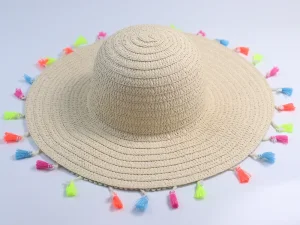
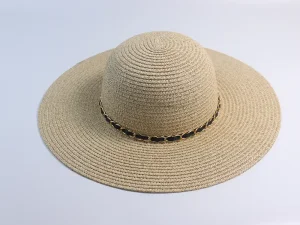
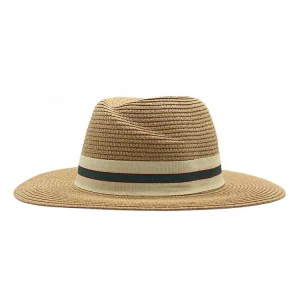
The phrase “other bags” in Japanese sourcing parlance usually collapses several categories into one line item: かごバッグ (kago-baggu), straw totes, raffia shoulder bags, sub-bags, eco-bags and seasonal accessory bags that ship alongside hat collections. Japanese buyers rarely source hats and bags separately — the hat-and-bag set (帽子とバッグのセット) is a staple SKU in department stores such as Isetan, Takashimaya and Daimaru Matsuzakaya, and in specialty chains like Loft and Tokyu Hands.
Three structural features shape the market:
| Channel | Typical Order Size | Category Focus |
|---|---|---|
| Department stores | 300–2,000 pcs / SKU | Raffia totes, Panama-style bags, gift sets |
| Specialty & lifestyle chains | 100–800 pcs / SKU | Mini sacs, sub-bags, kids' straw sets |
| Online (Rakuten, ZOZO) | 50–300 pcs / SKU | Trend-led raffia, seasonal color drops |
| Trading houses (商社) | 1,000–10,000 pcs | Multi-SKU spring programs, private-label |
| Select shops & D2C | 50–150 pcs / design | Hand-woven artisan raffia totes |
Figures reflect typical ranges observed across the Japanese woven-bag category and reflect broad industry patterns — not individual client data.
The 2024–2027 Japanese woven-bag program is not a repeat of 2019. Procurement briefs arriving at Chinese factories now embed sustainability, traceability and packaging requirements that were optional five years ago.
Raffia and paper straw promoted for biodegradability; buyers request optional GRS-aligned cotton trims.
Reversible linings, removable straps, and two-way totes command higher average unit prices.
ECRU, GREIGE, KINARI and charcoal dominate; seasonal accents shift annually but quiet tones always sit.
50–100 pcs per design feeds POS-driven reorders, pushing factories to accept low-MOQ terms.
FSC-certified hang tags, recycled polybags, and heat-transfer-free labeling preferred.
“Where was this woven?” is now a customer-facing question — buyers want provenance built into the story.
Global demand for woven bags continues to shift toward factories that can serve multiple regional programs from the same production line. Japanese buyers sit at the demanding end of that spectrum — smaller batch sizes, higher inspection standards, and stricter packaging — but they also reward suppliers with loyalty and stable re-order patterns across seasons.
Compliance is not a checkbox for Japanese procurement teams — it is the first filter. A supplier that cannot speak credibly to labeling, chemical restrictions and packaging in the first call is unlikely to progress to sample stage. This is the framework we use with Lige Hats' Japan-facing accounts.
Fiber composition, care instructions and Japanese-language labeling designed into the hang tag system from sampling stage.
Restricted azo dyes, formaldehyde and heavy metals tested against Japanese standards; reports available on request for qualifying programs.
Consistent in-line inspection, batch traceability and shipping records to support a defensible quality narrative.
Export-carton planning aligned with Japanese palletization, FSC-friendly hang tags and consolidated shipments via Qingdao Port.
Japanese buyers increasingly ask for a roadmap, not just a catalog. Here is how we describe our own trajectory — the investments made, in progress and planned, that will define how we serve the Japan market into 2027.
Standardized raffia splitting and paper-straw twisting parameters across weavers, documented per SKU.
Blocking and steaming protocols stabilized for shape retention across FCL sea-freight conditions.
In-house application of woven labels, decals, embossed patches and Japanese-language hang tags.
SKU-level inspection photography and AQL documentation delivered with shipment files.
Line scheduling tuned to 50–100 pcs per design test runs, with efficient scale-up for reorders.
Expanded paper straw, recycled cotton and blended fiber options aimed at sustainability-led programs.
Faster mockup cycles and physical sample kits sent in a Japan-friendly review format.
Deeper integration of packaging, traceability documentation and QC reporting for Japan-focused programs.
Rather than a catalog, we present a program — a repeatable operating model from first brief to re-order. This is how Lige Hats aligns OEM and ODM production to the rhythm of a Japanese buying calendar.
Style references, target price, MOQ, retail channel and packaging constraints confirmed.
Raffia, paper straw, natural grass or blended options matched to the season's price band.
Physical samples plus digital mockups for in-house review, with color and label variations.
Sample sign-off, hang tag confirmation, packaging plan, and delivery window locked.
Weaving, blocking, trimming and in-line QC; batch traceability recorded per SKU.
AQL-level check of shape, stitching, size grading, trims and labeling accuracy.
Export carton plan, packing list, inspection report and photographer-approved QC set.
FCL or LCL export with option for consolidation with the hat line in the same shipment.
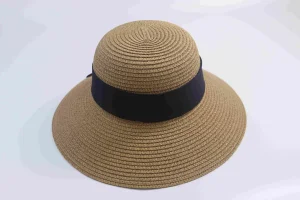
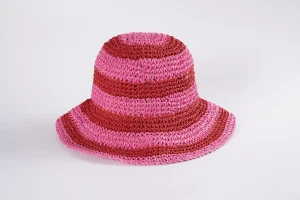
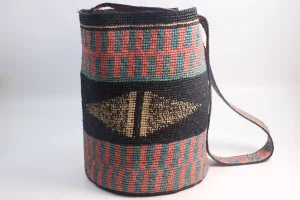
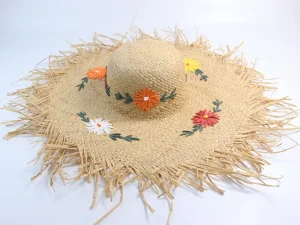
Each of the following silhouettes is production-ready and available with custom woven labels, hang tags and Japanese-language care instructions. Consistent quality across styles lets Japanese buyers consolidate their seasonal bag and hat sourcing into a single supplier.
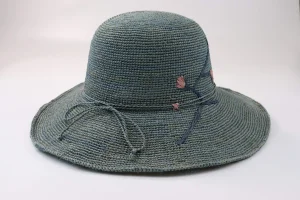
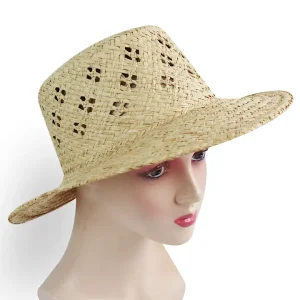
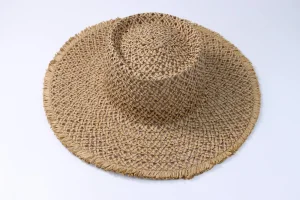
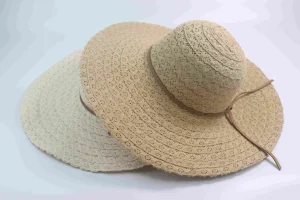
Looking for hat-only or bag-only programs? Explore the full range in Straw Bags and Other Bags.
Straight answers on MOQ, labeling, shipping and support. Our team replies within 8 hours — often before the next JST business morning.
Send Inquiry NowShare your style references, target quantity, fiber preference and delivery window. Our team will return material suggestions, a sampling plan and a production timeline within 8 hours.
Send Inquiry Now