
Best Seller
A buyer-facing guide to sourcing structured straw and felt fedoras and trilbies for the Korean market — covering Seoul's wholesale districts, global factory economics, China's manufacturing speed, localized styling demand and the trends reshaping headwear procurement in 2025 and beyond.
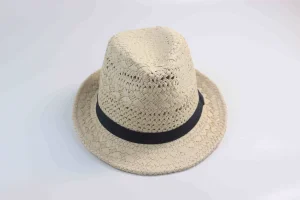
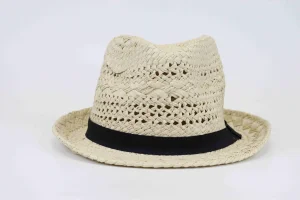
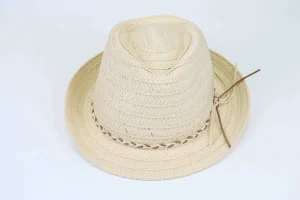
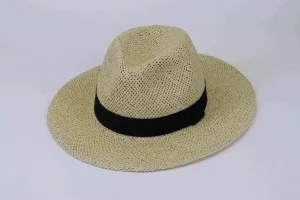
Four flagship silhouettes engineered for Korean retail floors and duty-free counters — pinched crowns, refined brims and breathable weaves that hold shape through humid monsoon weeks and dry winter air alike.
Seoul sits at the intersection of luxury retail, fast-moving fashion and a deeply embedded hat-wearing culture — making it both a destination market and a strategic redistribution gateway for Northeast Asia.
Seoul's fedora and trilby market is not a single channel — it is a layered ecosystem. Premium department stores in Apgujeong and Cheongdam carry imported Italian felts at retail prices that rival Tokyo. Meanwhile, Dongdaemun's wholesale towers (Dongpyeonghwa Market, Migliore, Doota) move thousands of straw and blend fedoras per week to independent boutiques and online resellers. Between those poles, a dense middle market of DTC brands, K-fashion multi-label shops and duty-free operators sources mid-tier headwear with an emphasis on silhouette accuracy and photogenic finish.
That layering creates distinct procurement profiles. Luxury-adjacent buyers prioritize material provenance — Ecuadorian toquilla, Portuguese wool felt, beaver blends — and are willing to pay for it. Volume buyers at Dongdaemun and on Naver Smart Store optimize for landed cost per unit, MOQ flexibility and 30–45 day replenishment. Both are increasingly turning to Chinese factories as the practical compromise: comparable craftsmanship, shorter cycles, and the ability to run small private-label batches that Korean garment suppliers are often unwilling to touch.
For a supplier, understanding Seoul means understanding seasonal asymmetry. The market has two sharp peaks: a spring–summer peak from March through June (straw, paper straw, raffia, lightweight cotton blends) and an autumn–winter peak from September through November (wool felt, wool-blend, faux fur trims). This dual-cycle rhythm forces buyers to plan sourcing calendars around Chinese factory capacity, which is itself stretched by overlapping Golden Week and Lunar New Year shutdowns. Factories that can compress sampling into under 10 days and ship with reliable lead-time commitments become structural partners, not transactional vendors.
Apgujeong, Cheongdam and Garosu-gil anchor premium demand; Hongdae and Seongsu drive trend-led volume.
Dongdaemun's Migliore and Doota clusters set the tempo for fast-replenishment fashion headwear.
Incheon and downtown duty-free counters drive premium gift-tier fedora purchasing by international travelers.
Naver Smart Store, Coupang and Musinsa now capture a large share of mid-tier hat spend with 48-hour delivery expectations.
The names get used interchangeably in email threads — but on paper, the metrics matter. This table is the vocabulary we use when reconciling a Seoul buyer's spec sheet against factory capability.
| Specification | Fedora | Trilby | Seoul Market Preference |
|---|---|---|---|
| Brim Width | 5.5 – 7.5 cm typical | 4.0 – 5.0 cm typical | Fedora for premium & outdoor; Trilby for K-fashion |
| Crown Height | 10 – 12 cm with center dent | 9 – 10.5 cm, more tapered | Trilby dominates street-style resale |
| Brim Shape | Snap brim, mostly flat | Steeply upturned at rear, narrow | Trilby's upturn flatters smaller faces |
| Typical Materials | Wool felt, rabbit fur, straw | Wool felt, cotton twill, paper straw | Straw for S/S; felt for F/W |
| Unit MOQ (OEM) | 50 – 100 pcs / color | 50 – 100 pcs / color | Small batches favor Chinese suppliers |
| Retail Price Band (KRW) | ₩80,000 – ₩350,000 | ₩45,000 – ₩180,000 | Trilby anchors the volume tier |
Headwear sits inside the broader $30B+ global hat market. Fedora and trilby silhouettes represent a modest but commercially valuable slice — high perceived value, strong seasonality and heavy brand sensitivity.
Three structural forces are re-shaping global fedora and trilby sourcing, and each one intersects with Seoul's buying behavior.
First, the shift toward small-batch private label. Korea, Japan and parts of Europe have moved decisively away from pre-season container commitments toward reactive replenishment — 100–500 unit drops driven by online sell-through. This favors factories with nimble sampling and flexible MOQs over those optimized for 5,000-piece runs.
Second, materials transparency is becoming a purchase criterion, not a marketing flourish. EU and Korean eco-labels increasingly request documentation on raffia sourcing, felt fiber composition and recycled content. Factories that can produce traceable material dossiers — even in PDF form — win the compliance conversation before price is discussed.
Third, the felt supply chain is experiencing renewed pressure. Wool prices are volatile, and demand for premium felts from heritage European mills has outstripped allocation in several seasons. Buyers are therefore testing Chinese felt blends as an alternative — often with acceptable results at 40–60% of the landed cost of Italian equivalents.
On the demand side, the fedora's cultural repositioning is as important as any supply shift. For two decades, the fedora was a heritage accessory — think Sinatra, jazz clubs, slow tailoring. Today, it has been reabsorbed into K-fashion and gender-fluid styling, worn with oversized blazers, cropped knits and technical outerwear. Trilbies, with their narrower brims and less formal posture, have become the easiest entry point for younger consumers testing the silhouette.
The merchandising implication is clear. Whereas a traditional menswear retailer might stock four fedora SKUs in two colorways each, a Seoul-based multi-label shop stocks twelve to eighteen SKUs across straw, felt, blend and cotton — with rotation every 8–12 weeks. That turnover drives a permanently-hungry sampling pipeline, and it is why the responsiveness of your factory matters more in Seoul than almost anywhere else in Asia.
Korea has a sophisticated finishing and retail ecosystem, but its domestic hat production has narrowed to small artisanal workshops and a handful of legacy manufacturers. For volume, variety and cost discipline, Chinese factories in Shandong and Guangdong remain the default.
Integrated pattern-making, blocking and trim sourcing means a Seoul buyer can validate a fedora sample within two working weeks — versus 4–6 weeks with fragmented local suppliers.
Weaving, blocking, trimming and QC all under one roof. Paper straw, raffia and natural grass are sorted and woven on premises — no multi-vendor coordination lag.
Small private-label batches are economically viable — well below the 500–1,000 unit floors typical of Korean garment subcontractors.
Direct-factory pricing at 40–65% of the landed cost of comparable Korean or Japanese small-batch production, without compromising structured crown accuracy.
Shandong factories sit near Qingdao Port, with frequent direct container routes to Busan and Incheon — sea freight transit in roughly 2–4 days to Korea.
A 15-year QC management track record, with final inspection covering crown shape, brim tolerance, stitching and trim application before export packing.
Seoul's wearing occasions are distinct from Western markets. Buyers who understand them spec different brims, different weaves and different trims.
Spring weekends send thousands along the Han and to riverside parks. UV-blocking straw fedoras with 7cm brims are the dominant silhouette — light, photogenic, and easy to stack in a bag.
Fan-meetings and pop-up events drive fashion-forward trilby demand — narrow brims, bold colors, monogram bands. Custom logo and embossed leather bands are frequently requested.
Incheon Airport and downtown duty-free stores cross-sell premium felt fedoras to departing travelers — trims emphasize recognizability, and packaging tolerance is generous.
Executive golf outings and branded sports days generate custom-logo felt or blend fedoras — subdued colors, tonal bands, discreet embroidery on the crown's left side.
Outdoor weddings at hotel gardens or hanok venues call for structured felt trilbies with velvet or grosgrain bands — often purchased in small bridal-party batches.
From November through February, wool felt fedoras pair with long coats in Myeongdong and Seongsu. Felt density and inner sweatband quality are the deciding factors.
Transparent, dated and repeatable — this is how a fedora or trilby program typically progresses from first contact to landed inventory.
Buyer provides silhouette reference, target retail price, material class and quantity. We return a specification sheet within 48 hours.
Paper straw, raffia, wool blend or cotton twill — our team recommends based on price, shape retention and season.
Prototype produced in 7–10 working days. Buyer reviews crown proportion, brim tolerance and trim placement in hand.
Bulk production after sample sign-off, typically 20–35 days depending on quantity and finishing complexity.
Final QC on crown structure, brim symmetry, stitching and labels. Cartons labeled to the buyer's warehouse scheme.
Sea freight from Qingdao Port to Busan or Incheon in 2–4 days; air freight for urgent replenishment.
These are the shifts we see in sampling requests, material dossiers and RFQ patterns across mature and emerging markets.
Buyers are asking for raffia sourcing documentation, recycled felt percentages and vegan trim certification — expect this to become standard in Korean RFQ templates by 2026.
Season structures are collapsing from two annual collections to quarterly drops — brands want dropshipping-friendly supply with 4–6 week cycles rather than 6-month planning windows.
Korean K-fashion has largely dissolved the federation of "men's" and "women's" hats. Unisex sizing and photoshoots with mixed-gender models are now standard briefs.
Blends between fedora crowns and bucket or cowboy brims are growing in streetwear lines — technically demanding, and a filter that separates capable factories from assemblers.
Small DTC brands increasingly run 50–200 unit reorders every 4–8 weeks. The winning supplier relationship is no longer about a single seasonal PO — it's about a continuous flow.
Band customization, monogram embossing and logo patches on 50-unit runs are increasingly expected — a service tier that requires flexible trim inventory and skilled finishing staff.
Across our active inquiry book, three procurement personas dominate. Seoul-based buyers span all three, often inside the same company.
Persona A — the trend-led boutique brand. Typically 2–15 SKUs per season, with tight photography requirements and an emphasis on brand-consistent trims. Their RFQ asks about custom band colorways, embossed leather, and MOQ flexibility. They will pay a premium for factory responsiveness and are intolerant of sampling delays.
Persona B — the multi-brand wholesaler or department store. Orders 1,500–8,000 units per season across seasonal collections. They prioritize landed cost, on-time delivery and documentation completeness. Their biggest pain is not price — it is capacity predictability during Chinese New Year and Golden Week.
Persona C — the licensed or promotional buyer. Orders between 300–2,000 custom-branded units for corporate events, golf tournaments or K-content merchandise. Delivers a compressed timeline (often 45 days from brief to ship) and requires strict logo placement and Pantone color fidelity.
What unites all three is a demand for supplier-side visibility: a clear sampling timeline, a documented production calendar, a QC checklist and predictable lead-time confirmation. Buyers — especially in Seoul, where brand reputation is unforgiving — will forgive a higher unit price far more readily than a missed ship date or a batch of fedoras with crooked brims.
MOQ 50–200 pcs · 4–8 week cycle · custom trims & packaging
MOQ 1,500–8,000 pcs · seasonal programs · documentation-heavy
MOQ 300–2,000 pcs · compressed timelines · Pantone-critical
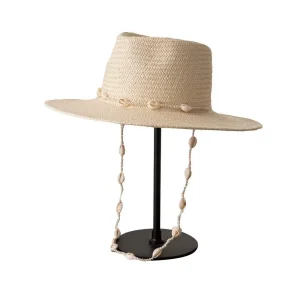
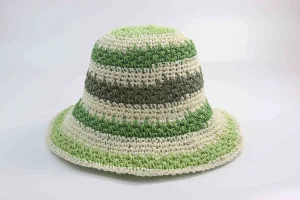
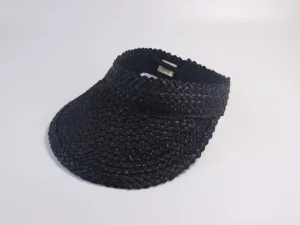
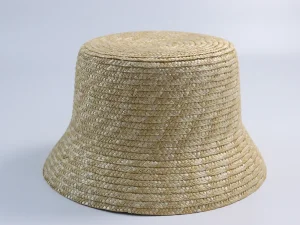
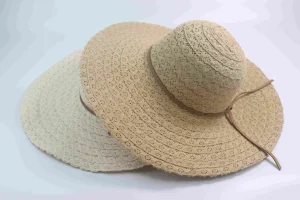
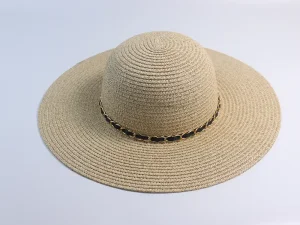
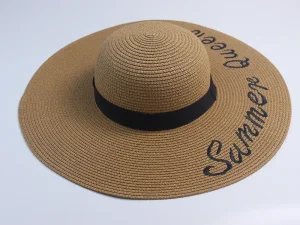
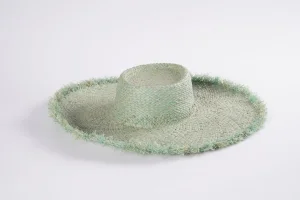
Our broader headwear catalog supports Seoul buyers who want to consolidate their seasonal assortment with a single factory — from formal boaters to bucket hats and western sun hats.
Straight answers on MOQ, customization, shipping and compliance — the questions that come up on nearly every introductory call with a Korean importer or boutique brand.
Every category below ships from the same factory, with the same sampling and QC standards.
Send your style references, target retail price, quantity and destination market. Our team replies within 8 hours with material suggestions, a sampling plan and a production timeline.