
 Beach & Resort
Featured Floppy Hat Programs
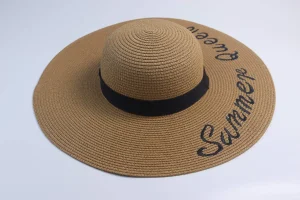
Floppy Hat Styles Most Requested by UAE & GCC Buyers
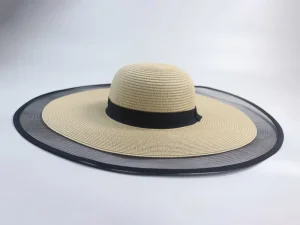
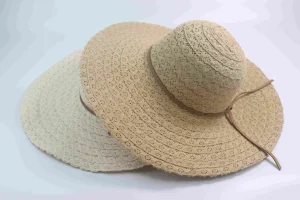
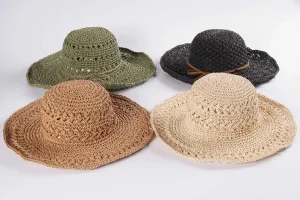
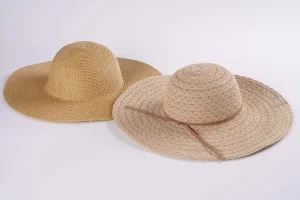
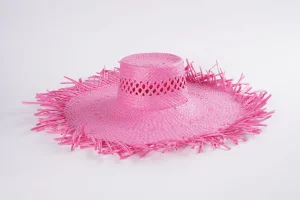
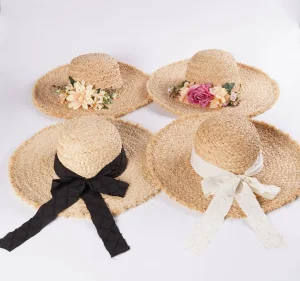
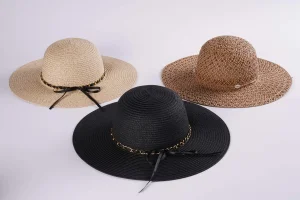
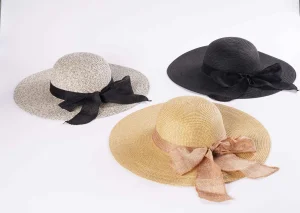
These four silhouettes consistently lead sample requests from Dubai, Abu Dhabi and Sharjah importers because they answer the region's core demand: broad shade coverage, breathable natural fibre, and a packable shape that survives airport-to-resort logistics.
Local Commercial Reality
Why the UAE Is Now a High-Velocity Market for Floppy Hats
The United Arab Emirates is not a single summer market — it is a portfolio of demand signals compressed into seven emirates. Retailers in Dubai Mall and Mall of the Emirates sell to tourists from Europe and Russia between October and April. Resort operators in Ras Al Khaimah, Fujairah and Saadiyat Island need shade accessories that survive chlorinated pools and saline air. Meanwhile, the resident population — roughly 88% expatriate — buys lightweight sun hats for school runs, Friday brunches and desert excursions from September through May.
What ties these buyers together is a narrow but intense peak season. Between November and March, ambient temperatures sit in the 22–30°C band and UV index regularly crosses 8. That is the exact window when floppy hats sell — and it is also the window when shipping delays become commercially fatal. A container that arrives in April is a container that gets discounted.
This is why experienced UAE importers structure their floppy hat sourcing calendar backward from the season: sample approvals in June, bulk production in July–August, sea freight in September, retail floor by late October. Understanding that calendar is the first form of information gain a buyer can act on.

8+
Typical peak UV index across the UAE Gulf coast
7
Emirates with distinct retail demand profiles
88%
Expatriate share of the resident population
Nov–Mar
Core floppy hat sell-through window
50pcs
Realistic starting quantity per design
Global Status & Trade Flows
The Global Floppy Hat Supply Chain: Where Value Actually Sits
Headwear is a fragmented category — but the floppy hat segment has quietly consolidated around three structural forces. Understanding them helps UAE buyers negotiate with confidence rather than guesswork.
Natural Fibre Retains Premium Pricing
Raffia, natural grass straw and paper-straw blends continue to hold a premium over synthetic competitors because consumers now read natural fibre as a sustainability signal — not just a stylistic choice. Buyers who can document fibre origin and care instructions command better retail margins.
Production Is Concentrated in China
China remains the world's dominant exporter of woven headwear, with Shandong, Zhejiang and Guangdong provinces hosting the deepest supplier ecosystems. The result: shorter sampling cycles, tighter per-unit costs and more reliable bulk consistency than most alternative origins can currently match.
Demand Is Shifting Toward the Gulf
Middle East retail expansion — from Dubai's resort belt to Saudi's entertainment-driven tourism push — has made GCC buyers a growth segment for sun-hat suppliers. Buyers in this region increasingly expect fast sampling, low MOQ trials, and heat-appropriate materials baked into the offer.
| Origin | Strength | Constraint | Best Fit for UAE Buyers |
|---|---|---|---|
| China | Vertical integration, deep material choice, sampling speed, low MOQ | Buyer must manage freight timing carefully | Private-label floppy lines with seasonal color refresh |
| Vietnam | Growing skill base, competitive labour cost | Narrower material range for fine straw | Volume cotton and blended sun-hat programs |
| Madagascar | Authentic raffia fibre origin | Limited finishing and branding capability | Raw material sourcing, not finished private label |
| Ecuador | Fine toquilla straw heritage | Long lead times, high cost per unit | Luxury capsule pieces, not volume programs |
| Italy | Fashion finishing and trim design | Cost-prohibitive at scale | High-end boutique drops with small batches |
China Factory Efficiency Advantage
Where Chinese Factories Convert Effort Into Measurable Speed
The phrase "China efficiency" is often repeated but rarely explained. For floppy hats specifically, the advantage comes from four concrete mechanics that a UAE buyer can verify during supplier qualification.
Raw Material Proximity
Straw, raffia, paper yarn, ribbon and label suppliers cluster within a few hundred kilometres of major headwear factories. A floppy hat that needs three trim variations can be re-sampled inside a week instead of six — decisive when a UAE retail buyer changes their colorway in August.
In-House Blocking & Finishing
Competitive Chinese suppliers no longer outsource blocking, banding or trim application. Keeping those steps under one roof shortens production cycles, improves size consistency across a bulk run, and reduces the risk of colour mismatch between crown and band.
Documented QC Sequences
Experienced suppliers run multi-stage inspection: material sorting, weave check, blocking verification, trim alignment and final packing review. Each stage catches a different defect class. That layered approach is what allows bulk runs of thousands of pieces to remain consistent enough for repeat retail orders.
Low-MOQ Flexibility
Fifty to one hundred pieces per design is a realistic starting point with established floppy hat factories. That threshold matters in the UAE because independent boutiques and mid-tier resorts often want to test multiple colorways before committing to container volumes. Low MOQ turns a single order into a learnable experiment.
UAE Localization & Use Cases
Six Local Scenarios That Define Floppy Hat Demand in the UAE
General sun-hat demand is a weak signal. Specific scenario demand is a strong one. Here are the six scenarios that repeatedly appear in UAE buyer inquiries — each with distinct material and branding implications.
Luxury Resort & Hotel Retail
Five-star properties along Jumeirah and Saadiyat need floppy hats that read "premium" in a lobby boutique. Raffia and organza finishes with discreet woven labels outperform generic designs here — branding is secondary to material honesty.
Desert Safari Operators
Tour operators running dune drives and overnight camps order floppy hats as client giveaways or rentals. Durability and shade outweigh style; wide-brim paper straw with reinforced stitching is the practical specification.
Beach Clubs & Pool Concessions
Day-pass beach clubs near Palm Jumeirah and Kite Beach buy in higher volumes but expect aggressive pricing. Paper-straw floppy hats with simple logo embroidery hit the right balance between margin and perceived value.
Airport & Travel Retail
Dubai International and Abu Dhabi airports absorb enormous seasonal gifting volume. Packable floppy hats — foldable brim, lightweight weave, travel-friendly hang tag — align with the traveller's buying logic of last-minute usable gifts.
Corporate Gifting & Events
Brands running outdoor activations from Expo City to Yas Marina order co-branded floppy hats as event merchandise. Embroidery durability under heat and wash cycles becomes the key quality metric — not fashion detail.
Children's Family Retail
Family-oriented retail in Al Ain, Sharjah and Abu Dhabi demands scaled-down floppy hats in softer weaves. Elastic inner bands, gentle raffia and bright colorways convert this segment — but child-safety stitching quality is non-negotiable.
Global Purchasing Behaviour
What Global Buyers Actually Evaluate Before Placing a Floppy Hat Order
After years of working with importers, distributors and brand owners across more than sixty countries, the same five evaluation criteria keep surfacing. Suppliers who address them proactively win the order; suppliers who wait to be asked usually lose it to a more transparent competitor.
Sampling Fidelity
Does the bulk production match the approved sample in weave density, brim stiffness and colour? Buyers now request retention samples specifically to enforce this.
MOQ & Trial Flexibility
Can the supplier support a 50–100 piece trial without punitive setup fees? Emerging brands and seasonal UAE retailers depend on this flexibility.
Material Transparency
Is the fibre source clearly stated, and are care instructions accurate for humid Gulf climates? Ambiguity here creates returns and reputation damage.
Freight Timing Discipline
Can the supplier commit to production windows that align with the buyer's retail calendar? Sea-freight predictability matters more than a marginally lower unit price.
Communication Latency
How quickly does the supplier respond with real answers — not generic reassurance? Response speed is now one of the strongest predictors of eventual order fulfilment quality.
Industry Trends to Watch
Five Trends Reshaping Floppy Hat Sourcing Through 2027
Sustainability Documentation
Buyers increasingly ask not just "is it natural fibre?" but "can you document the fibre's journey?" Suppliers who can provide basic traceability for raffia and paper straw will win a disproportionate share of GCC and European premium programs.
Compressed Seasonal Cycles
Fast-fashion logic is now leaking into resort wear. UAE retailers are asking for in-season replenishment — not just one annual shipment. Suppliers with short sampling windows and flexible production scheduling gain a structural edge.
Search-Led Buying
B2B buyers increasingly shortlist suppliers through search — which means online documentation quality (specs, MOQs, lead times, real factory photos) directly determines who gets the inquiry. Suppliers who publish rich, verifiable information win visibility.
Heat-Performance Language
Consumers respond to UPF language and breathable-weave claims. Retail buyers are starting to demand that suppliers provide fabrics and finishes supporting those claims credibly, rather than decorative wording without substance.
BRICS Gifting and Cross-Border E-Commerce
Cross-border e-commerce platforms are creating demand for small-batch branded floppy hats aimed at regional tourist markets. A supplier who supports multilingual labeling and small, frequent shipments becomes a more attractive long-term partner.
Trust via Factory Proof
Generic supplier claims are losing weight. Buyers increasingly value verifiable assets — workshop photos, QC process documentation, retention sample policies, and real material origin details — when selecting long-term partners.
Verified Supplier Expertise
The Supplier Behind the Data: Lige Hats
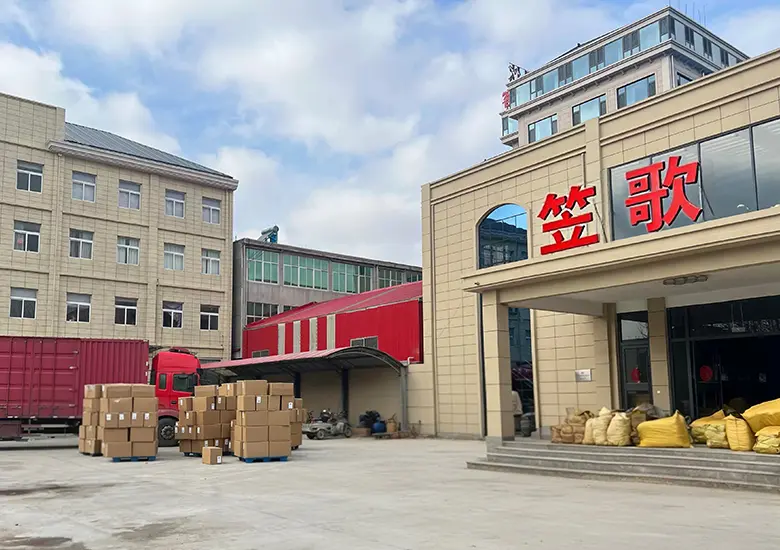
Shandong Lige Import & Export Co., Ltd. is a straw hat manufacturer based in Linyi, Shandong Province, working with importers, brand owners and distributors in more than sixty countries. With over fifteen years of focus on straw hats, paper hats, straw bags and paper bags, the company runs raw-material sorting, weaving, blocking, finishing and export quality inspection in-house.
The practical advantage for a UAE buyer is straightforward: nearby Qingdao Port provides reliable container access, and a starting quantity of 50–100 pieces per design makes first orders low-risk. Samples can be developed from mood boards or reference pieces, and a dedicated sales contact handles your file from sampling through after-sales.
This is the E-E-A-T foundation of the above analysis: the local-market reading, the material recommendations and the timing logic all come from a supplier that has shipped this category repeatedly — not from a purely theoretical review.
15+
Years of straw hat manufacturing experience
Buyer FAQ
Questions UAE & GCC Buyers Ask Most
Direct answers for importers, retail buyers and resort procurement teams evaluating floppy hat supply from China into the UAE market.
What is the typical MOQ for floppy sun hats shipped to the UAE?
Most established floppy hat factories — including Lige Hats — start at 50 to 100 pieces per design, depending on material and trim complexity. This is deliberately low so independent UAE boutiques, resort groups and new brands can test colorways or silhouettes before committing to container volumes.
Which fibres are best suited to the UAE's heat and humidity?
Natural raffia and paper straw both handle the Gulf climate well. Raffia's natural resins give it shape recovery and dye receptivity, making it ideal for packable floppy hats and premium boutique positioning. Paper straw offers a more uniform finish, more predictable unit cost, and cleaner branding surfaces — useful for beach clubs and corporate gifting. For humid coastal conditions, specify care labelling that instructs buyers to dry hats flat rather than leaving them in car interiors.
How is freight from China to the UAE typically managed?
Bulk orders normally move by sea freight from Qingdao (or another major gateway) to Jebel Ali or Khalifa Port, either as FCL or LCL depending on volume. The transit window needs to be planned backward from the retail calendar: a UAE winter season start means production should conclude in late summer so containers land in October. Urgent samples and small orders can ship by air or express courier when timing is tight.
Can floppy hats be customised with UAE-specific branding or packaging?
Yes. Beyond shape, material and color, suppliers can apply woven labels, embroidered patches, hang tags and even bilingual packaging suitable for GCC distribution. Custom branding elements should be approved on a physical or digital pre-production sample — retention samples of the branded version reduce subsequent disputes.
How do you ensure bulk production matches the approved sample?
This is the most important operational question in floppy hat sourcing. Reputable suppliers run staged inspection: raw material check, weave density verification, brim stiffness assessment, trim alignment review and final packaging inspection. Buyers should also request a retention sample from the bulk run — retention samples are the practical enforcement mechanism that prevents "sample drift" between sampling and shipping.
What's the realistic timeline from inquiry to delivery for a UAE order?
A practical planning window for a non-urgent floppy hat order is 10 to 14 weeks from initial brief to retail delivery — covering design confirmation, sampling, sample approval, bulk production, inspection and sea freight. Sampling alone can take 1–2 weeks; bulk production typically runs 3–5 weeks depending on design variety. Orders submitted in June–July are usually positioned comfortably for the November–March UAE season.
Do you support replenishment orders mid-season?
Yes, but planning matters. Because floppy hat factories run on material batching and seasonal capacity allocation, mid-season replenishment is significantly smoother if the original order included a defined replenishment clause at the outset. UAE retailers increasingly structure their orders this way so popular colorways can be re-ordered without resetting the entire sampling process.
Which UAE retail segments buy the most floppy hats?
Ranked by volume, the most consistent buyers are: luxury resort boutiques, beach clubs and pool concessions, airport travel retail, tour operator gift programs, and family-focused children's retail. Each segment has a different price sensitivity and style expectation, which is why a UAE-focused collection usually includes multiple fibre options rather than a single fabric story.
Floppy Hat Collection
Ready-to-Ship Styles for UAE Sourcing Programs
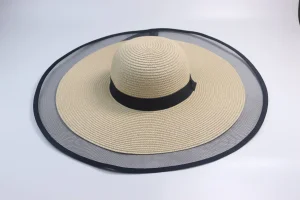
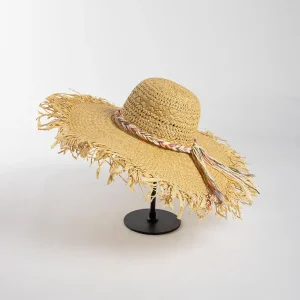
Eight production-ready floppy hat styles covering the range of silhouettes most frequently ordered by UAE and GCC buyers — each available for private-label customization.
Ready to Build Your UAE Floppy Hat Program?
Send your style references, target quantities and destination market. Our team responds within 8 hours with material recommendations, a sampling plan and a production timeline aligned to your retail calendar.