
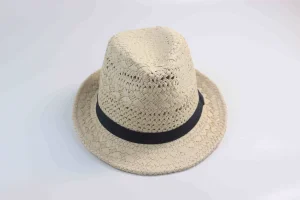
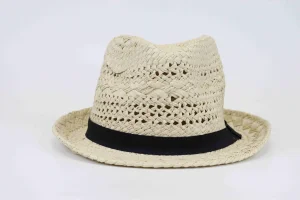
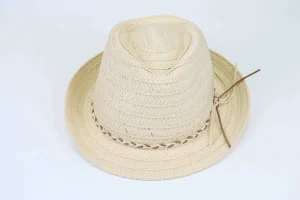
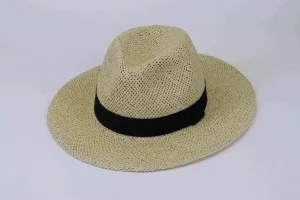
Featured Styles
Manila-Ready Fedora, Trilby & Sun Hat Programs
Every silhouette below is available for private-label production with custom bands, woven labels, patches and packaging — sampled in 7–12 days and consolidated for Manila-bound freight.
Manila Market Intelligence
Why Fedora & Trilby Demand Is Accelerating in Metro Manila
Metro Manila is one of Southeast Asia's most under-served headwear markets relative to its retail density. The city's 13.5 million residents live in one of the world's hottest urban heat islands, where the heat index routinely crosses 45 °C during April and May. Combine that climate pressure with a retail sector that opens dozens of mid-tier fashion stores per year, and the case for stock fedora and trilby programs becomes straightforward.
What's actually selling? Three commercial channels consistently reorder:
- Resort & leisure retail in Pasay & Parañaque. Hotels and casino-adjacent boutiques around Manila Bay buy sun-blocking fedora hybrids at 200–600 pcs per season for poolside and airport-transfer traffic.
- Department stores in Makati & Ortigas. SM, Robinsons and Landmark-tier buyers test trilby lines in compact 50–100 pcs SKUs and expand winners before Holy Week and Christmas.
- Corporate gifting & events. BPO conventions, film festivals and LGU events order logo-branded trilbies as premium giveaways, requiring small MOQs, embroidery and clean lead times.
A recurring Manila-specific insight: humidity, not heat, is the real failure mode. Cheap paper-straw trilbies sold by local traders warp within weeks in the rainy season. Buyers who upgrade to raffia or poly-blend constructions, with stitched rather than glued bands, see dramatically fewer returns. Our fedora programs for Manila are engineered around this exact variable.
Send Inquiry Now
Global Supply Landscape
The Global Fedora & Trilby Category in 2026
Understanding global consumption patterns is how a Manila buyer negotiates better terms locally. Here's the reality of the category worldwide.
Category Rebound
Following a soft 2020–2022, straw fedora and trilby volumes returned to pre-pandemic levels by 2024. Tropical markets — Southeast Asia, Latin America, the Gulf — are now the fastest-growing tier, outpacing traditional US and EU demand.
Shift to Premium
Fast fashion's price-only trilby lines are consolidating. Buyers increasingly demand traceable fibers, reinforced crowns and dye-lot consistency — which favors factories with full in-house blocking capacity over trading intermediaries.
Panama Canal Pressure
Reduced Panama Canal transits pushed more Asia–USEC freight through Suez and Singapore. For Manila buyers this is actually advantageous: Philippine ports sit directly on the most-used eastbound routes.
Shorter Cycle Times
Global buyers moved from annual to seasonal to quarterly buying cycles. A factory that can sample in 7 days and ship in 30–40 days captures a structural advantage over one locked into 90-day programmes.
Full Collection Range
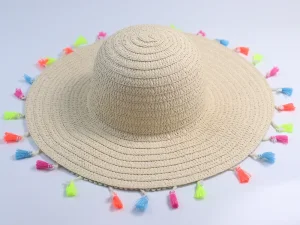
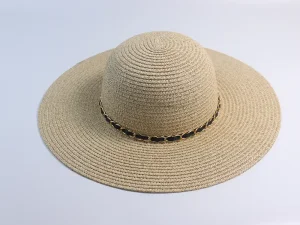
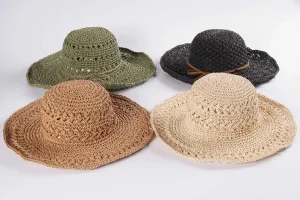
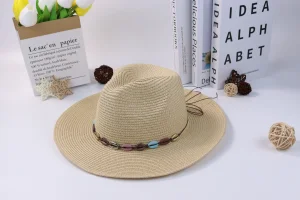
Full OEM / ODM Range for Philippine Import Programs
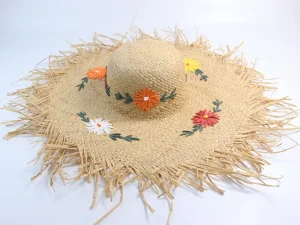
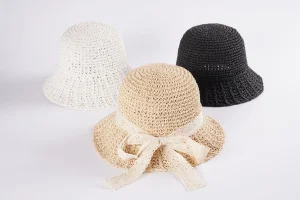
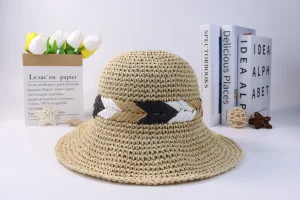
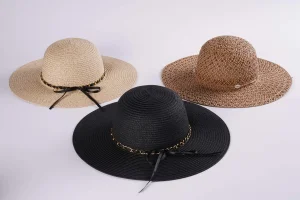
Adjacent silhouettes that let Manila buyers consolidate fedora/trilby orders with sun hats, sun visors, kids' sets and floppy brims — one supplier, one container, one quality standard.
Supply Chain Resilience
Why the China Factory Supply Chain Still Beats Alternatives for Manila Buyers
Sourcing from China has moved past the "cheap labor" story. In 2026, the competitive advantage is resilience, not just price. Here's what that actually looks like for a Manila importer ordering fedora and trilby programs.
Vertical Integration of the Shandong Cluster
Linyi and its surrounding counties in Shandong form the world's densest straw and paper hat weaving cluster. Raw material sorting, weaving, blocking, sewing, banding and QC operate within a 40 km radius. This means a Manila buyer can call for a color change on Monday and have it reflected in a shipment window without re-negotiating an entire order.
Freight Routing to Manila Is Short
Qingdao → Manila is a 5–7 day ocean transit on the major carriers, and even via a Hong Kong or Singapore transshipment it remains under 12 days. Compare that to 25–35 days for the same freight to Los Angeles or Rotterdam. For seasonal fedora drops that miss April–May or Christmas windows, a 20-day reduction in lead time directly translates to revenue.
Documentation Fluency for PH Customs
BOC (Bureau of Customs) filings for hats — HS headings 6504 and 6505 — are routine for us. We prepare commercial invoices, packing lists, Certificate of Origin (Form E under ASEAN–China FTA, giving Manila buyers preferential duties), and product-safety documentation as standard. Delays at Port of Manila usually trace to improper documentation, not the factory.
Alternative Sourcing Is Weaker Than It Looks
Vietnam, India, Indonesia and the Philippines' own local hat industry can produce fedora and trilby basics, but none match China for the combination of material range, consistent dye-lot quality, and 50-piece-per-design MOQ. Buyers who tested alternatives between 2022 and 2024 overwhelmingly returned to Shandong for these reasons.
Currency and Payment Stability
CNY-denominated pricing remains attractive relative to PHP, and most Shandong factories now quote FOB Qingdao in USD. For Philippine Buyers, this means price certainty over a 30- to 60-day order cycle — an advantage Turkish or Ecuadorian Panama-hat sources cannot match.
English-Language Account Handling
Our sales team handles every Manila account in English with time-zone overlap through the full Philippine business day. Sampling questions, artwork approvals and after-sales follow-up are answered within 8 hours — a service level other regions rarely meet.
0+Years of Straw Hat Manufacturing
0+Countries Served Globally
0–100Pieces Minimum per Design
0hAverage Response Time
Technical Roadmap
The Fedora & Trilby Manufacturing Roadmap for Tropical Markets (2026–2030)
Fedora and trilby construction is evolving from a heritage leather-and-felt silhouette into a performance-driven summer accessory. Here's the roadmap Lige is building toward, and how it benefits a Manila buyer planning multi-year programmes.
Material Hybridization
Blending raffia with polypropylene or paper with cotton to stabilise shape in high humidity. Result: fedoras that hold crown pinch after 40+ wear cycles in Manila's climate.
UV-Engineered Weaves
Tightened basket weaves and added finishes delivering UPF 50+ verified by third-party labs — increasingly required by Philippine retail chains under their own compliance charters.
Stitchless Band Systems
Adhesive-free band application using ultrasonic welding and mechanical clips reduces failure modes in high-humidity storage and cuts after-sales return rates by half.
Digital Color Management
Spectrophotometer-calibrated dye acceptance at the factory ensures lot-to-lot consistency, so a reorder placed six months later matches the original shipment on a trade-show table.
Compression-Ready Packaging
Developed specifically for Manila's LCL freight patterns and warehouse space constraints, allowing buyers to increase container utilization by 20–30% without hat deformation.
Traceable Fibers & MRF Reporting
Fibre-level sourcing documentation and Material Recovery Facility reporting, aligned with the Philippines' EPR Act (RA 11898) — critical for retail buyers introducing formal sustainability disclosures in 2026–2028.
Manila Application Scenarios
Localized Use Cases for Fedora & Trilby Hats in the Philippines
Fedora and trilby hats in Manila are not the formal, office-bound accessory they are in London or New York. Philippine usage patterns are inherently different, and factory programmes should reflect that:
- Intramuros & heritage tourism. Bicycle and walking-tour operators, plus souvenir shops around Fort Santiago, buy trilby hats in lighter colorways and shorter brims — a niche 200–500 pcs category with strong repeat rates each Q3.
- Boracay, Siargao & Palawan resort retail. Fedora hybrids with UPF-rated weaves at 400–1,000 pcs per boutique per season. These stores buy year-round, not seasonally.
- Makati and BGC corporate gifting. Law firms, banks and consulting companies order logo-woven trilby hats as premium executive gifts; 100–300 pcs per order with individual polybags and branded boxes.
- Media, film and entertainment. Production outfits and wardrobe teams order small-lot trilbies and fedoras for shoots — usually 20–80 pcs, needing fast turnaround within 10–14 days.
- Church & community events. Black-trimmed trilbies for Holy Week ceremonies and community pageants; a recurring micro-demand that benefits from our MOQ 50 starting tier.
Localized Support Model
For Manila accounts, the operational model is deliberately specific: English-speaking account handling, sampling dispatched via DHL Express (typically 5–7 days to Metro Manila), bulk production shipped FCL or LCL from Qingdao to Manila South Harbor, and consolidated quality inspection before loading. Post-shipment, our team supports buyers with documentation for BOC clearance, Form E Certificate of Origin under the ASEAN–China FTA, and any commercial or product data required by the buyer's compliance team.

Compliance & Quality Assurance
Compliance, Quality & Documentation for Philippine Importers
Once an order is placed, the risk shifts from design to documentation and clearance. Here is the compliance layer we prepare as standard for Manila-bound shipments.
| Compliance Area | What We Prepare | Why It Matters for Manila Buyers |
|---|---|---|
| Customs Documentation | Commercial invoice, packing list, bill of lading, Certificate of Origin (Form E) | Ensures BOC clearance without delay; Form E qualifies consignments for preferential ASEAN–China FTA duties. |
| HS Classification | Correct HS codes: 6504 (plaiting-material hats) or 6505 (textile hats) | Misclassification triggers post-entry audits or release delays at Manila South Harbor. |
| Product Safety | AFT (azo dye) testing, formaldehyde screening, nickel-free hardware | Aligns with Philippine consumer safety expectations and department-store QA charters. |
| Sustainability Reporting | Fibre origin traceability, MRF-aligned packaging declarations | Supports buyers subject to EPR obligations under RA 11898 and ESG disclosure rules. |
| Packaging & Labeling | Country of origin, care instructions, private-label inserts | Meets DTI labeling requirements; supports resale at retail tier without rework. |
| Quality Inspection | 100% in-line inspection plus AQL 2.5 sampling before loading | Reduces arrival-of-defective-goods disputes that are costly to resolve across borders. |
How an Order Actually Flows
Share Your Brief
Style references, target quantity, destination Manila warehouse, brand assets, deadline.
Design & Sampling
Material recommendations, sample development in 7–12 days, dispatched via DHL Express to Metro Manila.
Approval & PO
Confirm sample, labeling, packaging and delivery schedule. 30% deposit typically starts production.
Bulk Production
Material sorting, weaving, blocking, banding, finishing — sequentially documented for QC traceability.
Final QC & Packing
100% in-line plus AQL 2.5 sampling. Individual polybags and export cartons prepared with Manila warehouse labeling.
Export & Clearance
FCL or LCL from Qingdao. Documents couriered; container typically at Manila South Harbor within 5–7 days of booking.
Buyer Q&A
Frequently Asked Questions from Manila Buyers
Direct questions we receive from Philippine importers, department-store buyers and brand owners — answered with the same operational detail we'd give on a call.
What is the minimum order quantity for fedora or trilby hats shipped to Manila?
Our starting quantity for small orders is 50 to 100 pieces per design, depending on material and craftsmanship. This is deliberately low for boutique and emerging-brand buyers testing Philippine retail. For a full fedora/trilby programme you can order 3–5 designs in a single consolidated shipment, achieving both low per-design risk and efficient freight economics at the LCL tier.
Can you produce private-label fedora hats with our Philippine brand logo?
Yes. OEM and ODM production is our core business. We customize shape, material, color, size and hat bands, and can add branding elements such as woven labels, patches, embroidery, custom hang tags and branded boxes. Our in-house designers can also develop new styles from your mood board or reference samples — important for Manila buyers who want a silhouette distinct from the generic mall offerings.
Where is your factory and how are orders shipped to Manila?
We are located in Linyi City, Shandong Province, China, close to Qingdao Port. Bulk orders are typically exported by sea freight as FCL or LCL shipments direct to Manila South Harbor (or via Singapore/Hong Kong transshipment). Samples and urgent small orders can be sent via DHL Express, arriving in Metro Manila in 5–7 days. For Manila we strongly recommend LCL consolidations during Q1 and Q3 — that's when most of our Philippine buyers ship.
Which ASEAN trade preferences apply to my order?
The ASEAN–China Free Trade Area (ACFTA) applies when we issue a Form E Certificate of Origin with the shipment. Under this scheme, most hat categories (HS 6504, 6505) enter the Philippines at reduced or zero duty, provided the origin rules are satisfied. We prepare Form E as standard for all Manila-bound consignments; your customs broker or forwarder can confirm the exact duty rate against your shipment's HS classification.
How do your fedora hats hold up in Manila's humidity and rainy season?
This is the question we take most seriously for tropical markets. Standard paper-straw trilbies warp within weeks under sustained humidity, and glued hat bands lift. Our Manila-recommended builds use raffia or raffia-blend constructions, stitched or ultrasonically welded bands, and stiffened crowns with moisture-resistant finishes. We can supply a small sample set for you to hold in Manila for 4–6 weeks before committing to a bulk order — this is the only honest way to validate performance in your specific climate.
What is your production lead time?
Sampling takes 7–12 days from confirmed brief. Bulk production for 500–2,000 pcs typically runs 25–35 days after deposit and sample approval. Combined with 5–7 days ocean transit to Manila and 3–5 days for BOC clearance, a realistic end-to-end cycle is 45–55 days — comfortably within typical Philippine quarterly buying rhythms. For urgent restocks, express air freight can compress the freight portion to 3–5 days.
Which markets do you export to? Do you have other Philippine accounts?
Most of our products go to the United States, Canada, Australia, Mexico, Western Europe, Japan and, increasingly, Southeast Asia. We serve customers in more than 60 countries and work with over 25 global distributors. For regional confidentiality reasons we don't disclose specific Philippine buyers, but we can share anonymised reference cases (SKU counts, order volumes, freight lanes) during a buyer conversation.
How fast does your team respond to Manila inquiries?
We respond and take action within 8 hours, covering product questions, sampling, order follow-up, and after-sales service. Our team schedules effectively around the Manila time zone (GMT+8) — the same as China Standard Time — so there is no awkward time-zone gap for buyers in Metro Manila.
What products do you manufacture besides fedora and trilby hats?
In addition to fedora and trilby hats, we manufacture paper hats, straw bags and paper bags, as well as children's straw hats, toy hats, lifeguard hats, sun visors, winter hats, Panama hats, cowboy hats, boater hats, bucket hats and floppy hats. This breadth lets Manila buyers consolidate multiple headwear categories within a single container — improving freight utilization and simplifying supplier management.
How do I start a fedora or trilby order for Manila?
Send us a brief with style references, target quantity, destination and deadline via our contact page. Within 8 hours we'll respond with material recommendations, indicative pricing, a sampling plan and a realistic delivery window based on Qingdao → Manila freight schedules. Sampling starts as soon as you confirm the brief — no paperwork burden before there's something real to approve.
Start a Manila Programme
Build Your Next Fedora & Trilby Collection for Manila
Send us your style references, target quantity and destination market. Our team replies within 8 hours with material suggestions, a sampling plan, indicative FOB Qingdao pricing and a realistic delivery window to Manila South Harbor.