
Men's Sun
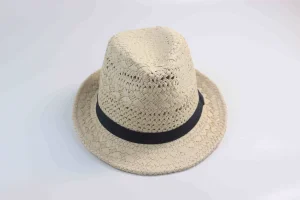
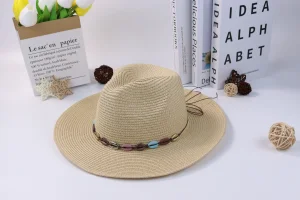
Four core silhouettes that importers placing programs into Ho Chi Minh City distribution hubs routinely reorder — from UV-protected men's sun hats to structured straw fedoras. Each links to the live product specification page.
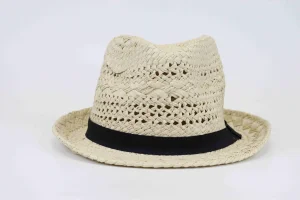
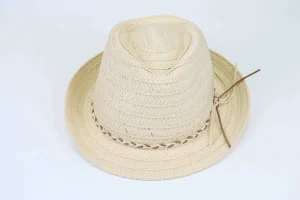
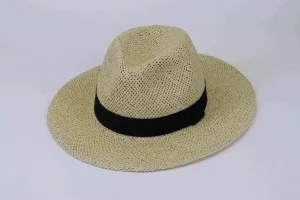
Ho Chi Minh City — still widely referred to as Saigon in trade circles — is not simply Vietnam's largest urban economy. It is the operational nerve centre for a national textile, garment and accessory supply chain that exports to more than 100 markets. For a buyer searching for fedora and trilby hat suppliers in Ho Chi Minh City, the city functions less as a single factory address and more as an aggregation layer: a dense network of trading houses, finishing workshops, material importers, sampling studios and export agents that connect global brands to production capacity across Binh Duong, Dong Nai, Long An and the wider Mekong region.
This matters because headwear sourcing in Vietnam is structurally different from sourcing in China. Vietnamese capacity is dominated by garment-led manufacturers — factories whose core competence is cut-and-sew apparel, with headwear as an adjacent category. Structured felt fedoras and blocked trilbies require a different skill set: blocking, steaming, brim flanging, sweatband insertion, crown pinching and shape retention testing. Buyers who assume a garment factory can deliver a consistent felt fedora often discover quality variance at the blocking stage, not the sewing stage.
What Ho Chi Minh City does exceptionally well is commercial coordination. The city hosts the largest concentration of English-speaking merchandising teams in Vietnam, handles documentation and customs brokerage at Cat Lai and Cai Mep ports, and maintains the sample-room ecosystem that brands rely on for rapid prototyping. Many "Ho Chi Minh City hat suppliers" are in fact sourcing offices that place production with partner workshops — a model that adds margin layers between the buyer and the loom.
Vietnam is a strong producer of natural raw materials — rattan, bamboo, palm leaf, seagrass and water hyacinth — and these feed a healthy handicraft and woven-accessory sector. For straw fedoras and trilbies, however, the critical inputs are often imported: fine paper straw yarn, raffia tow, wool felt hoods and stiffener chemistry. This creates a dependency that buyers should price into their landed-cost model, particularly when a supplier quotes an aggressive FOB Saigon figure without clarifying the material origin.
The practical conclusion for procurement teams: Ho Chi Minh City is an excellent first-mile commercial hub, but it is rarely the optimal sole-source destination for structured felt and blocked straw fedoras at scale. Sophisticated buyers treat it as one node in a multi-country network.
The fedora and trilby category has shifted from a fashion-led impulse buy to a programmed, replenishment-driven accessory. Buyers no longer ask only "what does it cost per piece?" — they ask about compliance documentation, shape consistency across reorders, lead-time reliability and brandable trim options.
Retailers reorder a hero fedora across three or four seasons. Crown height, pinch depth and brim width must stay inside a tolerance band — not "close enough" — or the product is rejected at DC intake.
EU and North American buyers increasingly require fibre composition declarations, dye compliance and, for natural straw, harvest-origin traceability before a purchase order is issued.
Direct-to-consumer brands and boutique chains want to validate a silhouette at 50–100 units per design before committing to container volumes. MOQ flexibility is now a scored criterion.
Beyond a woven label: custom grosgrain bands, metal eyelets, debossed leather patches, hang-tag design and retail-ready polybag presentation all signal a supplier that understands branding.
Buyers want a dated production calendar — sampling, approval, bulk, inspection, sailing — not a single vague "35 days" figure that quietly excludes Tet, material lead time or port congestion.
Post-pandemic procurement policy now mandates a backup origin. A Vietnam primary paired with a China secondary — or vice versa — is the emerging standard for headwear programmes.
The demand picture is reinforced by category drift. Fedoras and trilbies are no longer confined to formal menswear. They appear in resort collections, festival merchandising, sun-protection ranges for outdoor hospitality staff, promotional corporate gifting and unisex streetwear capsules. Each of these end-uses imposes a different specification: a hospitality sun hat prioritises UPF-rated weave density and machine-washable trims, while a fashion capsule prioritises silhouette novelty and premium band hardware. A supplier that cannot flex across these specifications forces buyers into multi-vendor complexity — the exact cost that consolidated sourcing is meant to remove.
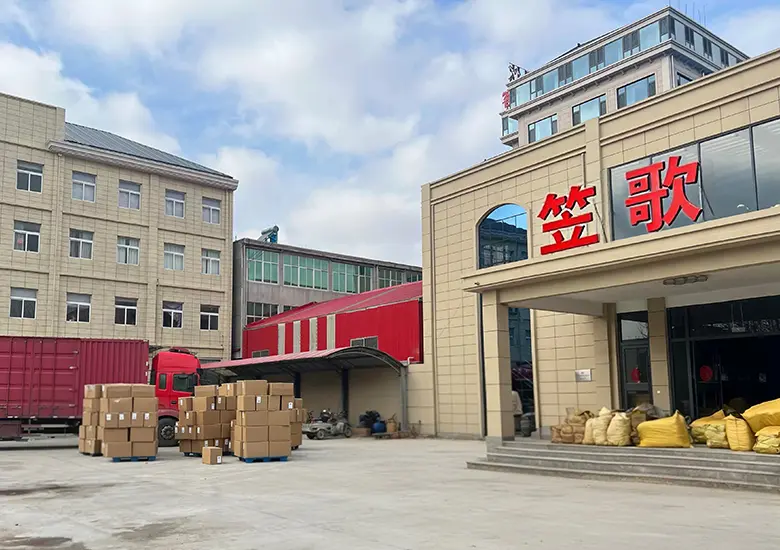
While Ho Chi Minh City offers commercial agility, the upstream manufacturing layer in China's Shandong and Zhejiang clusters has undergone a quiet operational transformation. The result is a headwear supply base that is materially more resilient and more predictable than the one buyers remember from a decade ago.
For two decades, headwear sourcing was decided almost entirely on unit price. That calculus has broken down. When a container is delayed, the cost of an empty shelf, a missed season and a discounted markdown dwarfs the cents-per-unit saving that motivated the original sourcing decision. Procurement leaders now model total landed cost of ownership, which includes delay probability, rework rate, reorder variance and the administrative burden of managing a marginal vendor.
China's manufacturing clusters score well on this revised model. The density of supporting industries — stiffener suppliers, band weavers, label printers, packaging converters — means a single factory can resolve a specification change without waiting on an external vendor chain. For structured fedoras and trilbies, where blocking and shape-setting are the highest-risk operations, that adjacency is a genuine quality control.
Vietnam, in parallel, scores well on tariff positioning and labour economics for volume apparel. The rational answer is not to choose one origin but to architect a portfolio: use Ho Chi Minh City for commercial coordination, regional distribution and duty-advantaged programmes, and use a vertically integrated China factory for the structured, shape-critical, brand-differentiated fedora and trilby lines where consistency is non-negotiable.
The two names are routinely used interchangeably, yet they are distinct silhouettes with different retail audiences and production requirements. Mis-specifying at the brief stage is the single most common cause of sample rejection.
| Attribute | Fedora | Trilby | Sourcing Implication |
|---|---|---|---|
| Brim width | Medium to wide, typically 5–7 cm | Narrow, typically 3.5–5 cm | Trilby brims need sharper flanging control |
| Crown height | Taller, centre-dent with pinched front | Lower, shorter pinch | Crown block sets differ; cannot swap moulds |
| Typical material | Wool felt, fur felt, paper straw, raffia | Felt, paper straw, cotton twill | Felt hoods add lead time; straw is faster |
| Styling context | Resort, unisex fashion, sun protection | Tailored menswear, smart-casual | Trilby bands lean slimmer and more formal |
| Band width | Wider grosgrain or leather band | Narrow band, often 2–3 cm | Band inventory must be planned per silhouette |
| Packability claim | Possible in soft straw, not in felt | Limited | Validate the claim with a crush test before marketing it |
Understanding end-use is how sourcing decisions become commercial ones. These are the demand pockets that a Ho Chi Minh City-distributed fedora programme realistically serves.
Riverside hotels, rooftop bars and Mekong Delta resort properties specify matched fedoras with UPF-rated straw and branded bands for poolside and concierge teams — a repeat-order contract category.
Local multi-brand boutiques and DTC labels test narrow trilby silhouettes in small runs, then scale the winning shape. Low MOQ per design is the enabling commercial condition.
Group-travel operators and cruise lines source packable straw fedoras as branded welcome gifts — favouring crush-tolerant construction over felt for obvious logistics reasons.
Launch events, conferences and festivals commission logo-bearing fedoras. Debossed leather patches and printed bands convert a commodity hat into a branded keepsake.
As health authorities in Southeast Asia amplify UV messaging, UPF-oriented headwear moves from fashion accessory to functional purchase — favouring tight-weave natural straw.
Exporters in HCMC often pool headwear with accessories for a single container. Mixed-SKU consolidation capability at the factory reduces the buyer's per-unit freight burden.
A transparent workflow that keeps a Ho Chi Minh City commercial partner and a Shandong manufacturing partner operating on the same specification sheet.
Silhouette (fedora or trilby), crown height, brim width, fibre, band width, size run and branding defined on a single sheet.
Factory produces counter-samples against the reference; measurements logged and photographed for sign-off.
Confirm MOQ tiers, unit price, trim artwork, packaging and the dated production calendar including holiday pauses.
Material sorting, weaving or felt blocking, steaming, flanging, sweatband and band attachment, final pressing.
Shape, stitch density, size tolerance, trim alignment and packaging checked against the approved golden sample.
FCL or LCL sailing from Qingdao, with documentation aligned for Cat Lai or Cai Mep receiving where applicable.
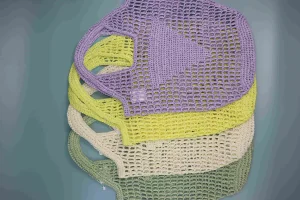
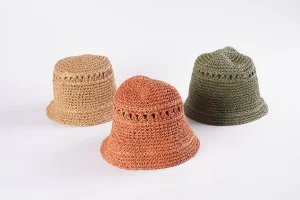
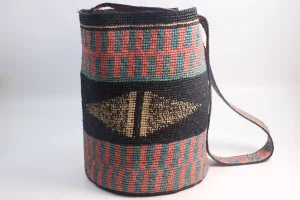
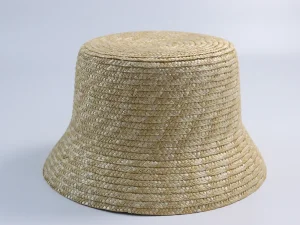
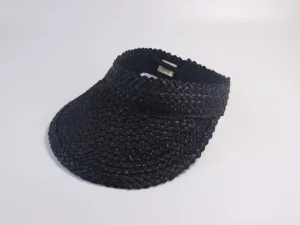
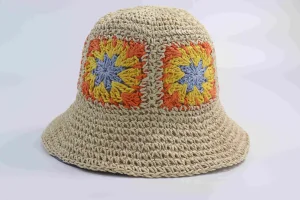
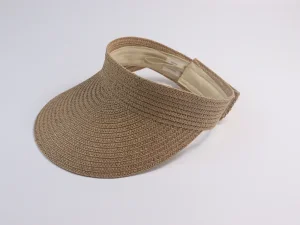
Fedoras and trilbies rarely ship alone. These companion styles — straw bags, Panama hats, bucket hats and visors — allow a single consolidated container to serve an entire seasonal accessory floor.
Direct answers to the questions procurement teams raise most often when evaluating a Vietnam-based headwear supply route.
Rarely as standalone, vertically integrated operations. Ho Chi Minh City is primarily a commercial and coordination hub. Most headwear production sits in surrounding industrial provinces — Binh Duong, Dong Nai, Long An, Ba Ria–Vung Tau — while city-based trading companies handle sampling, merchandising, documentation and export logistics. When evaluating a "Ho Chi Minh City hat supplier", always ask whether they own blocking and finishing capacity or sub-contract it.
It depends entirely on whether the supplier controls blocking in-house. Structured fedoras and trilbies live or die on crown block consistency, brim flanging accuracy and sweatband alignment. Fragmented supply chains — where blocking, sewing and trimming happen at different workshops — introduce tolerance drift between reorders. Vertically integrated factories that own the full process, as in Shandong's headwear cluster, produce auditable, repeatable shapes.
MOQ varies with construction. Straw fedoras in established shapes can start from 50–100 pieces per design, which is viable for boutique and DTC market testing. Felt fedoras typically require higher minimums because felt hoods are ordered by the batch and dyed to specification. Always clarify whether MOQ is per design, per colourway or per size run — a distinction that materially changes the real minimum commitment.
Not automatically. Vietnam's labour cost advantage is real but narrowing, and many headwear inputs — fine paper straw yarn, raffia tow, felt hoods, stiffeners — are themselves imported. Meanwhile, the margin layers introduced by trading intermediaries in a fragmented chain can erode the nominal saving. Landed cost must be modelled on total ownership: unit price, delay probability, rework rate, reorder variance and administrative overhead.
The Tet holiday creates a production and logistics pause that commonly runs two to four weeks, with a slower ramp-up period afterwards as workers return. For a Northern Hemisphere spring launch, the practical rule is to complete bulk production before the pause and to schedule sailing dates that account for post-holiday congestion at Cat Lai and Cai Mep. Build the pause into the calendar, not the contingency budget.
For any programme above boutique scale, yes. A single-origin dependency exposes the buyer to tariff shifts, port disruption, labour holidays and capacity constraints without a fallback. A rational structure assigns shape-critical, brand-differentiated structured fedora lines to a vertically integrated factory, and assigns volume-sensitive, tariff-advantaged programmes to a Vietnam-based route. The added coordination cost is typically a fraction of the cost of a missed season.
In an established factory with in-house design and blocking capacity, a counter-sample can typically be produced within days of receiving a clear brief and reference. Bulk production then follows sample approval, with the total timeline driven by material availability, trim sourcing and the chosen shipping mode. Buyers should insist on a dated calendar rather than a single aggregate lead-time figure.
Send your style references, target quantity and destination market. Our team responds within 8 hours with material recommendations, a sampling plan, MOQ tiers and a dated production schedule — including dual-origin options for buyers distributing through Ho Chi Minh City.