Belgium Core Line
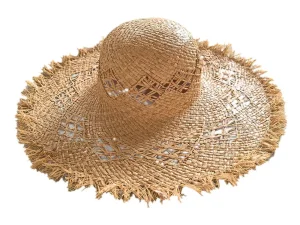
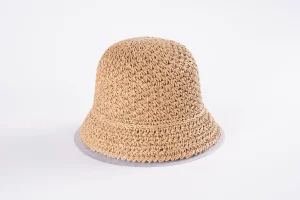
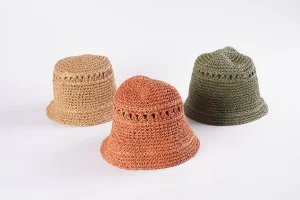
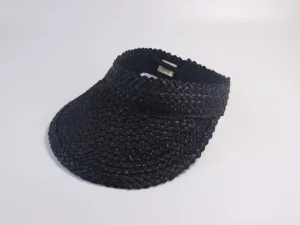
Belgium-Ready Toy Hat Program: Four Anchor Styles
These four references form the backbone of our Belgian toy and play-hat assortment — tested for skin contact, dye migration and small-parts safety, and produced with the documentation Belgian retail compliance teams expect.
0Years in OEM Hat Manufacturing
0Export Markets Served
0Minimum Order (pcs / design)
0Hour Response Commitment
Belgium Market Intelligence
The Belgian Toy & Play-Headwear Landscape
Belgium is a small but disproportionately influential market. Its consumer base is dense, its retail channels are sophisticated, and its compliance culture is among the strictest in the EU. For toy hat manufacturers, that combination rewards suppliers who treat regulation as a design input rather than an afterthought.
Belgium's commercial identity is built around three poles: Antwerp as a global petrochemical and logistics gateway, Brussels as the institutional centre of the European Union, and the Flemish retail corridor running from Ghent through Mechelen to Leuven, where family-owned toy chains and specialty boutiques sit alongside international mass merchants. Alongside them, the carnival and folklore economy of Wallonia and the Flemish provinces — Binche, Aalst, Halle, La Louvière — creates recurring, seasonal demand for costume and play headwear that is quite unlike the summer-resort pattern of Southern Europe.
That folklore calendar is a genuine commercial asset. Belgian carnival societies place repeat orders year after year for top hats, novelty caps and character headwear, and they typically want small runs in multiple colourways rather than one enormous volume SKU. A manufacturer who can support 50–100 piece runs across a dozen designs is far better matched to this market than one who insists on 3,000-unit minimums.
Alongside folklore, Belgium has a strong dress-up and role-play culture — from hospital play corners and kindergarten "beroepen" (professions) weeks to the ever-present Sint-Maarten and Sinterklaas traditions in November and December. Each of these occasions generates predictable, date-driven demand for toy hats that parents and schools buy in small volumes but with high expectations for safety and washability.
Antwerp & Brussels Channels
Port-anchored importers and EU-institution-adjacent buyers drive high documentation standards.
Folklore Calendar
Carnival, Sinterklaas and school play seasons create recurring small-batch reorder cycles.
Trilingual Packaging
NL / FR / DE labelling expectations mean artwork must be prepared once and applied consistently.
Premium Standards
Belgian toy buyers routinely request EN 71 test reports before sampling, not after.
Localized Application Scenarios
Where Belgian Buyers Actually Deploy Toy Hats
Toy hats are rarely sold as a single, isolated product in Belgium. They are bundled into play kits, sold as carnival accessories, integrated into classroom materials, or dropped into gift boxes. Understanding these contexts changes how a manufacturer designs, packages and prices.
Carnival & Folklore Costume Sets
Binche, Aalst and Halle carnival societies order coordinated headwear — top hats, caps, novelty shapes — in matched colourways. Small runs, high variety, tight January–February deadlines.
Kindergarten & School Role-Play
Profession-themed play corners (firefighter, chef, doctor) require durable, washable hats that survive daily handling by groups of 20+ children.
Retail Play & Dress-Up Aisles
Belgian specialty toy chains and department stores merchandise dress-up hats in mixed displays where packaging clarity and colour consistency matter more than individual unit price.
Gift Box & Subscription Bundles
Belgian gift-box curators pair a toy hat with a cape, mask or wand. These bundles demand flat-packable designs and clean, logo-ready label placement.
Sinterklaas & Seasonal Promotions
November–December Sinterklaas promotions drive short, sharp bursts of demand for themed headwear, usually with fixed delivery windows that cannot slip.
Museum & Attraction Play Corners
Belgian museums and family attractions commission bespoke historical or themed play hats — often 100–300 pieces — under their own brand guidelines.
Sourcing insight: In Belgium, the "unit of sale" is often a themed kit, not a hat. Suppliers who can deliver a coordinated set — hat plus matching bag, mask or cape — win more purchase orders than suppliers who offer hats alone, because the buyer avoids coordinating three separate vendors.
Extended Belgium Range
Eight Additional Styles for Belgian Play & Costume Programmes
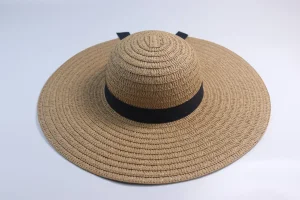
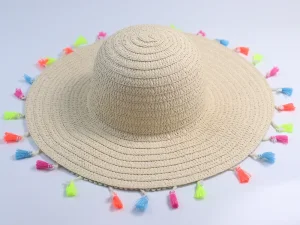
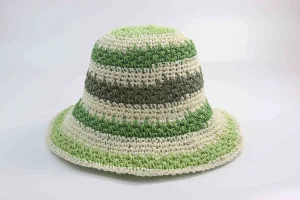
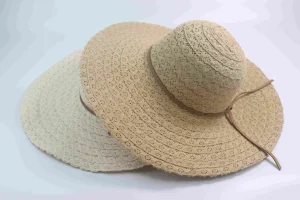
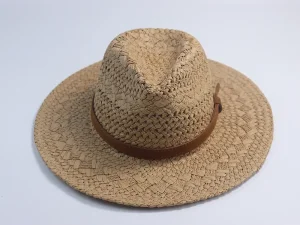
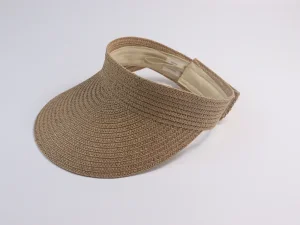
Beyond the four anchor references, these eight styles cover the breadth of demand a Belgian toy buyer typically needs: sun-safety play hats, straw top hats for costume, kids' hat-and-bag sets, and unisex visors for outdoor activity programmes.
Localized Support & Compliance
Compliance Architecture for Belgian Toy Hats
A toy hat imported into Belgium sits at the intersection of toy safety law, chemical regulation and labelling requirements. Getting the paperwork wrong is expensive; getting it right is a competitive advantage that buyers reward with reorders.
| Requirement | Scope | What We Provide |
|---|---|---|
| EN 71-1 / -2 / -3 | Mechanical & physical properties, flammability, migration of certain elements | Third-party test reports per material batch; small-parts and seam-strength verification |
| CE Marking & Technical File | EU Toy Safety Directive 2009/48/EC | Declaration of Conformity support, technical documentation pack, batch traceability |
| REACH Annex XVII | Azo dyes, formaldehyde, heavy metals, phthalates in accessible components | Material declarations from dyed yarn and trim suppliers; dye-batch records |
| GPSR Labelling | General Product Safety Regulation — producer identity and traceability | Label artwork templates with importer details, batch codes and care instructions |
| NL / FR / DE Language Rules | Consumer information on packaging and labels | Trilingual warning and care text prepared once, applied consistently across runs |
| Washability & Durability | Institutional and school play use | Colourfastness and shrink testing; hand-wash care guidance per material |
Documentation Before Sampling
Belgian compliance teams often request EN 71 evidence before approving a sample. We prepare the material pack up front so approvals are not delayed.
8-Hour Response SLA
Documentation questions, sample status, reorder confirmations — all answered and actioned within 8 hours, in English, with one dedicated account contact.
Importer of Record Support
We help Belgian importers align HS classification, origin documentation and shipping paperwork with their customs broker before the first shipment.
Supply-Chain Resilience
Why the China–Belgium Route Still Wins on Total Cost
Headline freight volatility gets attention, but landed cost is only one variable. The real question for Belgian buyers is whether a supplier can hold quality, hold schedule and hold documentation across repeat seasons. On those three, a vertically integrated Chinese hat factory remains difficult to match.
Our production base in Linyi, Shandong Province sits inland from Qingdao Port — one of China's largest container gateways — with mature feeder links into Northern Europe. For Belgian buyers, the practical route is typically ocean freight to Antwerp or Rotterdam, followed by short-haul road or rail into Brussels, Ghent or Liège. Transit times are predictable, and the frequency of sailings means small LCL consolidations can be grouped into a single monthly shipment without unreasonable waiting.
What makes the model resilient is not distance but vertical integration. Raw material sorting, weaving, blocking, trimming, finishing, inspection and packing all happen under one roof. That eliminates the hand-off delays that plague trading-company supply chains, and it means a colour-matching problem is solved on the factory floor rather than negotiated between three vendors.
It also means we can accept the order sizes Belgium actually needs. A carnival society ordering 60 top hats, a museum commissioning 200 themed caps, a toy chain testing a new dress-up line at 100 units per colourway — these are all viable, and none of them require the buyer to commit to a full container.
Vertical integration upside: when a Belgian buyer changes a trim, a band colour or a label position mid-season, there is no cross-supplier renegotiation — the change goes straight to the production line, usually within the same working week.
Global Industry Context
The Toy & Play-Headwear Sector Worldwide
Toy hats live in two overlapping industries: the children's products market and the costume, party and dress-up category. Both are growing, but they have different buying patterns, different compliance depth and different seasonality — and a Belgian buyer often needs a supplier who understands both.
Costume & Dress-Up Growth
Global dress-up and role-play categories have expanded steadily, driven by social-media-led birthday themes and the rise of full-year costume retail beyond Halloween.
Natural & Sustainable Materials
Paper, raffia and natural straw remain the preferred substrates because they are light, breathable, recyclable and align with EU sustainability messaging.
Compliance as Market Entry
In the EU, the toy safety framework is the de facto gatekeeper. Suppliers who already hold EN 71 documentation can shorten buyer onboarding by weeks.
Licensing & Character Demand
Character-licensed headwear drives fast, short runs. Manufacturers who can execute small colourway batches with strict brand approval timelines are in demand.
Short-Cycle Replenishment
Retail buyers now plan in 12–16 week cycles. Suppliers who can compress sampling to two weeks and hold buffer stock of base materials gain a measurable advantage.
Regional Consolidation
European importers increasingly consolidate small SKUs into a single container from a single factory, which favours suppliers with broad, in-house product ranges.
Technology Roadmap
Material, Process & Digital Roadmap 2025–2028
Belgian buyers increasingly ask for a forward-looking supplier, not just a current one. This is the roadmap we share openly with partners, structured by timeline so planning teams can align their own product cycles.
-
Now · 2025 Dyed-Fibre Traceability at Batch Level
Extending batch-level dye and trim records to every SKU in the toy hat line, so REACH declarations can be produced for a specific production run rather than a generic material.
-
Now · 2025 Trilingual Label Templates as Standard
NL / FR / DE label artwork is being integrated into the default sampling workflow, removing the separate artwork cycle that typically costs Belgian buyers one to two weeks.
-
2026 Low-Impact Dyeing Trials
Evaluating lower-water dye processes for raffia and paper yarn, with pilot colourways targeted for the 2026 carnival and spring-season programmes.
-
2026 Digital Sampling Approval
Rolling out a digital sample-approval workflow that allows Belgian buyers to review shape, proportion and label placement remotely before a physical sample ships.
-
2027 Recycled Paper-Straw Blends
Developing recycled-content paper-straw yarns for toy hats where the aesthetic benefits of natural fibre can be maintained without adding weight or fragrance.
-
2028 EU-Ready Digital Product Passport
Preparing the data architecture for Digital Product Passport requirements — material composition, origin, recyclability and care data available at the SKU level.
Material Engineering
Choosing the Right Fibre for Toy & Play Hats
A toy hat is handled, dropped, bent and often put in a child's mouth. Material selection therefore balances feel, form retention, colour stability and safety — not just visual appeal.
Raffia
Soft, dye-receptive palm fibre. Excellent for twisted character shapes, wide play brims and colour-led costume sets. Recovers shape after handling.
Paper Straw
Lightweight, uniform and cost-efficient. Ideal for high-volume promotional toy hats and licensed designs where colour consistency across runs is critical.
Wheat Straw
Firmer and more structural. Best suited to top hats, truncated crowns and shapes that must hold a silhouette on a retail shelf or in a costume box.
Cotton & Knit
Washable and soft against skin. The default for hats intended for younger children, repeated institutional use, or markets with strict tactile expectations.
Buyer guidance: for Belgian school and institutional play programmes, cotton or knit is usually the safer specification because it tolerates repeated washing. For carnival and one-off costume use, raffia and wheat straw deliver a far stronger visual payoff at a comparable price point.
Working Process
From Brief to Belgian Delivery: The Six-Step Path
A transparent process is worth more to a Belgian buyer than a vague promise of quality. Here is exactly how an order moves from first contact to container.
1 · Share Your Brief
Style direction, material preference, sizes, colourways, target quantity and any compliance or brand requirements.
2 · Design & Sampling
Our designers propose materials and shapes, then build a physical sample for your approval. Two-week typical turnaround.
3 · Approval & Documentation
Sample sign-off, label artwork confirmation and EN 71 / technical file alignment before production begins.
4 · Production
Material sorting, weaving, blocking, trimming and finishing run in-house, so schedule changes are absorbed quickly.
5 · Quality Inspection
Seam strength, colour consistency, small-parts safety and label accuracy verified before packing.
6 · Export Shipping
Sea freight via Qingdao to Antwerp or Rotterdam as FCL or LCL; air and express for samples and urgent small orders.
Buyer FAQ
Questions from Belgian Toy Buyers
Direct answers on compliance, MOQ, customization and shipping. If your question is not here, our team replies within 8 hours.
What is the minimum order quantity for custom toy hats?
Our starting quantity for small orders is 50 to 100 pieces per design, depending on material and craftsmanship. This lets Belgian boutiques, carnival societies, school suppliers and emerging brands test new styles before scaling up — which matches the small-batch, multi-colourway pattern of the Belgian market.
Can you produce private-label hats with our own logo and packaging?
Yes. OEM and ODM production is our core business. We customize shape, material, color, size and hat bands, and can add branding such as woven labels, patches and hang tags. We can also prepare NL / FR / DE label artwork so the same packaging standard is applied across every production run.
Do your toy hats meet EU toy safety requirements such as EN 71?
We supply EN 71-1, EN 71-2 and EN 71-3 test documentation per material batch, along with support for the Technical File and Declaration of Conformity required under the EU Toy Safety Directive. For Belgian buyers who also require GPSR labelling and REACH declarations, we prepare those as part of the standard documentation pack.
Where is your factory located and how are orders shipped to Belgium?
We are located in Linyi City, Shandong Province, China, close to Qingdao Port. Bulk orders are typically shipped by sea as FCL or LCL to Antwerp or Rotterdam and then trucked or railed into Brussels, Ghent or Liège. Samples and urgent small orders can go by air or express courier directly to Brussels Airport.
How fast will your team respond to a Belgian inquiry?
We respond and take action within 8 hours — covering product questions, sampling, order follow-up, documentation requests and after-sales service. Each account is assigned a single point of contact in English so there is no hand-off confusion.
Can we order a coordinated hat-and-bag or hat-and-accessory set?
Yes. Because weaving, bag production and finishing all happen in-house, we can build coordinated sets — hat plus matching bag, or hat plus complementary costuming pieces — under a single brand and packaging standard. This is particularly useful for Belgian gift-box curators and retail dress-up programmes.
What products do you manufacture besides toy hats?
Alongside toy hats, we manufacture straw hats, children's straw hats, paper hats, straw bags, paper bags, sun visors, lifeguard hats, winter hats and other bags.
Start a Programme
Build Your Belgian Toy Hat Collection With Us
Send us your style references, target quantity, branding direction and destination city in Belgium. Our team replies within 8 hours with material recommendations, EN 71 documentation, a sampling plan and a production timeline.