
Featured Selection
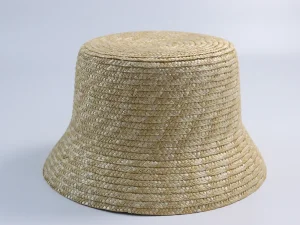
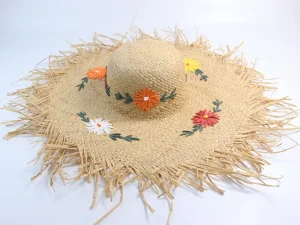
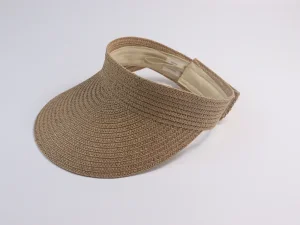
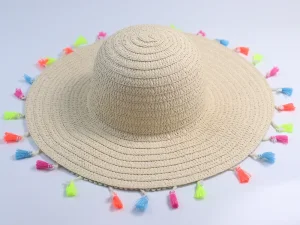
Four Styles Portuguese Buyers Test First
These are the shapes that clear sampling fastest for Algarve resort accounts and Lisbon concept stores — packable, photogenic and already compliance-ready for EU buyers.
Executive Summary
Why Portugal Is Now a Priority Demand Signal for Straw Headwear
Portugal has quietly become one of Europe's most efficient test markets for seasonal accessories. The country receives roughly 30+ million overnight tourist stays in a peak summer quarter, operates a mature hospitality sector across the Algarve, Lisbon, Porto and Madeira, and hosts a dense network of independent concept stores and resort boutiques that reorder small quantities quickly.
For a Chinese straw-hat factory, that combination is strategically valuable. Portuguese buyers rarely commit to container-scale volumes on a first order — they validate a silhouette in 50–300 pieces, read sell-through across a short June-to-September window, then scale the winners into the next season. A manufacturer that supports low MOQ, rapid sampling and pre-validated EU documentation wins that second order.
This whitepaper is written from the buyer's side of the table. It maps the local commercial and industrial context, the global supply picture, the compliance layer that decides whether goods clear customs, the localized application scenarios that drive demand, and a technical roadmap for the next three seasons.
What this document answers
- What "Hot Products" demand actually looks like inside Portugal's resort and retail channels.
- How global straw supply is shifting and what that means for 2026–2027 pricing.
- Which EU compliance points cause the most shipment delays — and how to pre-empt them.
- Which Portuguese use cases justify specific weaves, brims and finishes.
- Where the manufacturing technical roadmap is heading: traceability, UV claims, packability.
Local Context
The Portuguese Commercial Landscape Behind the Demand
Straw headwear in Portugal is not a single market. It is at least four different buying behaviours running on the same calendar.
Hospitality & Resort Procurement
Algarve hotels, beach clubs and golf resorts buy branded headwear as guest amenities and retail add-ons. Orders are small but repeat annually, and logo placement quality matters more than unit cost.
Buyers here typically want a woven label or embroidered logo, mid-weight raffia or paper straw, and a colorway matched to their property palette.
Independent Retail & Concept Stores
Lisbon and Porto drive a curated, design-led buying culture. Stores want small runs, distinctive trims and story-driven materials — raffia origin, hand-weaving, natural dyes.
They reorder fast when a style sells, which rewards factories that keep approved samples and color cards on file for instant resampling.
Annual Festivals & Event Merchandise
Summer festivals, surf events, wine-harvest celebrations and local fairs generate short, high-volume bursts of promotional headwear with tight delivery deadlines.
These buyers prioritize delivery certainty and low MOQ over premium finishing — a different production line logic from resort accounts.
Private-Label & Brand Owners
Portuguese and Spain-based fashion labels use Portugal as a design and logistics base while sourcing headwear from Asia. They demand full documentation, consistent sizing and repeatable colorways.
This segment is the highest-value target because it converts a first sample into a multi-season program.
Distribution & Wholesale Intermediaries
Iberian distributors aggregate demand across Portugal and Spain, buying in larger lots and holding stock for regional retail. They value predictable lead times above all else.
Distributors respond well to consolidated shipments — mixing hats, bags and kids' sets in one container to reduce landed cost per unit.
The Seasonal Calendar Constraint
Portugal's selling window is short and sharp. Goods that land in July miss the peak; goods that land in April capture it. Production must be scheduled backwards from a May arrival date.
This is why Portuguese buyers increasingly pre-book production slots in Q4 of the previous year.
Global Industry Status
Where the Global Straw Headwear Supply Chain Stands
Buyers in Portugal are competing for capacity with importers in the US, Australia, Japan and the Gulf. Understanding the global picture explains local lead times and pricing.
Global demand for natural-fiber headwear has moved from a purely seasonal beach category into a year-round accessory segment. Resort wear, festival culture, sustainable fashion and sun-protection awareness have extended the selling season in both hemispheres, which in practice means a factory's production calendar now has fewer idle months.
On the supply side, natural fiber availability remains the single largest variable. Raffia supply depends on harvest cycles in Madagascar and is subject to quality grading differences between lots. Paper straw is more industrially predictable but is exposed to pulp pricing and energy costs. Natural grass straw requires skilled braiding labor, which is concentrated in specific Chinese provinces and increasingly competes with domestic wage growth.
The competitive response has been consolidation: factories that control material sorting, weaving and finishing in-house can protect both margin and quality, while trading intermediaries lose ground because they cannot guarantee consistency across repeat orders.
| Factor | 2024 Baseline | 2026–2027 Outlook |
|---|---|---|
| Raffia availability | Moderate, grade variance | Tighter grading, premium for consistent lots |
| Paper straw cost | Stable | Energy-linked volatility of 5–9% |
| Skilled braiding labor | Concentrated, rising wages | Automation of prep steps, hand-finish retained |
| EU compliance burden | Rising | Documentation-first ordering becomes standard |
| Buyer MOQ expectation | 100–500 pcs | 50–150 pcs for test runs |
| Lead time expectation | 45–60 days | 32–45 days for pre-booked slots |
Industry Trends
Six Trends Reshaping Straw Hat Programs
These are the movements that show up in buyer briefs, not just in trade press.
01 · Packability as a Feature
"Folds flat in a suitcase" has become a product claim, not a nice-to-have. Buyers ask for shape-recovery testing before confirming a floppy or wide-brim order.
02 · Verifiable UV Claims
Sun-protection language is shifting from marketing copy to testable specification. Buyers increasingly request weave-density data behind any UPF statement.
03 · Traceable Natural Fiber
Origin storytelling on raffia and natural grass is becoming a purchase criterion in EU concept retail, with buyers asking for material provenance statements.
04 · Small-Batch Test Runs
MOQ expectations have collapsed. A 50-piece test run per design is now a normal request, which forces factories to keep material inventories flexible.
05 · Cross-Category Bundling
Hats travel with bags, kids' sets and visors in a single order, reducing landed cost per unit and simplifying supplier management for the buyer.
06 · Documentation as a Product
EU-facing buyers now evaluate a supplier on its ability to deliver consistent spec sheets, material declarations and test reports alongside the goods.
Localized Use Cases
Five Portuguese Scenarios That Specify the Product
Each scenario below implies a different weave, brim geometry and finishing standard. Matching the spec to the scenario is where margin is won or lost.
Algarve Beach & Resort Clubs
Wide-brim floppy and Panama-style hats in raffia or mid-weight paper straw, with heat-transfer or woven logo placement on the band. Brims must survive stacked storage and guest handling.
Specification: 8–10 cm brim, shape-recovery tested, sweatband in cotton canvas, neutral and sand colorways.
Lisbon & Porto Concept Retail
Design-led floppy and western shapes with visible hand-weaving, natural dye variation and distinctive trims. Buyers accept higher unit cost for a defensible story.
Specification: hand-finished brim edge, custom embroidery or hand-stitched band, small run of 50–120 pieces per colorway.
Douro Valley & Rural Tourism
Visor and bucket formats for vineyard tours, river cruises and walking routes. Breathability and light weight outrank decorative detail.
Specification: perforated weave or ventilated crown, adjustable rear closure, moisture-wicking sweatband, subdued earth tones.
Festival & Event Merchandise
High-volume promotional buckets and visors with one-color logo printing, delivered as a fixed-date drop. Delivery reliability is the deciding factor.
Specification: paper straw or cotton-blend knit, single-color print, carton-packed by size, pre-booked 90 days ahead.
Family Resort & Kids' Retail
Kids' hat-and-bag sets sold as bundles in resort boutiques and gift shops. Sizing bands and safety-relevant trims matter as much as appearance.
Specification: three size bands (2–4y, 5–7y, 8–12y), chin strap options, non-toxic dye documentation, bundled packaging.
Golf, Tennis & Active Resorts
Visors and lightweight buckets for course shops and tennis academies, where sweat management and fit adjustability drive repeat purchase.
Specification: elasticated or hook-and-loop closure, quick-dry sweatband, club-color logo patch, packable crown.
Compliance Layer
What Decides Whether a Portuguese Shipment Clears Smoothly
Compliance failures rarely stop at the border — they stop at the buyer's trust. Pre-empting these six points is the cheapest risk control available.
Fiber & Material Declaration
Accurate fiber composition labeling is required for textile-adjacent accessories. Natural vs. synthetic content must match the declared spec sheet, not a generic template.
Chemical & Dye Restrictions
Restricted substances in dyes and finishes are a recurring audit point. Request dye supplier declarations and batch records before production begins.
Packaging & Waste Rules
EU packaging obligations place responsibility on the entity placing goods on the market. Buyers increasingly expect packaging data from the factory to complete their obligations.
Responsible Sourcing Claims
Any "sustainable" or "natural" wording must be defendable. Vague claims are a liability; material provenance statements and process descriptions are safer and stronger.
Customs & HS Classification
Headwear classification depends on material construction. Misclassified entries cause delays at Leixões and Lisbon. Confirm classification with the factory before booking freight.
Children's Product Standards
Kids' hats and sets face stricter expectations on small parts, cords and straps. Chin straps and decorative components need explicit design justification.
Sourcing Performance
The Numbers Portuguese Buyers Actually Track
0+
Years of specialized straw hat manufacturing
0+
Minimum order quantity per design
0+
Export countries served worldwide
0h
Response and action window on every request
Landed Timeline, China → Portugal
Production 15–25 days · Inland to Qingdao 2–3 days · Sea freight to Leixões or Lisbon 32–40 days · Customs clearance 2–4 days. Pre-booked Q4 slots compress the total to roughly 55–65 days door to door.
Why It Matters Locally
A May arrival captures Portugal's June-to-September peak. A July arrival misses the Algarve season entirely. Backward scheduling from an arrival date, not a production date, is the single most useful discipline for Iberian buyers.
Technical Roadmap
Manufacturing Roadmap: 2026 to 2028
Where the production side is heading, and what buyers should begin specifying now to avoid re-specifying later.
Phase 01 · 2026
Standardized Material Grading
Raffia and natural grass lots graded against written criteria rather than visual judgment, so repeat orders match the approved sample.
Phase 02 · 2026–2027
Documented Shape-Recovery Testing
Compression and recovery protocols for packable styles, producing a testable claim instead of an unverified marketing statement.
Phase 03 · 2027
Weave-Density UV Specification
Linking weave density to UV-blocking performance so sun-protection claims are traceable to construction parameters.
Phase 04 · 2027–2028
Digital Batch Traceability
Batch-level records linking fiber lot, dye lot and finishing run to the shipped carton, supporting buyer-side audits and provenance claims.
Phase 05 · 2028
Low-Impact Finishing at Scale
Water-based finishes and reduced-energy blocking processes offered as standard options rather than premium upgrades.
Specify Now, Avoid Later
- Request material provenance statements with every raffia order.
- Add a shape-recovery line to your tech pack for floopy and wide-brim styles.
- Ask for weave density figures behind any UPF claim.
- Require batch-level carton marking for traceability.
- Confirm HS classification in writing before booking freight.
Where Automation Helps — and Doesn't
Automation is compressing prep steps: fiber twisting, band cutting, carton packing and inspection imaging. Hand-weaving and hand-blocking remain the quality differentiators and are unlikely to be automated at premium grades within this horizon.
Macro Solutions
Three Supply Models for Portuguese Buyers
Different buyers need different commitment structures. These are the three models we operate with Iberian customers.
Test-and-Scale Model
Start at 50–100 pieces per design, read sell-through across a single Portuguese season, then scale winning styles into the next program with locked specifications.
Best for: concept stores, new market entrants, brand pilots.
Consolidated Container Model
Mix hats, bags, kids' sets and visors in one shipment to reduce landed cost per unit. Ideal for distributors serving both Portugal and Spain.
Best for: wholesalers, Iberian distributors, multi-brand retailers.
Private-Label Program Model
Full ODM development with dedicated design support, brand-specific trims, packaging and repeatable colorways across multiple seasons.
Best for: fashion brands, resort groups, established retail chains.
Buyer Workflow
From First Brief to Leixões Arrival
A transparent sequence that lets Portuguese buyers plan backwards from an arrival date rather than forwards from a production start.
1 · Share Your Brief
Style references, target material, size range, colorway direction, logo placement, quantity and destination port.
2 · Design & Sampling
In-house designers recommend fiber and construction, then produce pre-production samples with your trims.
3 · Approval & Documentation
Sign off samples, labels, packaging and compliance documents before production is scheduled.
4 · Production
Material sorting, weaving, blocking, trimming and finishing, all under one factory roof.
5 · Inspection
Shape, stitching, sizing, trims and packing verified against the approved specification.
6 · Export to Portugal
FCL or LCL sea freight via Qingdao Port to Leixões or Lisbon, with documentation packaged for EU clearance.
Full Hot Products Range
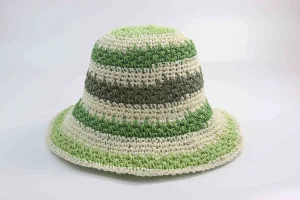
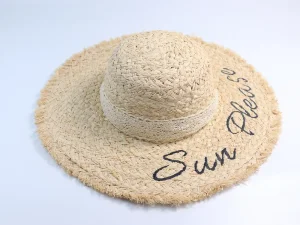
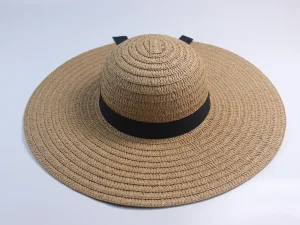
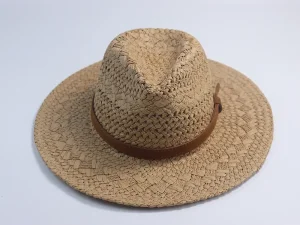
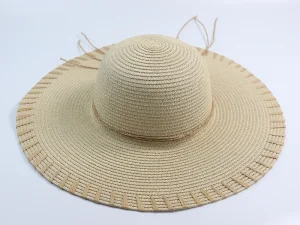
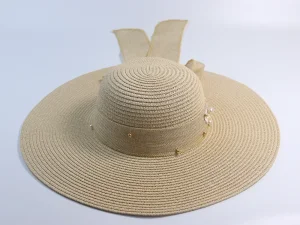
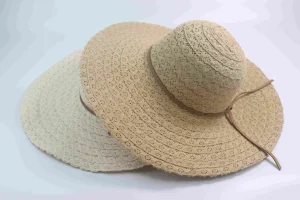
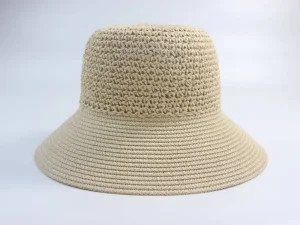
Eight More Styles Built for Iberian Reorder
The complete hot-products line: crochet, western, paper straw, fedora, UPF floppy, sun-protective beach, fashion straw and fisherman bucket formats.
FAQ
Questions Portuguese Buyers Ask Most
Direct answers on MOQ, Portugal-specific logistics, documentation and customization scope.
What is the minimum order quantity for custom straw hats shipped to Portugal?
Our starting quantity is 50 to 100 pieces per design, depending on material and craftsmanship. This lets Portuguese boutiques, resort buyers and emerging brands test a style across one short summer season before committing to a larger program.
Which Portuguese ports do you ship to, and how long does it take?
We ship from Qingdao Port to Leixões and Lisbon by sea, typically 32–40 days in transit. Inland transport from our Linyi factory to Qingdao takes 2–3 days, and customs clearance in Portugal usually takes 2–4 days. Samples and urgent small orders can be sent by air or express courier.
Can you supply documentation suitable for EU and Portuguese customs?
Yes. We prepare commercial invoices, packing lists, material and fiber declarations, and origin documentation. We recommend confirming HS classification and fiber composition in writing before booking freight, as misclassification is the most common cause of delays at Portuguese ports.
Can we add our own brand logo, labels and packaging?
OEM and ODM production is our core business. We customize shape, material, color, size and hat bands, and can add woven labels, embroidered logos, patches and hang tags. Our in-house designers can also develop new styles from your mood board or reference samples.
What materials are best for the Portuguese climate?
Raffia and paper straw perform well for resort and retail styles thanks to breathability and lightweight construction. For Douro Valley and active tourism use, ventilated paper straw or cotton-blend knit visors are usually preferred for sweat management and packability.
How do you handle UPF and sun-protection claims?
Sun-protection language should be backed by weave density and construction data rather than used as a generic label. We can supply weave specifications and, where required, discuss testing arrangements so the UPF claim on your packaging is defensible under EU expectations.
How fast does your team respond to buyer requests?
We respond and take action within 8 hours, covering product questions, sampling, order follow-up and after-sales service. This is particularly relevant for Portuguese buyers working to a compressed April-to-June delivery window.
What else do you manufacture besides straw hats?
Alongside straw hats, we manufacture straw bags, paper bags, children's straw hats, toy hats, lifeguard hats, sun visors and winter hats, which allows consolidated shipments for Portuguese and Iberian distributors.
Hot products manufacturers Portugal
Straw hat factory serving Portugal
Panama hat supplier Leixões
Raffia floppy hat OEM
UPF 50 beach hat wholesale
Algarve resort headwear supplier
Kids straw hat and bag set
Low MOQ hat factory Iberia
Plan Your Portuguese Season Before the Calendar Closes
Send your style references, target quantity and destination port. Our team replies within 8 hours with material recommendations, a sampling plan and a production timeline scheduled backwards from your May arrival date.