
Fast-Moving Styles for Hungary
Four Hot Sales SKUs Hungarian Buyers Reorder
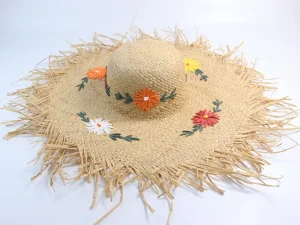
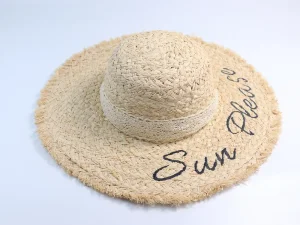
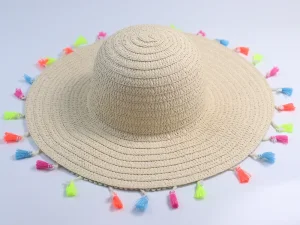
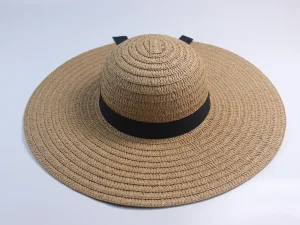
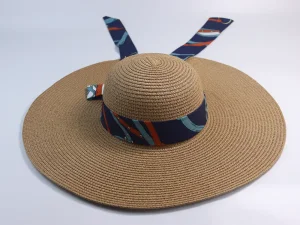
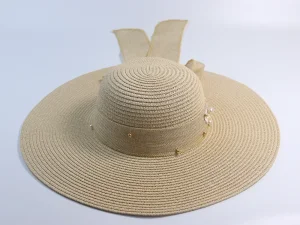
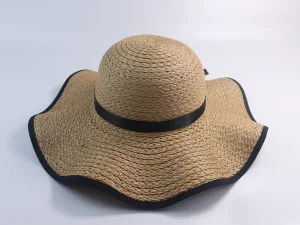
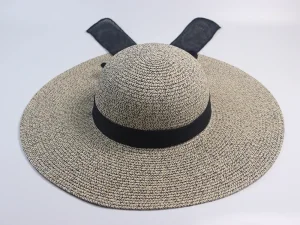
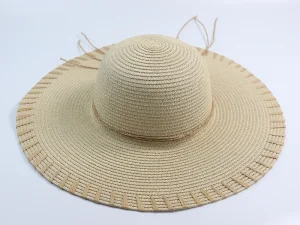
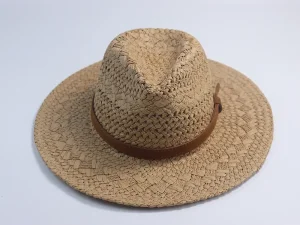
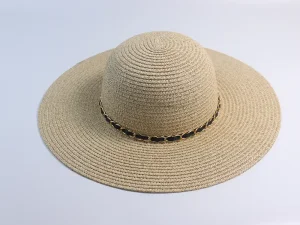
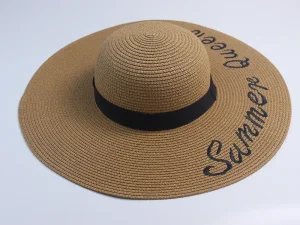
Selected from our highest-volume production lines for Central European retail seasons. These four silhouettes cover resort retail, boutique fashion, family beach programmes and promotional gifting — the four demand clusters we see most often from Budapest, Debrecen and the Balaton retail corridor.
0Years of Hat Manufacturing
0Export Countries Served
0Global Distributor Partners
8hReply & Action Window
Hungary-focused note: EU sizing, CE-relevant labelling and recyclable polybag options are available on request.
Send Inquiry Now
Local Market Intelligence
Why the Hungary Market Is a Smart Entry Point for Central Europe
Hungary sits at the geographic and logistical heart of Central Europe. As a full European Union member since 2004, it applies the same product safety, labelling and consumer-protection framework as Germany, Austria and Slovakia — which means a single compliance strategy can support expansion across the entire region once a Hungarian channel is established.
The domestic demand picture is unusually seasonal and unusually concentrated. Lake Balaton, the largest freshwater lake in Central Europe, transforms each May–September into a dense retail corridor of beachwear boutiques, resort hotels, marina shops and souvenir stands. Budapest adds a year-round city-break tourism stream, and the Danube Bend and Tokaj wine regions draw steady weekend traffic. For headwear, this produces a predictable, repeatable summer peak that importers can plan around with remarkable precision.
Hungarian buyers are typically mid-sized wholesalers, multi-brand fashion retailers, pharmacy-and-drugstore chains and promotional-gift distributors. They tend to work with tighter order quantities than German or French counterparts, value fast sampling turnarounds, and respond strongly to European-style presentation — clean photography, accurate size charts, consistent carton markings and paperwork that clears EU customs without friction.
- EU single-market access — one compliance framework covers Hungary, Austria, Slovakia, Slovenia, Croatia and Romania.
- Balaton-driven seasonality — a concentrated May–September window creates clear reorder cycles for straw and sun hats.
- Price-sensitive but quality-aware — Hungarian retail rewards suppliers who balance fabric consistency with competitive landed cost.
- Small-batch experimentation culture — boutiques test new shapes every season, favouring MOQ 50–100 pcs suppliers.
Illustrative Demand Profile — Hungary Headwear by Channel
Illustrative qualitative model based on buyer conversations in the region. Not a statistical forecast.
Structural Advantages
What Chinese Hat Factories Genuinely Do Better
The China advantage in headwear is not simply cheap labour. It is a mature, vertically integrated supply ecosystem — fibre twisting, weaving, blocking, dyeing, trimming, labelling and packing within a short driving radius. For Hungarian buyers, that translates directly into three things: speed of sampling, consistency at scale and flexibility on small MOQ.
Vertically Integrated Production
Raw raffia and paper straw arrive, are sorted, twisted, woven, blocked, trimmed, labelled and packed in one factory footprint. That reduces handoff delays and protects shape consistency between production batches — the single most common quality complaint in alternative sourcing regions.
Speed-to-Sample Culture
Chinese factories compete on how quickly they can turn a reference photo into an approvable sample. For Hungarian boutiques working to a tight May–September window, a two-week sampling cycle versus a six-week cycle can be the difference between launching in season and missing it entirely.
Real Low-MOQ Flexibility
Our starting quantity is 50 to 100 pieces per design. That is genuinely achievable because the production line is organised around mixed-batch weaving, not high-volume single-style runs — ideal for Hungarian multi-brand retailers who need assortment breadth rather than depth.
Material Depth
Raffia, paper straw, natural grass straw, cotton, polyester and knitted constructions are all sourced within the same ecosystem. A single supplier can therefore carry a buyer from premium resort raffia through to promotional paper straw without a second onboarding cycle.
Export Infrastructure
Linyi sits within easy reach of Qingdao Port, one of China's major container gateways. FCL and LCL sea freight to European ports is routine, and consolidated shipments let Hungarian importers share container space across multiple SKUs and multiple suppliers.
Private-Label Maturity
OEM and ODM are the default operating model, not an add-on service. Woven labels, printed hangtags, custom bands, embroidery, patches and recyclable polybag packaging are all handled inside the production flow — which shortens the path from concept to retail-ready carton.
Industry Trends
Five Forces Reshaping Headwear Sourcing in 2026
These trends are visible in the briefs Hungarian and Central European buyers are actually sending. They are not predictions — they are patterns in current purchase behaviour.
1. Sustainability Becomes a Procurement Filter
EU green-claims scrutiny is pushing buyers to request documented fibre origins, recyclable packaging and reduced plastic use. Natural raffia, paper straw and unbleached grass straw are increasingly positioned as the compliant default rather than a premium niche — and suppliers who can evidence fibre sourcing win the brief.
2. Small-Batch, Assortment-Led Buying
Multi-brand retailers in Budapest and regional cities are reducing depth and increasing breadth. A single order might contain eight colourways of the same floppy hat at 60 pieces each. Suppliers organised for mixed-batch production win this business; suppliers optimised only for single-style volume runs lose it.
3. Functional UPF Claims as a Selling Point
Sun-protection messaging has moved from marketing flourish to product specification. UPF 50 constructions, tighter weave densities and wider brim geometries are now standard requests, particularly for pharmacy and drugstore channels which pair hats with sun-care products.
4. Compressed Lead-Time Expectations
Post-pandemic inventory discipline means buyers commit later. A supplier who can compress sample approval to two weeks and bulk production to four to six weeks after deposit is systematically preferred over a cheaper supplier who needs twelve weeks from brief to load.
5. Hybrid Physical-Digital Retail
Hungarian resort shops increasingly pair a physical storefront with an online catalogue and social content. That raises the bar on product photography, consistent colour across batches and packaging that photographs well — all of which are now legitimate sourcing criteria rather than afterthoughts.
6. Consolidation Around Fewer, Better Suppliers
Managing eight suppliers across four categories is expensive. Buyers are consolidating onto suppliers who can cover hats, bags, children's sets and winter accessories under one account — reducing audit overhead, freight complexity and quality variance in a single move.
Localised Application Scenarios
Where Our Hot Sales Styles Actually Sell in Hungary
Sourcing decisions improve when the end-use context is clear. These are the four commercial scenarios our Hungarian and Central European buyers most commonly describe, and the product logic that fits each one.
Lake Balaton Resort Retail
Beach boutiques and marina shops around Balaton need eye-catching wide-brim silhouettes that photograph well and pack flat for tourist carry-on luggage. Floppy raffia hats and foldable paper straw styles with strong colour blocking are the workhorses here. Packaging should be crush-resistant and light — buyers frequently consolidate to island shops by van.
Budapest Fashion Boutiques
City-centre multi-brand retailers and concept stores want elevated styling: embroidered raffia western hats, structured paper straw fedoras and boater silhouettes with ribbon bands. Small runs per colourway, premium hangtags and boutique-grade photography assets matter more than unit price at the low end.
Family & Children's Beach Programmes
Supermarket chains and family retailers build summer promotional islands around matching parent-and-child sets. Our kids hat-and-bag combo is designed exactly for this: coordinated colour story, safe materials, and carton configurations that allow a retailer to merchandise a complete family display from a single pallet.
Promotional & Corporate Gifting
Event organisers, beverage brands and tourism boards order sun visors and lightweight paper straw hats as branded giveaways for summer festivals and outdoor activations. Low unit cost, fast turnaround and clean area for logo printing are the deciding criteria — visor and paper straw lines are built for this channel.
Macro Solution Framework
A Category-Level Sourcing Solution, Not Just a Product List
Buyers who succeed in Central Europe rarely purchase hats as isolated transactions. They build a seasonal headwear programme — a structured assortment with defined price tiers, defined material logic and defined reorder triggers. Our role is to support that structure from the factory side.
Practically, this means we recommend an assortment architecture rather than filling a purchase order. A typical Hungarian summer programme might run three tiers: an opening price point in paper straw for volume and promotional placement, a mid tier in raffia for boutique and resort retail, and a premium tier in natural grass straw for department-store and gifting channels. Each tier has its own MOQ, its own sampling timeline and its own packaging standard.
On top of the tier structure we layer channel-specific finishing: recycled kraft hangtags for sustainability-led retailers, printed belly bands for promotional distributors, and bilingual care labels in Hungarian and English for domestic compliance clarity. This is what separates a factory partner from a catalogue.
Commercial Visibility
Weekly production status reports, pre-shipment inspection photos and carton-level packing lists — delivered as standard, not on request.
Single Point of Contact
One account manager owns your brief from sampling through after-sales, with an 8-hour response standard covering every stage.
Assortment Advisory
We share what is actually reordering across our other European accounts, so Hungarian buyers can benchmark their plan against real sell-through patterns.
OEM & ODM Workflow
A transparent six-step process that keeps Hungarian buyers informed from first brief to container loading.
Share Your Brief
Style references, material preference, size range, colourway count, branding and target quantity.
Design & Sampling
Our in-house designers propose materials and constructions, then produce physical samples for review.
Approval & Order
Confirm samples, labels, packaging, carton markings and delivery schedule before deposit.
Bulk Production
Material sorting, weaving, blocking, trimming and finishing — all under one factory roof.
Quality Inspection
Final QC on shape retention, stitching integrity, dimensional accuracy and trim attachment.
Export Shipping
FCL or LCL sea freight through Qingdao Port, with documentation prepared for EU customs clearance.
Global Procurement Context
What International Buyers Consistently Ask For
Hungarian buyers are entering a procurement conversation that is already well defined by buyers in North America, Western Europe, Australia and Japan. Understanding that shared baseline is useful, because it shows which requirements are market-specific and which are now simply the global standard.
Predictable Quality
Third-party inspection access, pre-shipment photo evidence and clear AQL targets. No buyer anywhere now accepts "trust us" as a quality control mechanism.
Custom Private Label
Woven labels, printed hangtags, heat-transfer logos, custom bands and custom packaging. Branding is expected as standard output, not a premium add-on.
Low MOQ Testing
50–100 pcs per design so a new style can be validated before a volume commitment. This is now a baseline expectation across boutique and mid-market retail.
Compliance Documentation
Material composition statements, care instructions and packaging declarations. For EU buyers this is non-negotiable; for other markets it is fast becoming so.
Reliable Logistics
Accurate carton dimensions, honest lead times and a supplier who understands consolidated LCL shipping rather than treating it as an exception.
Responsive Communication
An 8-hour response standard, in English, with a named contact who does not change every quarter. This single factor drives most supplier retention decisions.
Extended Hot Sales Range
Eight More Styles Built for Central European Shelves
The wider hot sales range covers sun visors, foldable beach floppies, western silhouettes and children's sets — giving Hungarian buyers a complete summer assortment from a single production partner.
Not sure which assortment fits your channel? Send your target retail price and quantity — we will propose a matching configuration.
Send Inquiry Now
Buyer Q&A
Questions Hungarian Buyers Ask Us Most
Direct answers on MOQ, customisation, EU compliance, shipping and after-sales. If your question is not covered here, our team replies within 8 hours.
Send Inquiry NowWhat is the minimum order quantity for the Hungary market?
Our starting quantity is 50 to 100 pieces per design, depending on material and construction complexity. This is specifically designed for Hungarian boutiques, multi-brand retailers and wholesalers who want to test new silhouettes before committing to a larger seasonal volume. Mixed-batch orders combining several styles and colourways in one shipment are available.
Can you produce private-label hats with our brand logo?
Yes — OEM and ODM production is our core business. We customise shape, material, colour, size and hat band, and can add woven labels, printed hangtags, embroidery, patches and belly bands. Our in-house designers can also develop new styles from a mood board, a reference photo or a competitor sample. Send your concept via the contact form and we will respond within 8 hours.
How do you ship to Hungary and what are typical lead times?
Bulk orders ship by sea freight from Qingdao Port as FCL or LCL, which is the most cost-efficient method for Hungarian importers bringing volume. Consolidated LCL shipments are routine for smaller buyers and allow sharing container space across multiple SKUs. Samples and urgent small orders can move by air express. We provide accurate production lead times before order confirmation — typically around four to six weeks after deposit, depending on quantity and complexity.
Are your hats suitable for the EU market, including Hungary?
Yes. As an EU member state, Hungary applies European product safety and labelling requirements, and we supply material composition statements, care instructions and packaging declarations on request. Recyclable polybag and kraft packaging options are available. Labelling can be produced in Hungarian and English for domestic clarity. Buyers who plan to expand into Austria, Slovakia, Slovenia or Croatia can use a single compliance approach for the whole region.
How fast does your team respond to a new inquiry?
We respond and take action within 8 hours, covering product questions, sampling requests, order follow-up and after-sales service. Each account is assigned a named contact who does not change between seasons, which keeps communication efficient and reduces repeated back-and-forth during sampling rounds.
What products do you make besides straw hats?
Alongside straw hats, we manufacture paper hats, straw bags, paper bags, children's straw hats, toy hats, lifeguard hats, sun visors, winter hats and other bag categories. This makes a single-supplier summer-to-winter programme practical, and it reduces the audit, freight and quality-management overhead of running multiple suppliers.
Can you match a sample we already have from another supplier?
Yes. Send a physical sample or clear photographs with dimensions and material notes, and our design team will reverse-engineer the construction and propose the closest available material. Where an exact match is not possible, we will explain the closest alternatives and their trade-offs in hand-feel, shape retention and unit cost — before you commit to a sampling round.
Do you offer quality inspection before shipment?
Our in-house QC manager, with 15 years of experience in headwear production, runs final inspection on shape retention, stitching integrity, dimensional accuracy and trim attachment. Pre-shipment photo reports are provided as standard. Third-party inspection is welcome and can be arranged at your nominated agency — we consider this a strength, not a risk.
About the Manufacturer
Shandong Lige Import & Export — One-Stop Hat Partner
Shandong Lige Import & Export Co., Ltd. is based in Linyi City, Shandong Province, within easy reach of Qingdao Port. For more than 15 years we have specialised in straw hats, paper hats, straw bags and paper bags, combining traditional hand-weaving skills with modern blocking, finishing and quality control.
Our customer base spans importers, wholesalers, brand owners and retailers in the United States, Canada, Australia, Mexico, Western Europe and Japan, with more than 25 global distributors and service across 60+ countries. The expertise behind that record is concrete: a production manager with 20 years of experience, a QC manager with 15 years, and a team averaging more than five years of tenure.
For the Hungary market specifically, we combine competitive factory-direct pricing with the documentation discipline European buyers require — and we treat the first small order as the start of a seasonal programme, not a one-off transaction.
20yrsProduction Manager Experience
15yrsQC Manager Experience
5+Average Team Tenure
Direct Contact
Phone: +86 136 8639 8175
Email: [email protected]
WhatsApp: +86 178 6505 3218
Factory Location
Linyi City, Shandong Province, China — a short drive from Qingdao Port, one of China's major container gateways for European sea freight.
Related Categories
Panama Hats · Fedora / Trilby · Cowboy Hats · Boater Hats · Floppy Hats · Visor Hats · Straw Bags
Start Your Hungary Programme
Let's Build Your Next Hat Collection for Hungary
Send your style references, target quantity, destination city and retail price point. Our team responds within 8 hours with material recommendations, a sampling plan, indicative landed costing and a realistic production timeline.