
Floppy
A capability brief for Canadian aquatics operators, municipal procurement teams and outdoor brands sourcing sun-protective lifeguard headwear — from fabric and straw visors to UPF-rated patrol caps, built to Canadian safety, climate and compliance expectations.
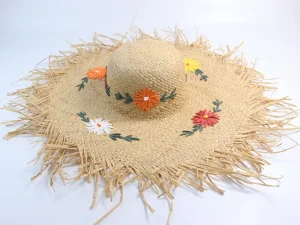
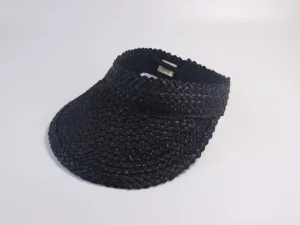
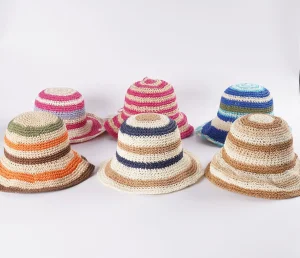
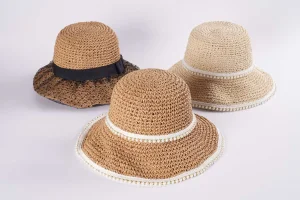
These four silhouettes are the most frequently sampled by Canadian aquatics buyers, resort operators and promotional distributors. Each can be developed in straw, paper straw, cotton canvas or performance polyester, with UV-blocking brim geometry and optional reflective or branding trims.
The Canadian aquatics market is not a scaled-down version of the United States. Municipalities procure through public tenders with published evaluation criteria, provincial safety regulators publish heat and sun-exposure guidance, and the operating season compresses into roughly ten to fourteen weeks in most provinces. That combination creates three unusual pressures on a lifeguard hat supplier.
First, the season is short but the contract is long. A municipal pool in Ontario or a conservation authority beach in Manitoba may run a May-to-September staffing window, yet the procurement award is often valid for three to five years with option years. Suppliers must therefore guarantee that a specified fabric, colourway and brim specification can be reproduced identically in year four — not just in year one. Colour continuity across reorders is a genuine, underestimated risk in textile sourcing.
Second, the geographic span is enormous. A single national aquatics brand may need headwear for outdoor pools in the Lower Mainland of British Columbia, indoor facilities in Alberta, urban splash pads across the Greater Toronto Area, and seasonal beaches in Atlantic Canada. UV intensity, humidity, salt spray and wind loading differ substantially across those zones, and a hat that performs on an Okanagan lake beach may fail in a windy coastal setting on the Bay of Fundy.
Third, sun safety is increasingly written into policy. Canadian occupational health frameworks, provincial sun-safety guidance for outdoor workers, and municipal aquatic operating standards all reference headwear, shade and UV protection as mitigating controls. That pushes lifeguard hats from a cosmetic uniform item into a documented protective-equipment decision — and buyers now ask for fabric specifications, UPF ratings and care-instruction documentation rather than simply a photo and a price.
Most Canadian outdoor aquatic programs run ten to fourteen weeks. Deliveries must land before the staffing ramp-up, not during peak season, so production and freight planning matter more than raw speed.
Northern latitudes deliver intense summer UV with long daylight hours and high reflection off water and snow-melt surfaces — wide brims and UPF-rated fabrics stay functional requirements.
Sun-safety guidance, uniform standards and public tender scoring mean specification sheets, test documentation and consistent colour matching carry real weight.
Understanding where a lifeguard hat sits in the global headwear supply chain helps Canadian buyers write better specifications and ask sharper questions during sampling.
Performance polyester, recycled PET yarn and cotton canvas each have distinct lead times and minimum order quantities at the yarn stage. Natural straw programs — raffia, wheat straw, paper straw — depend on agricultural harvest cycles, which means a Q1 sampling decision can be constrained by a Q3 harvest outcome. Buyers who understand this plan reorders earlier.
The headwear manufacturing base concentrates in a relatively small number of producing regions. Capability varies sharply: many workshops can weave a sun hat, but far fewer can execute consistent brim stiffness, colour matching across dye lots, reflective trim application or documented UPF testing. The gap between "can make" and "can certify and repeat" is where procurement risk lives.
North American aquatic demand peaks in the same calendar window as resort, cruise, festival and promotional headwear demand. Ocean freight capacity out of Asian loading ports tightens predictably in the March-to-June build. Canadian buyers who place confirmed orders in late Q4 or early Q1 routinely secure better freight rates and cleaner delivery windows than those ordering in April.
Recycled polyester from post-consumer PET has moved from a premium niche to a mainstream specification in North American uniform programs. Buyers should ask whether the recycled content claim is traceable at the yarn stage and how it is documented — "recycled" without a chain-of-custody record is a marketing claim, not a procurement specification.
Rather than treating a lifeguard hat as a standalone purchase, treat it as one component in a sun-protection and uniform system. This framework is how experienced Canadian procurement teams structure the problem.
Define fabric composition, brim dimensions, airway ventilation, chin-strap retention, colour reference (Pantone or equivalent) and required UV performance before sampling begins.
Test in real conditions — wind, wet-dry cycling, chlorine splash, sunscreen contact — not only in a showroom. Validate colour fastness and brim stiffness after repeated laundering.
Secure a documented specification record so reorders in later contract years match the originally approved sample. This is the single most requested capability by municipal buyers.
Embroidered crests, woven labels, heat-transfer logos and reflective patches are all viable. Confirm application method against fabric type — heat transfer on polyester performs differently than on straw.
Choose FCL for full-season volume, LCL for mixed apparel shipments, and air or express only for samples and emergency replenishment. Build in a buffer against the spring freight peak.
Prepare commercial invoices, HS classification, packing lists and care-instruction inserts that align with Canadian retail and municipal receiving expectations from the very first shipment.
Compliance is not paperwork appended at the end of a project — it shapes the product, the packaging and the shipping plan. Here is what Canadian buyers consistently need addressed.
Textile care labeling and consumer-facing product information in Canada generally needs to serve both English and French-speaking markets. Plan the label artwork at sampling stage so the label does not become a last-minute bottleneck before production release. Fiber content, country of origin, care instructions and any performance claim should all be reviewed together.
Headwear classification depends on construction, material and whether the item is knitted, woven or felt. A straw visor and a performance polyester cap can sit in different tariff positions. Buyers should confirm the HS code with their customs broker early — landed cost modelling is unreliable until classification is settled.
If a hat is marketed with a UPF rating, the claim should be supported by test documentation aligned to a recognised standard and should be specific about the fabric tested — not the finished hat. Buyers should request the test basis and confirm whether the rating applies to the fabric as supplied or after washing.
Occupational health and aquatic operating requirements vary by province. A supplier that understands this distinction — rather than offering one generic "safety-compliant" statement — helps buyers assemble documentation that actually survives internal review.
Headwear that performs well on a Mediterranean beach is not automatically right for a Canadian operation. These are the deployment contexts buyers most often raise, and the design priorities each one implies.
| Canadian Deployment Context | Operating Conditions | Headwear Priority | Recommended Construction |
|---|---|---|---|
| Municipal Outdoor Pools Ontario, Quebec, BC urban centres |
Full sun, chlorine splash, frequent laundering, uniform branding requirements | Colour stability, repeatable fit, embroidered crest durability | Cotton canvas or performance polyester, structured brim, chin cord |
| Conservation Authority & Provincial Park Beaches | Wind exposure, salt and fresh water, long shifts, high UV reflection off water | Retention in wind, wide brim coverage, quick-dry fabric | Wide-brim performance fabric, adjustable strap, ventilated crown |
| Private Resort & Hotel Aquatics | Guest-facing presentation, brand aesthetics, lighter shift patterns | Premium look, custom colourways, subtle branding | Straw or paper straw visor, ribboned brim, tone-on-tone logo |
| Outdoor Adventure & Rafting Operators | Water immersion, rapid dry cycle, abrasion, minimal laundry infrastructure | Fast drying, secure fit, low water retention | Lightweight synthetic, mesh crown, breakaway chin strap |
| Community Splash Pads & Camps | High-volume low-cost procurement, mixed sizes, frequent replacement | Low unit cost, size flexibility, easy restock | Budget visor or bucket styles, adjustable closure, bulk packing |
| Event & Promotional Programs | Short lead times, printing-heavy decoration, one-season use | Decoration surface, fast sampling, competitive MOQ | Straw visor or floppy hat with wide print area, low minimums |
Each of the following can be developed within the same program and consolidated into a single shipment, which reduces per-unit freight cost and simplifies receiving at Canadian distribution centres.
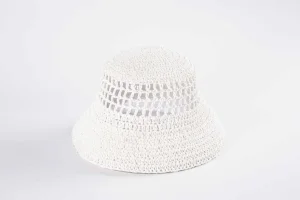
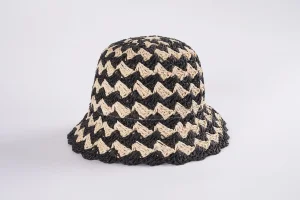
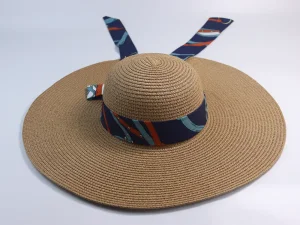
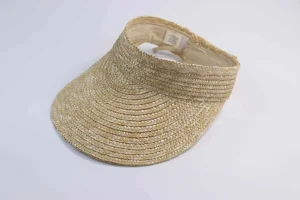
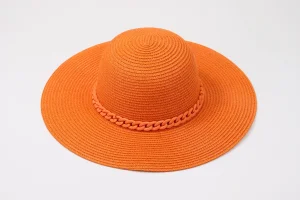
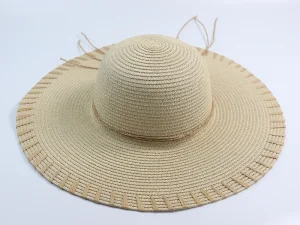
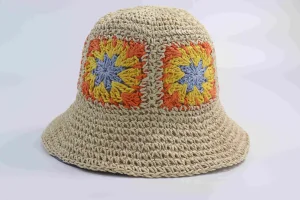
Canadian buyers writing multi-year contracts need a forward view, not only a snapshot of today's catalog. These are the technical directions our product development team expects to shape specification sheets through the late 2020s.
Post-consumer PET conversion from bottle to yarn with documented chain of custody moves from a marketing differentiator to a baseline expectation in municipal and institutional tenders. Buyers should begin asking for yarn-stage traceability now, before it becomes a mandatory scoring criterion.
Mesh panels, laser-perforated crown bands and moisture-wicking sweatbands are shifting from premium options to standard features. In humid Canadian summers, comfort directly affects staff compliance with uniform rules — an underrated adoption factor.
For operators running dusk and evening aquatic programs, reflective piping and high-visibility trims integrated into the brim or strap improve visibility without compromising the sun-protection silhouette. Expect more requests for dual-purpose day/night specifications.
As sun-safety guidance matures, "UPF 50" statements will increasingly need a named test standard and a clear statement of what was tested. Suppliers that can produce this documentation on request will have a structural advantage in public tender scoring.
Expect growing pressure for structured product data — material composition, recycled content share, care instructions and end-of-life guidance — attached to each stock-keeping unit. Buyers who build their specification records to accommodate this now will face far less disruption later.
Direct answers on MOQ, customization, shipping, compliance documentation and response times for the Canadian market.
Send us your specification brief, target quantity, destination province and required delivery window. Our team will respond within 8 hours with material recommendations, a sampling plan and a production and freight timeline tailored to the Canadian season.