
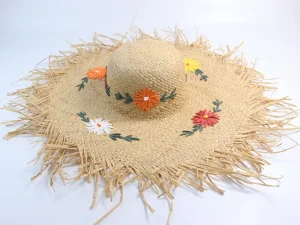
Tokyo Spring Program · Wholesale Handmade Raffia Straw Lady Floppy Hat — Customizable Summer Hat
View ProductTokyo is not a volume market in the way North America is. It is a precision market. Japanese buyers at the Tokyo wholesale, department-store and specialty-retail levels evaluate bags on tolerance, finish consistency, packaging discipline and delivery punctuality — then they evaluate price. A factory that can pass a Tokyo inspection can usually pass any inspection in the world; the reverse is not true. This page documents how Shandong Lige Import & Export Co., Ltd. approaches the Tokyo "Other Bags" category, and gives buyers the technical and commercial context to compare suppliers on evidence rather than on brochure language.
Tokyo Spring Program · Wholesale Handmade Raffia Straw Lady Floppy Hat — Customizable Summer Hat
View Product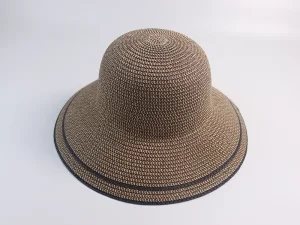
Tokyo UV Season · High-Quality Wholesale Fashion Female Bucket Summer Hat, Big Brim Sunshine Hat
View Product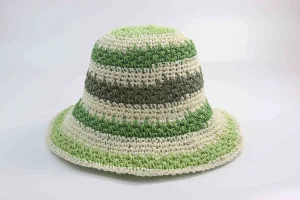
Tokyo Concept Store · Wholesale Trendy Summer Bucket Hat — Custom Crochet Designs Available
View Product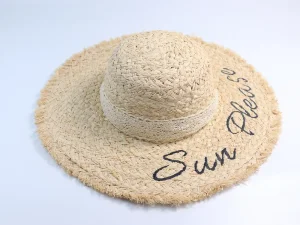
Tokyo Premium Line · Handmade Raffia Western Hat for Women — Customizable Embroidered Straw Hat
View ProductThe Tokyo metropolitan area concentrates an unusual density of bag buyers inside a single rail network. Wholesale clusters around Bakurocho and Higashi-Kanda, where trading companies and wholesale distributors handle small-lot replenishment for regional shops. Department stores and select shops in Ginza, Omotesando, Shinjuku and Marunouchi buy at a different tier — seasonal, brand-curated, with strict presentation standards. Specialty chains in Koenji, Shimokitazawa and Kichijoji buy emerging silhouettes in smaller runs and rotate them faster.
What ties these tiers together is a shared expectation: a bag must arrive exactly as approved. Japanese quality control culture rewards documentation. Factories that supply Tokyo typically maintain per-lot measurement records, tolerance statements, color approval chips and photographic inspection reports. Buyers do not ask for these because they are fashionable; they ask because returns and re-orders in Japan are relationship events, and a single dimensional drift can end a multi-season program.
Small-lot orders, mixed-SKU cartons, fast turnaround on re-orders. The priority is repeatability: the fifth shipment must match the first.
Brand-consistent trims, custom labels, color approval chips, and packaging that photographs correctly under retail lighting.
Souvenir and gift-segment bags demand visual differentiation, compact packing and price points that survive duty and retail margin.
The non-leather, non-luggage bag category — woven totes, paper bags, raffia shoppers, crochet pouches, mixed-material market bags — has become one of the fastest-moving accessories segments worldwide. It sits at the intersection of three structural forces: a global shift toward natural and recycled materials, the fragmentation of retail into smaller seasonal drops, and rising compliance expectations in Europe and East Asia.
Paper straw, raffia, jute, cotton canvas and recycled polypropylene are displacing virgin synthetics in the entry-to-mid tier. Buyers cite two reasons: consumer sentiment and actual regulatory pressure in the EU on single-use plastics and packaging disclosure.
Japan's market responds to the same forces through a different vocabulary — "eco" and "natural material" labels sell at department-store level, while functional claims such as UV protection and packability sell at the wholesale and specialty tiers.
Chinese woven-goods clusters — Shandong, Zhejiang and Guangdong — have consolidated around factories that can handle both handwork and semi-automated finishing. The competitive gap is no longer "can you make it" but "can you make it the same way fifty times".
For Tokyo buyers, this matters because an inconsistent factory looks identical to a consistent one in a sample photo. Differentiation lives in production records, in-line checks and packing discipline.
Sea freight between North China and Japan is short but not immune to schedule shifts. Factories that plan backward from a delivery window — rather than forward from a production start — protect buyers from the most expensive failure mode: arriving after the retail floor has already been reset.
"Other bags" increasingly overlaps with headwear: raffia hats and raffia bags ship as coordinated sets, and buyers want one supplier for both. Vertical range reduces sampling cycles, simplifies labeling and consolidates freight.
Eight styles that have proven adaptable to Japanese retail tiers — from Bakurocho wholesale re-orders to Ginza-adjacent select-shop displays. Every item below can be produced in raffia, paper straw or natural grass, with custom trims and labels.
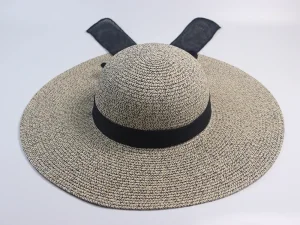
Tokyo Multi-Colour Series · Lady Hat Summer Floppy with Big Brim — Premium Quality
View Product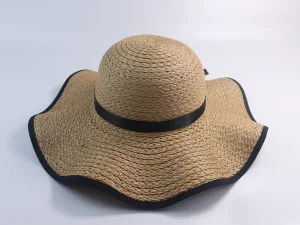
Tokyo Resort Program · Women's Large Brim Summer Beach Hat — Handcrafted Wavy Edge, Sun Protection
View Product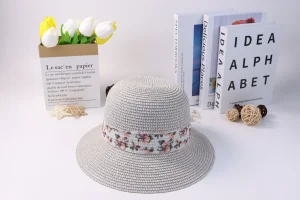
Tokyo UV Collection · Wholesale Stylish Beach Hats for Women — UV Protection & Trendy Designs
View Product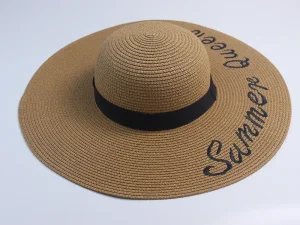
Tokyo Embroidery Line · Custom Embroidery Women's Wide Brim Straw Hats — UV Protect Beach Hats
View ProductTokyo Colour Story · Multi-Colours Lady Summer Hat Floppy with Big Brim
View Product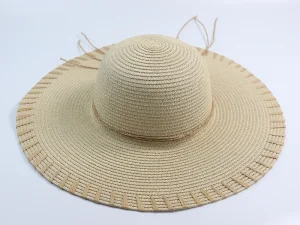
Tokyo Travel Retail · Women's Sun Straw Hat Wide Brim UPF 50 Foldable Floppy Beach Hat
View ProductTokyo Ladies Fashion · Multi-Colored Summer Floppy Hat for Ladies — Big Brim, Customizable
View Product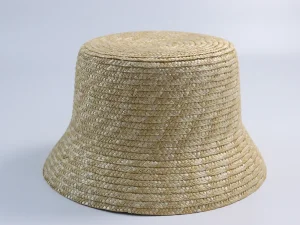
Tokyo Unisex Range · Summer Straw Panama Hat — Custom Logo for Beach, Sports & Events
View ProductCategory decisions in Japan are driven by the shelf, not by the catalog. These are the six real contexts where "other bags" and coordinated woven headwear generate revenue in Tokyo.
Coordinated hat-and-bag sets displayed together. Buyers need identical colorways across two product types from a single supplier — a range advantage a hat-only or bag-only factory cannot match.
Short-lived beach-house, festival and resort pop-ups in and around Tokyo need 50–150 piece runs with fast turnaround and compact, damage-resistant packaging.
Tokyo's gifting culture rewards presentation. A tightly packed raffia tote with a branded hangtag becomes a viable gift item; a crushed one does not.
Hospitality buyers around Tokyo Bay and inbound-tourism corridors buy woven bags as amenity upgrades and retail add-ons.
Apparel brands add a woven bag as a low-risk capsule extension. MOQ from 50 pieces per design makes testing a new silhouette commercially viable.
Branded woven totes with embroidered or printed logos for events and seasonal campaigns, where logo placement tolerance is judged under close inspection.
Buyers increasingly ask factories to describe not just what they can make, but how their process will evolve. Below is the technical direction we are working along — stated plainly, without overclaiming certifications we do not hold.
Locking fiber specifications — raffia grade, paper straw twist counts, natural grass stiffness — into written internal standards so the fifth order matches the first.
Defining per-SKU dimensional tolerance bands at blocking, brim shape and handle drop, with in-line checkpoints recorded per lot rather than per season.
Physical color chips retained per production run, and trim suppliers consolidated so ribbon, label and thread match across re-orders.
Photographic inspection reports, lot records and packing manifests delivered alongside the shipment — the evidence Tokyo buyers use to evaluate a supplier.
The most expensive line item in bag sourcing is not the unit price — it is the coordination cost of managing multiple vendors across a seasonal range. A consolidated program reduces sampling cycles, harmonizes colorways, simplifies labels and consolidates freight.
| Program Dimension | Typical Fragmented Sourcing | Consolidated Lige Program | Tokyo Buyer Benefit |
|---|---|---|---|
| Sampling cycle | Separate samples from hat and bag vendors | Single coordinated sample set | Faster approval; colorways match on the shelf |
| Minimum order | High MOQ per vendor, forced volume | From 50–100 pcs per design | Low-risk seasonal testing |
| Trims & branding | Inconsistent labels and ribbons | Standardized trim suppliers | Consistent presentation across SKUs |
| Freight | Multiple containers, multiple schedules | Consolidated shipment from Qingdao | Lower landed cost, fewer arrival risks |
| Quality evidence | Verbal assurance only | Lot-based inspection records | Auditable quality for retail partners |
| Communication | Vendor-by-vendor follow-up | 8-hour response and action | Faster resolution of production issues |
Shape, material, color, size and band customization, plus branding through woven labels, patches and hang tags. Our in-house designers develop new silhouettes from a mood board or reference sample — relevant for Tokyo buyers who want a unique SKU rather than a catalog repeat.
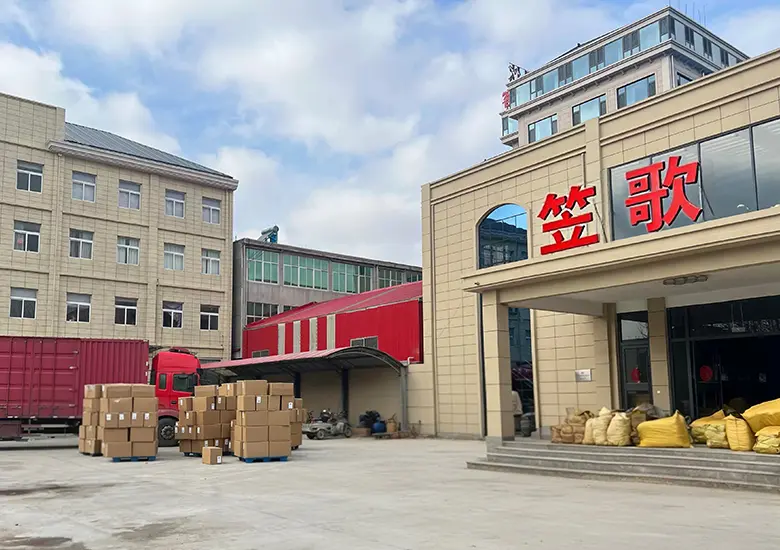
Raw material sorting, weaving, blocking, finishing and final inspection happen under one roof in Linyi, Shandong. That structure is why the process can be documented lot-by-lot — and why pricing stays stable without intermediary margin.
A production manager with 20 years in woven headwear and bags, and a QC manager with 15 years — practical depth that shows up in tolerance decisions, not marketing copy.
Over 15 years of manufacturing, exports to more than 60 countries and relationships with 25+ global distributors, including long-standing programs in Japan, North America and Western Europe.
An 8-hour response and action commitment covering product questions, sampling, order follow-up and after-sales — with a single dedicated contact per account. Registered as Shandong Lige Import & Export Co., Ltd., Linyi, Shandong, China.
Straight answers on minimums, customization, lead times and shipping to Japan. For anything not covered here, our team replies within 8 hours.
Send Inquiry NowSend style references, target quantity and destination market. Our team replies within 8 hours with material suggestions, a sampling plan and a production timeline — from Linyi, Shandong, through Qingdao Port, to your Tokyo warehouse.