The German straw bag category is not a single market. It behaves like a set of micro-markets, each of which expects something different from a manufacturer. A supplier that treats Germany as one homogeneous buyer will over-produce the wrong styles or under-serve the wrong channel.
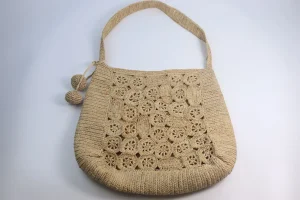
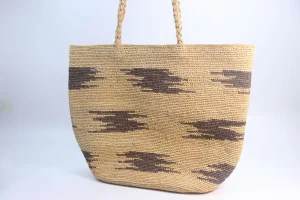
Beach resorts and lakeside towns — the Baltic and North Sea coastal retail clusters around Sylt, Rügen, Timmendorfer Strand and Usedom demand raffia crossbody bags and small shoulder totes with strong print and branding potential for tourist boutiques. These buyers want low minimums, fast repeat cycles and photogenic styling that works on Instagram and printed postcards.
City concept stores — in Berlin, Hamburg, Munich and Cologne, buyers select straw bags as accessory statements alongside linen apparel. Here, the story matters as much as the product: material provenance, hand-weaving technique, dye process and packaging all contribute to margin.
Online DTC and marketplace sellers — the most operationally demanding channel. They need consistent carton counts, uniform sizing, clean e-com images and the ability to reorder a single SKU without resetting tooling. Suppliers who cannot support 50–100 piece reorders quietly lose these accounts to competitors.
Sustainability-driven retail — a fast-growing segment in Germany, supported by consumer awareness of textile certifications. Bags positioned as natural-fiber, plastic-free or repairable require documentation that reaches back through the fiber supplier — not just the assembly line.
Raffia & paper straw
Natural grass straw
Plastic-free packaging
Reinforced handles
Low MOQ reorders
E-com ready cartons