
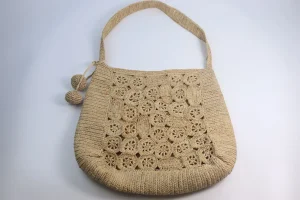
 Crossbody
High-Quality Handmade Raffia Straw Bag, Lightweight Woven Crossbody Bag for Summer Holiday Suppliers, Factories
View ProductFour proven silhouettes for the Australian summer window — November to February — where coastal lifestyle, cruise departures and outdoor hospitality converge. Every style is available for OEM/ODM production with low minimums.
CrossbodyHigh-Quality Handmade Raffia Straw Bag, Lightweight Woven Crossbody Bag for Summer Holiday Suppliers, Factories
View Product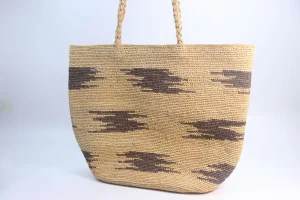 Tote
China Women's Handwoven Raffia Straw Tote Bag, Large Capacity Summer Beach Bag, Vintage Vacation Shoulder Bag Manufacturers, Factory
View Product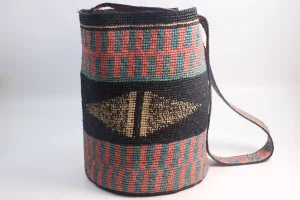 Old Money
Wholesale Old Money Style Raffia Straw Bag, Handmade Woven Straw Shoulder Tote, Beach Picnic Holiday Handbag Suppliers, Factories
View Product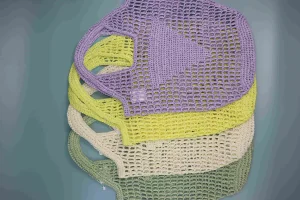 Vintage
High-Quality Women's Handwoven Straw Tote Bag, Large Capacity Summer Beach Bag, Vintage Vacation Shoulder Handbag Manufacturer, Suppliers
View ProductSydney is not simply "Australia's biggest city" for accessories buyers. It is a specific commercial ecosystem with its own seasonal rhythm, price architecture and moisture-driven product expectations. Buyers who treat it as a generic Western market consistently over-order the wrong SKUs.
Sydney's retail summer runs December to February, with the buying window for straw bags closing in August–September. Stock that lands in November is late; stock that lands in September captures the full cruise, Christmas gifting and festival build-up. This means production must be committed roughly 90–120 days ahead of the Australian peak — far earlier than many first-time importers assume.
Coastal Sydney — Bondi, Manly, Cronulla, the Northern Beaches — creates a brutal test environment: salt air, UV index regularly above 10, and summer humidity that softens untreated paper straw. Buyers should specify raffia or natural grass over paper straw for beach-adjacent retail, and require moisture-resistant linings and reinforced stitching on handles.
The Sydney market splits cleanly. Premium retail (Paddington, Double Bay, Mosman boutiques) supports AUD $120–260 handbags where hand-feel, hardware and storytelling justify margin. Volume retail (markets, surf chains, e-commerce) sits at AUD $29–69 and is entirely driven by landed cost. A single supplier catalog rarely serves both — segmentation at the factory stage is essential.
Sydney's accessory distribution is concentrated around a handful of wholesale agents and giftware showrooms, plus a strong roster of independent boutique owners who buy in small runs of 50–200 units. Direct-to-factory relationships increasingly displace traditional agents because importers want traceable material specs and private-label branding without a middle layer of markup.
Straw and raffia goods entering Australia fall under biosecurity review. Buyers should confirm that suppliers provide fumigation or heat-treatment documentation where required, along with clear material declarations. Packaging must meet Australian labelling norms, and brands making "natural" or "biodegradable" claims should hold supporting material evidence.
Sydney's outdoor culture — coastal walks, harbour picnics, festival season, the January cruise departures from Circular Quay — makes woven bags functional rather than purely decorative. Buyers report strongest sell-through on mid-size totes with structured bases that hold a towel, water bottle and sunscreen, and on crossbody styles for market and festival use.
Indicative figures drawn from typical OEM programs serving Australian and wider Oceanian buyers. Use them as benchmarks when comparing quotations.
Three structural shifts are reshaping how straw bags are specified, priced and marketed across Australian and global retail.
Machine-uniform bags now read as commodity. Buyers are shifting toward visible weave irregularity — the "made by hands" cue — and charging accordingly. This favours suppliers who can still produce genuinely hand-woven construction at scale rather than simulating it.
Australian retailers increasingly ask suppliers to identify fibre origin, treatment method and dye compliance. Suppliers who can answer in writing — not just verbally — win the larger programs, because the buyer's own compliance team needs the paper trail.
Inventory risk has pushed Sydney buyers toward 50–150 unit trial runs with a contracted reorder window. Factories that treat small orders as a nuisance lose the account; factories that build fast-changeover lines capture repeat revenue.
Across North America, the EU, Japan and Oceania, procurement briefs have converged on a recognisable set of demands. Sydney importers are not buying in isolation — they compete for the same factory capacity as buyers from California, Hamburg and Osaka.
The number one complaint from global buyers is batch-to-batch drift: a colour that shifts half a shade, a handle that shortens by two centimetres. Serious buyers now request retained "golden samples," locked material cards and photo-documented pre-production approvals.
EU and Australian buyers now require substantiation behind "natural," "biodegradable" and "eco" language. Suppliers that can name the fibre source, the dye class and the packaging material — and back it with a simple declaration — reduce buyer risk and shorten approval cycles.
Buyers want LCL consolidation for small programs and reliable FCL booking for volume. Sydney-bound shipments typically route through Port Botany, and steady transit reliability matters more than the absolute lowest freight rate — a late container destroys a seasonal window.
The strongest factories now contribute market-specific design input: recommending brim and handle proportions for a given climate, or proposing colour palettes aligned to a retailer's existing range. Buyers reward suppliers who arrive with a point of view.
The modern Chinese woven-goods factory is no longer a room of hand looms. It is a hybrid operation combining artisan handwork with digital production control — and that hybrid is precisely what protects buyers against seasonal risk.
Order tracking, material consumption records and inline QC checkpoints are increasingly standard. Buyers can request photo updates at defined production milestones, which removes the "black box" anxiety that used to push importers toward expensive local agents.
Fibre sorting, weaving, blocking, trimming and final inspection under one roof shortens lead times and stabilises quality. Vertical factories can absorb a late specification change without re-quoting an entire supply chain, which is critical for seasonal accessories.
Factory 4.0 in this category means rapid changeover between designs: a 50-piece trial run for a Sydney boutique can sit on the same line as a 5,000-piece program for a European chain, without the small run being deprioritised into oblivion.
Factories clustered near major container ports — such as the Shandong cluster served by Qingdao — reduce inland transit time and damage risk. For Sydney buyers, a predictable departure schedule is worth more than a marginally lower unit price.
Documented inline and final inspection, retained defect samples and corrective-action logs are now expected. Buyers should ask what the AQL standard is and whether inspection is internal or third-party — the answer separates serious factories from trading intermediaries.
Factories that hold relationships with multiple raffia and grass suppliers can substitute material when a harvest or shipping disruption hits. That material redundancy is the quiet advantage most buyers never see until a crisis year.
Product decisions should follow usage, not aesthetics alone. These are the concrete Sydney contexts that drive repeat purchase.
Bondi, Manly and Cronulla surf shops need totes that survive sand, salt and wet towels. Structured bases and wipeable linings outperform decorative unlined weaves.
Picnic-format bags with insulated compartments and reinforced handles sell strongly into gift and outdoor retail around the harbour foreshore.
Crossbody and small shoulder formats dominate festival retail, where hands-free carry and quick-access closure matter more than capacity.
Circular Quay and White Bay cruise traffic drives demand for lightweight, packable totes bought in the days before departure — a high-impulse category.
Paddington and Double Bay boutiques pair straw bags with resort apparel, favouring "old money" neutral palettes with fine hardware and clean stitching.
Branded woven totes work as hotel amenities, event gifting and corporate summer hampers — a niche where private-label labels and hang tags drive the sale.
Before committing a seasonal budget, run every candidate supplier through these four filters.
Ask for a production video walkthrough, not a catalogue PDF. Trading companies pass through quotes from unknown workshops; a real factory can show loom rooms, blocking stations and inspection benches.
Request a material specification sheet and, where possible, a moisture and abrasion note. Raffia and natural grass outperform paper straw for coastal retail; linings should be specified, not assumed.
Confirm production lead time plus transit plus customs clearance as a single number. A factory quoting 60 days of production but 45 days of uncertain freight is not a 60-day supplier.
Ask specifically how reorders are matched: retained golden samples, locked dye lots, stored patterns. The second order is where most supplier relationships break.
Practical answers on timing, materials, documentation and minimums for the Sydney market.
A coordinated bag-and-hat assortment converts better on shelf and in lookbooks. These companion styles ship from the same production line.
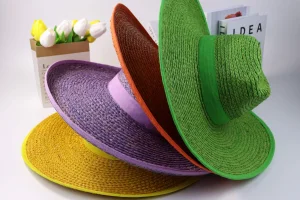 Wide Brim
China Women’s Straw Wide Brim Hat, Breathable Wide Hat for Women Summer Beach Vacation Suppliers, Factories
View Product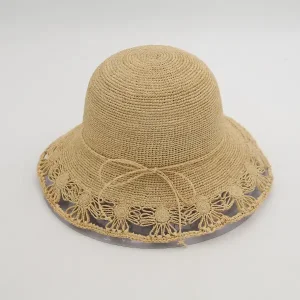 Bucket
China Old Money Style Wide Brim Bucket Hat for Women, Soft Woven Straw Sun Hat, Casual Outdoor Travel Hat Manufacturer, Suppliers
View Product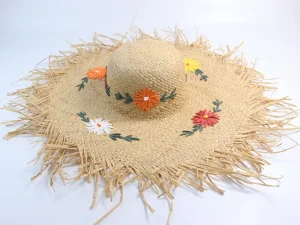 Floppy
Wholesale China Handmade Raffia Straw Lady Floppy Hat - Summer Hat from Suppliers & Factory, Customizable with Embroidery Manufacturer, Factory
View Product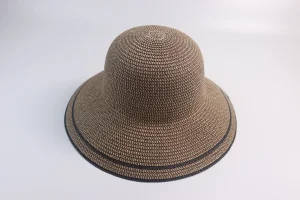 Sun Safe
Wholesale Wide Brim Bucket Hat for Sun Protection & Style Supplier, Factory
View Product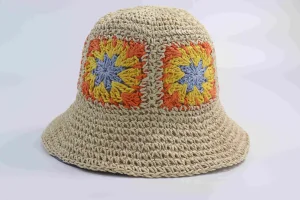 Factory Direct
Wholesale Stylish China Straw Bucket Hat from Trusted Suppliers - Ideal for Sun Protection! Factory Direct Pricing Available! Suppliers, Factory
View Product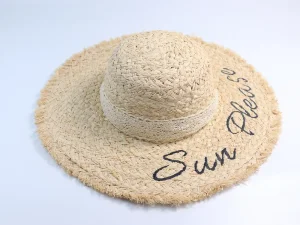 Western
China China Factory Supplier Handmade Raffia Western Hat for Women - Embroidered Straw Hat, Customizable Designs Factories, Factory
View Product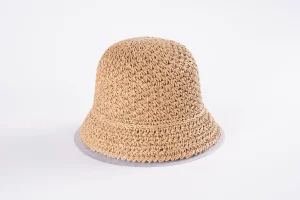 UV Protect
High-Quality Stylish Beach Hats for Women - UV Protection & Sun Safety Supplier, Factory
View Product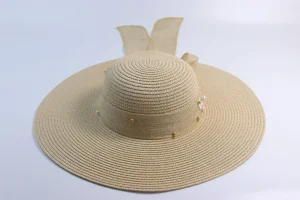 Big Floppy
High-Quality Stylish Big Floppy Hat for Sun Protection & Fashion - Quality from China Suppliers and Factory Supplier, Suppliers
View ProductSend us your style references, target retail price and delivery window. Our team responds within 8 hours with material recommendations, a sampling plan and a production timeline built around the Australian seasonal calendar.