
Top Pick
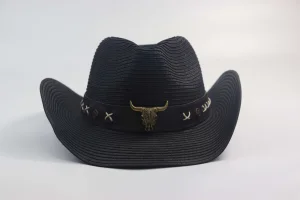
Norway is not a volume market in the way Germany or the UK are — it is a value-density market. With only ~5.6 million inhabitants but among the highest per-capita spending on children's goods in Europe, Norwegian retailers demand durability, non-toxic materials and traceable compliance. Toy hats sit at an unusual intersection: they are worn, gifted, used in role-play, sold in souvenir shops along the fjords, and bundled into kindergarten outdoor kits. This guide explains how a factory-direct program built for the Norwegian market actually works.
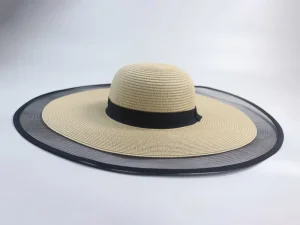
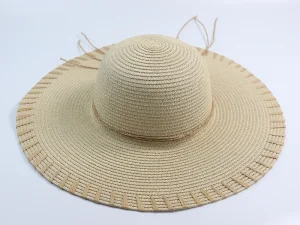
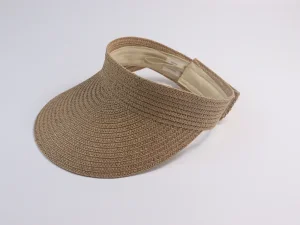
Norway's toy and children's apparel market is small in population but dense in purchasing power. Families spend heavily on outdoor and kindergarten equipment, and "dugnad" culture (community volunteering) plus a strong tradition of friluftsliv (open-air living) make functional, weather-resilient headwear a genuine year-round category — not a seasonal novelty.
Norwegian kindergartens are publicly subsidised and standardise outdoor kit. Toy hats used for role-play, seasonal costume days and sun protection are specified through municipal tenders that value documented safety compliance over price alone.
Norwegians shop heavily from EU e-commerce. Norwegian importers increasingly order toy hats from China as the base source and route inventory through Swedish or Dutch 3PL hubs to reduce customs friction while keeping lead times short.
Norwegian retail chains increasingly require recycled or natural-fibre content and reject PVC-based trims. Toy hats in raffia, paper straw, organic cotton and recycled polyester knit map directly onto these procurement specs.
Fjord cruises, Bergen and Tromsø souvenir retail and coastal gift shops form a distinct toy hat channel: high margin, fast turns, and a preference for "Norway" motifs such as moose, trolls, vikings and the Norwegian flag.
Winter accessories run from September to April. Toy hats with fleece lining, knitted uppers or insulated crowns sell alongside classic straw styles, letting a single supplier cover the full Norwegian calendar.
Norway follows EEA harmonisation and applies EN 71 toy safety, REACH Annex XVII restrictions and CE marking. Buyers ask for test reports up front; uncompliant suppliers are filtered out during first contact.
Across Europe, North America and APAC, toy hat demand is being shaped by four structural forces: extended product-safety regulation, near-shoring experiments, SKU fragmentation driven by DTC brands, and "top-of-funnel licensing" where character-based toy hats are ordered in short bursts. Understanding these forces lets a Norwegian buyer position themselves ahead of the next season instead of reacting to it.
Buyers no longer treat EN 71 / CPSIA / ASTM F963 as paperwork. They build supplier scorecards where test-report turnaround, retained-batch traceability and re-certification cost are scored alongside FOB price. A factory that can supply EU-representative documentation and monthly batch retention is now a commercial advantage.
Brands increasingly order 20+ toy hat variations at 300–800 units per SKU rather than 3 hero SKUs at 10,000 units. Low MOQ factories (like Lige at 50–100 pcs per design) can absorb this volatility. Large factories with 5,000-pc minimums are misaligned with current DTC assortment strategy.
European toy retailers increasingly maintain a China base program plus a small EU nearshore capacity for rush replenishment. Norwegian importers benefit from the same pattern: China for the main buy, a Swedish/EU warehouse for 2–3 top SKUs. Factory partners must support both.
The EU Green Claims Directive pushes Norwegian retailers to verify "recycled", "natural" and "biodegradable" claims. Suppliers now need to provide fibre certificates, yarn traceability and material composition at SKU level — especially for toy hats marketed to children.
| Market | Primary Buyer Type | Typical Order Profile | Compliance Focus |
|---|---|---|---|
| Norway | Kindergartens, gift & souvenir retail, DTC brands | Mix of 50–1,500 pcs per SKU, seasonal replenishment | EN 71, REACH, CE marking |
| Sweden / Denmark | Nordic retail chains, design labels | 1,000–5,000 pcs per SKU, 2 seasonal drops | EN 71, GOTS for textile variants |
| Germany / Netherlands | Wholesalers, toys trade fairs | 2,000–10,000 pcs per SKU | CE, GS mark optional, EN 71-3 migration |
| USA / Canada | Specialty toy chains, e-commerce sellers | 500–6,000 pcs per SKU, frequent shifts | CPSIA, ASTM F963, Prop 65 |
| Japan / Korea | Character-license retail partners | 800–3,000 pcs per SKU, tight packaging specs | ST Mark (JP), KC Mark (KR) |
Buying toy hats for Norway is not a transaction — it is a multi-layer system combining design, compliance, packing language, logistics and after-sales. Below is the framework we deploy with most Nordic importers, mapped to their procurement realities.
Norwegian retail prefers restrained palettes — deep blues, forest greens, muted reds, natural straw tones — with motif touches rather than loud character graphics. Our design team builds each SKU around the buyer's packaging identity, not the factory's existing style library.
Every toy hat order for Norway ships with EN 71-1/2/3 test summaries, REACH declaration, CE conformity paperwork and a material composition file per SKU. Documents can be pre-submitted during sampling so the Norwegian buyer has them before placing the PO.
Cartons, hang tags, care labels and any inserts can be produced in Norwegian (Bokmål), English, or dual-language, with GS1 barcode placement. Packaging is the most underestimated spec in Norwegian retail — it directly affects gift-retail partners and kindergarten procurement.
FOB Qingdao → Oslo, Gothenburg or Rotterdam → Norway 3PL. We support FCL, LCL consolidation, air express for sampling and pre-positioned stock at EU hubs. For first orders we often recommend a mixed container split with a co-purchase partner to hit a better freight rate.
Each Norwegian account has a bilingual English-speaking key contact, a dedicated QC log, and an 8-hour response commitment for sampling, PO changes and after-sales claims. Claims are reviewed against planned batch retention data so deficiencies can be traced to a specific production run.
Product recall scenarios are costly for any toy supplier. We mitigate by retaining a spec sample per production run for 24 months, maintaining a raw-material traceability sheet, and supporting the buyer in any downstream audit or regulatory query.
Toy hats sit at the intersection of traditional hand-weaving and modern digital manufacturing. The factory of the next five years will be defined by four shifts — the roadmap below shows how we are sequencing them.
3D CAD sampling replaces up to 60% of physical proto rounds, cutting sampling time from 25 to 10 days for new toy hat shapes. Norwegian buyers receive digital renders before physical samples ship.
Batch-level QR traceability on hang tags: raw material origin, weaver lot, QC result, test report link. Aligns with EU Digital Product Passport direction and Norwegian retail audit readiness.
Introduction of bio-based yarn blends, ocean-bound recycled polyester straps for kids' beach hats, and take-back programs for Norwegian retail partners. Bio-degradable raffia alternatives enter pilot production.
Hybrid lines combining traditional hand-weaving for premium lines with semi-automated weaving for high-volume basic styles. Target: 40% shorter lead time without sacrificing hand-feel.
The global toys and games market sits well above US$100 billion, with children's fashion accessories growing faster than core toys as gift-buying shifts toward smaller-ticket, higher-frequency items. Within that, straw, raffia and woven toy hats occupy a narrow but resilient niche — largely because they resist automation, retain a handcrafted character, and align with sustainability narratives.
Chinese straw hat production has consolidated into Shandong (Linyi-based cluster), Zhejiang and Hebei. Shandong specializes in raffia, paper straw and natural-grass programs, while Zhejiang handles paper straw and knitwear. Norwegian buyers almost always source Shandong for premium toy hats.
Character-licensed toy hats create short production windows — Disney, Pokémon, PAW Patrol, and Nordic characters such as Mummitrollet. Suppliers that can produce licence-compliant packaging and hit 8–10 week lead times become partner-of-choice for Nordic toy distributors.
Hand-weaving skills in Shandong have survived automation pressure because premium buyers pay for texture and finish quality. This preserves an unusual structural advantage: automation elsewhere compresses margins, but authentic hand-weaving preserves premium pricing power.
Post-2022 container rates have stabilised, and consolidation of LCL loads at Qingdao means small Norwegian orders (200–500 pcs) can reach Oslo cost-effectively. The economic case for ordering from China has re-strengthened compared with 2021 peak freight.
Norwegian DTC brands increasingly use AI demand forecasting, which produces tighter, shorter production runs. A factory with low MOQ per design and quick sample turnaround is more valuable than one with 5,000-pc minimums. Lige's 50–100 pc MOQ aligns with this shift.
EN 71 (EU/EEA), CPSIA (US), ASTM F963 (US), ST Mark (JP), and KC Mark (KR) are gradually converging in test methodology. A factory that maintains a unified internal test protocol can issue tailored documentation for each destination at low incremental cost.
Compliance in Norway is a moving target because Norwegian regulation tracks EU rules via the EEA agreement. A reliable supplier maps their documentation strategy to that reality, not to a single static certificate.
EN 71-1 (mechanical & physical), EN 71-2 (flammability) and EN 71-3 (migration of certain elements) apply to any toy hat intended for children under 14. For Norwegian buyers, this is the baseline test suite. Lige maintains a current test protocol set and can route each new SKU through third-party labs on request.
REACH Annex XVII restricts azo dyes, certain flame retardants and heavy metals in textiles and toys. Because toy hats may include coloured ribbons, elastic bands and printed labels, we screen every trim component against the REACH restricted list before sampling.
Responsibility for CE marking lies with the importer or EU/EEA representative. We provide the technical file, declaration of conformity draft and test reports required to support that CE marking process. For Norwegian importers, this means you can complete CE documentation without re-testing.
Hang tags, care labels and product inserts can be produced in Norwegian Bokmål, English, or bilingual formats. Common Norwegian phrases like "Ikke egnet for barn under 3 år" (not suitable for children under 3) and "Håndvask" (hand wash) are pre-verified for accuracy by native-speaker reviewers.
We provide commercial invoice, packing list, HS code classification (typically 6504.00 for woven hats or 9503.00 for toy-classified items), and certificate of origin on request. HS code selection directly affects Norwegian import duty and VAT — a critical decision point.
Any claim in Norway must be actionable against a retained production sample. We retain a batch sample per SKU for 24 months. Claims within the warranty window are reviewed within 8 hours and resolved with replacement or credit, per mutual agreement.
Shandong Lige Import & Export Co., Ltd. has manufactured straw hats, toy hats, paper hats and woven bags for 15+ years, exporting to 60+ countries. Our Shandong facility is within reach of Qingdao Port — Norway's primary container gateway — and we actively support Nordic importers with compliance-ready documentation.
Straight answers on MOQ, customization, compliance, logistics and service — written for Norwegian importers, kindergarten procurement officers and DTC brands.
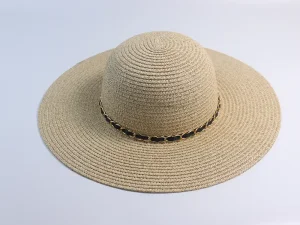
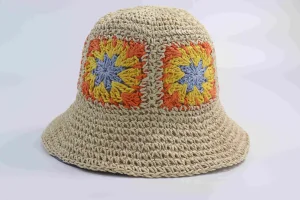
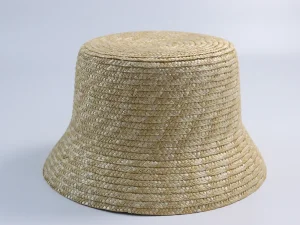
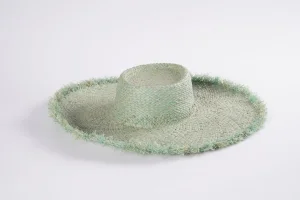
Every style below can be produced with Norwegian-market compliance, bilingual packaging and private-label branding. Click any product to request a spec sheet or a physical sample.
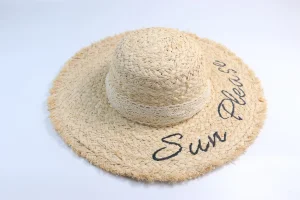
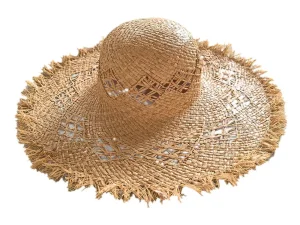
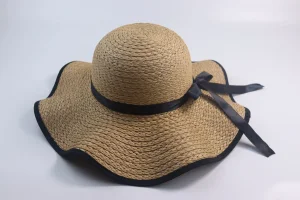
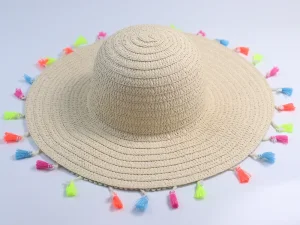
Share your brief — style references, target MOQ, packaging language and destination requirements. Our team will respond within 8 hours with material recommendations, a sampling plan and a compliance-ready quote.