
Ireland Market Intelligence · 2025 Buyer Briefing
Wholesale Boater Hats Manufacturer & Factory in the Ireland Market
A supplier-selection and sourcing intelligence report for Irish importers, boutique chains, race-day milliners, hotel groups and private-label brands — written with the E-E-A-T depth that procurement teams actually need.
- MOQ 50–100 pcs
- 8-Hour Response
- Qingdao Port Gateway
- OEM & ODM
- 60+ Countries Served
Featured for Irish Buyers
View Boater Category
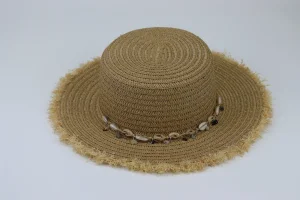
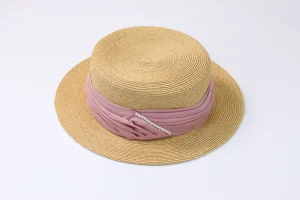
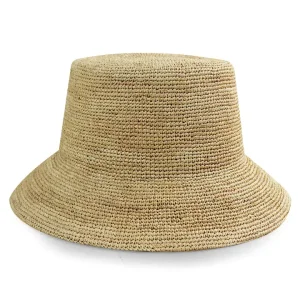
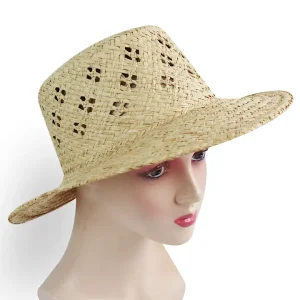
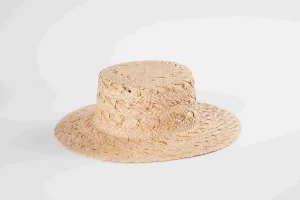
Four Boater Hats Irish Retailers Reorder
These four styles consistently perform across Irish summer retail — race days, coastal hospitality and boutique travel lines. Every item below is available for sampling, private labelling and volume production.
Ireland Market Deep Dive
The Irish Boater Hat Opportunity: Local Commercial Reality
Ireland is not a high-volume mass-market for straw headwear in absolute unit terms — but per-capita spend on occasion dressing, heritage style and tourism-linked fashion is disproportionately strong. For a boater hat programme, that combination is unusually attractive.
Why Boaters Fit the Irish Buying Calendar
The Irish retail year is punctuated by a small number of high-visibility, photograph-heavy occasions. Horse racing fixtures — most notably at Punchestown, the Curragh, Leopardstown, Galway and the larger summer meetings — create an intense, concentrated demand window for formal summer headwear. While the male formal boater has receded, the women's straw boater has absorbed that visual language: flat crown, level brim, grosgrain ribbon, worn with tailored separates and occasion dresses.
Alongside racing sits the wedding and communions market. Ireland has a notably strong "hat culture" at weddings by European standards, and guests routinely invest €40–€180 in headwear for a single event. Boutiques in Dublin, Cork, Galway, Limerick and Kilkenny stock rotating occasion headwear from April through September to service this demand.
The Tourism & Hospitality Channel
Ireland's tourism economy — coastal hotels in Kerry, Clare and Donegal, spa properties in Wicklow, heritage estates in Meath — creates a second, quieter channel. Hotel boutiques and gift shops buy small runs of "packable" straw hats for guests who arrive unprepared for Atlantic sun. These are frequently private-label or co-branded (hotel crest on the ribbon band), and they tolerate higher unit prices in exchange for reliable, small-batch replenishment.
What Irish Buyers Actually Ask For
- Small first orders — 50 to 200 pieces per style — to test a season.
- Consistent sizing for the domestic head-size distribution.
- Ribbon colourways matched to seasonal pantone palettes.
- Ability to reorder the identical style within 6–8 weeks.
- Clear REACH-compliant material documentation.
- Realistic landed cost including Irish VAT and customs.
Regulatory & Trade Realities for Irish Importers
Boater hats enter Ireland under the EU's General Product Safety Regulation framework and the REACH chemical restrictions regime. Textile and straw-based items must meet restrictions on azo dyes and certain finishes. While most natural straw is inherently compliant, ribbon bands, adhesives and label inks require supplier verification. Serious factories provide material declarations, dye compliance notes and where required third-party test reports before shipment.
Customs classification for woven straw hats typically falls under HS Chapter 6504 (plaited or made by assembling strips of any material). Irish importers must confirm the exact CN code with their customs broker, as duty treatment depends on material composition and value. Chinese-origin goods attract EU anti-dumping scrutiny in some textile categories — straw hats are generally not in scope, but incorrect classification can create avoidable delay.
VAT, Logistics & Landed Cost
Ireland applies a standard VAT rate to non-food retail goods. Imported hats are subject to VAT at the point of import, recoverable by VAT-registered businesses. Sea freight from Qingdao to Dublin Port typically takes 35–45 days door-to-door for LCL and 30–38 days for FCL. Air freight is viable for urgent sample or replenishment runs. A wholesale boater hat FOB price of €3.50–€7.00 becomes, after freight, duty, VAT and inland distribution, a landed cost that still supports a healthy Irish retail margin of 2.5–4× — provided the supplier is reliable and the styling is right.
Where Chinese Factories Fit
China remains the single most sophisticated supply base for woven straw headwear worldwide. The Shandong province cluster in particular — centred around Linyi — has developed multi-generational weaving, blocking and finishing expertise that no other region matches at the same cost. For an Irish buyer, the practical advantage is straightforward: lower MOQ at higher reliability, combined with regional proximity to Qingdao Port, one of the busiest container gateways in northern China.
Supply-Chain Snapshot
Numbers That Inform a Sourcing Decision
These figures are drawn from our own production data and from conversations with Irish and EU importers. They are provided to help procurement teams benchmark a factory programme realistically.
- 15+Years manufacturing
- 50Minimum pcs per design
- 60+Export countries
- 8hResponse window
Global Industry Context
The Global Straw Hat Sector: What Is Shifting
Understanding where the global market is going tells Irish buyers something useful: which styles will still be available to reorder in three seasons, and which factories will still be standing to supply them.
1. Sustainability Has Moved From Marketing to Procurement
Natural straw, raffia and paper braid are inherently lower-impact than synthetic fibres — they are plant-based, biodegradable and often produced by hand. European buyers increasingly ask for material provenance and for confirmation that dyes meet EU restrictions. This has moved from being a nice-to-have in brand storytelling to a documented requirement in purchase contracts. Factories that cannot supply this documentation lose tenders.
2. Occasion Wear Is Recovering Across Europe
After a period of suppressed events, European and UK weddings, racing calendars and summer festivals have returned to near or above pre-2020 levels. This directly supports demand for formal-adjacent straw shapes — the boater, the structured fedora, the Panama-style crown — rather than only the casual wide floppy. Ireland sits squarely inside this recovery.
3. Direct-to-Consumer Brands Are Compressing Order Sizes
DTC fashion brands now launch smaller, faster collections. Their order sizes per style are often 100–300 units, down from 500–2,000 just five years ago. Factories that cannot profitably run small batches are being filtered out of the market. Low MOQ is no longer a boutique nicety; it is a competitive requirement for reaching contemporary European brands.
4. Logistics Cost Has Become a Design Variable
Container costs rose sharply post-2020 and have since moderated but remain volatile. This has encouraged "packable" and "nestable" hat designs — shapes that can be compressed and stacked to fill container space efficiently. Boater hats, with their rigid crowns, are more complex: they require careful individual packing, which is why the factory's packing discipline matters as much as its weaving.
5. Automation Is Still Limited in Hand-Woven Categories
Hand-weaving remains genuinely labour-intensive. Machine braiding can produce paper-straw fabric, but the final shape, blocking and finishing still require skilled hands. This is why the Shandong cluster's accumulated skillset has not been easily displaced — and why lead times for premium hand-woven hats remain longer than for machine-woven styles.
6. Nearshoring Has Not Displaced China for this Category
While some apparel categories have moved toward Mediterranean or Eastern European suppliers, woven straw headwear has not shifted in any meaningful volume. The skills, the material supply around raffia imports, and the cost structure simply do not exist elsewhere at scale. For an Irish buyer, China remains the reliable choice — provided the factory is selected carefully.
- Total global demand for straw hats continues to grow modestly year on year.
- Price pressure from Far East competition remains intense at the low end.
- Quality expectations are rising at every price tier.
- Documented material compliance is becoming standard in European tenders.
China Factory Efficiency
Why the Chinese Supply Base Still Wins on Value
China's advantage for woven straw headwear is not simply labour cost. It is the aggregation of supply chain, materials, skill, and process discipline around a narrow product category.
Material Depth
Raffia, natural grass straw, paper braid, cotton-braid, synthetic blends — Chinese factories hold deep inventory of multiple braid widths and colourways, shortening sampling from weeks to days.
Compressed Sampling Cycles
A skilled factory can turn a reference photo into a physical sample in 7–12 days. That speed matters when an Irish boutique needs a mid-season style refresh.
Vertical Integration
Sorting, weaving, blocking, finishing, labelling and packing under one roof removes the coordination cost that separates a factory from a trading desk.
Mature QA Processes
Serious factories maintain in-house QC managers, AQL sampling and documented final inspections — the minimum standard Irish retail buyers now expect.
Workforce Experience
Linyi-area production managers often carry 15–20 years of category-specific experience. That accumulated judgement is not easily replicated in newer supply regions.
Port Proximity
Qingdao Port as a gateway shortens the container cycle to European ports relative to inland factories, reducing the risk of booking delays during peak season.
Ready to Move From Research to Sampling?
Send a style reference, your target quantity and your destination market. Our team will return a material suggestion, a sampling plan and a production timeline within 8 hours — no obligation.
What We Ask For
- Style reference or mood board
- Material preference (raffia, paper straw, natural grass)
- Target quantity and delivery window
- Branding requirements (labels, patches, bands)
- Destination market and customs requirements
Ireland Application Scenarios
Where Boater Hats Actually Sell in Ireland
The same physical product performs very differently depending on the retail channel. These are the specific Irish scenarios where boater hats move consistently.
| Channel | Style Focus | Typical Order Size | Buyer Priority |
|---|---|---|---|
| Race-day boutiques | Women's straw boater with ribbon band, natural and pastel colourways | 80–250 per style | Rapid reorder, on-trend ribbon colours |
| Wedding milliners | Structured boater, medium brim, refined trim | 30–120 per style | Fit consistency, premium hand-feel |
| Coastal hotel gift shops | Packable panama-style and lightweight boater | 50–150 per style | Packability, brand ribbon, replenishment |
| Heritage & tourism retail | Vintage-look raffia boater, muted tones | 60–200 per style | Narrative authenticity, material provenance |
| Online / DTC boutiques | Trend-led variations on classic boater | 100–300 per style | Photographic consistency, low MOQ |
| Event hire & styling | Neutral, unisex boater for photo shoots | 20–60 per style | Durable structure, consistent sizing |
Global Procurement Demand
What Global Buyers Are Actually Requesting in RFQs
Across the buyer inquiries we handle, a consistent picture emerges of what importers now expect from a factory partner. Irish buyers sit within this broader European pattern.
Compressed Lead Times
Buyers want 45–60 day production for volume orders and 7–14 days for samples. Factories unable to hit these windows lose tenders to competitors.
Documented Quality
AQL sampling, inspection reports and photo evidence of finished goods before shipment are now standard expectations rather than premium add-ons.
Material Compliance
REACH declarations, azo-dye compliance, and occasional third-party test reports are increasingly required by European buyers before a PO is confirmed.
Private Label Capability
Woven labels, custom ribbon bands, heat-transfer branding, hang tags and polybag inserts are requested far more often than five years ago.
Shipment Transparency
Container loading photos, B/L tracking and a single point of contact throughout the order cycle are baseline expectations for professional importers.
Flexible Payment Terms
30/70, 50/50, or LC structures are commonly negotiated. Reliable factories offer reasonable terms without demanding full prepayment from first-time buyers.
OEM & ODM Workflow
From Brief to Container: Six Transparent Steps
A well-run factory programme follows a predictable sequence. Understanding it lets Irish buyers avoid the common failure points: unclear sampling, untested materials, and unverified finishing.
-
Share Your Brief
Style reference, material preference, target quantity, colourway, branding and delivery window.
-
Design & Sampling
Our designers advise on material and construction, then produce physical samples for your review.
-
Approval & Sign-Off
Confirm samples, labels, packaging and the production schedule in writing before deposit.
-
Production
Material sorting, hand-weaving, blocking and finishing within our own facility.
-
Quality Inspection
Final QC on shape, stitching, dimensions and trim — with photographed inspection reports.
-
Export & Shipping
FCL or LCL sea freight via Qingdao Port, with air or express options for urgent small orders.
Industry Trends to Watch
Five Trends Shaping Boater Hat Demand
Buyers who anticipate these movements can place smarter orders. Factories that respond to them keep their clients for multiple seasons.
Occasion-Led Buying
Consumers are buying hats as occasion pieces, not wardrobe staples. This favours classic shapes like the boater, which reads as intentional and dressy.
Sustainable Materials
Raffia, paper straw and natural grass increasingly drive purchase decisions in European boutiques. Buyers want documented provenance, not just aesthetic claims.
Small-Batch Manufacturing
Independent Irish labels and DTC brands order in quantities that large mills will not touch. Low-MOQ factories are capturing this growing segment.
Faster Trend Cycles
Social media has compressed trend cycles to weeks. Buyers want factories that can sample quickly and reorder fast, within 4–6 weeks on repeat styles.
Custom Branding Depth
Ribbon colour, woven label placement, packaging inserts — buyers treat these as brand-critical details, not optional extras.
Cross-Border E-Commerce
Smaller batches shipped directly to EU consumers are rising. Factories that pack efficiently and document well are favoured by e-commerce buyers.
Extended Collection
View Full Catalog
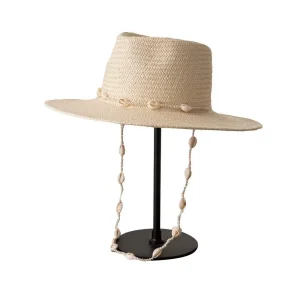
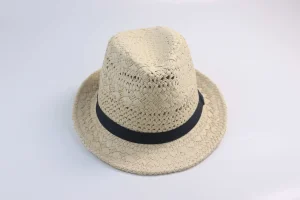
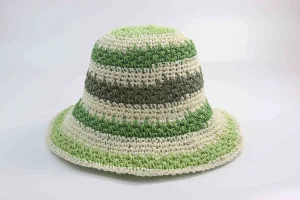
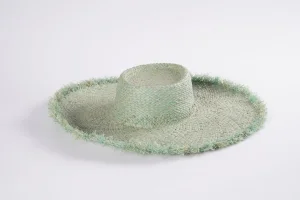
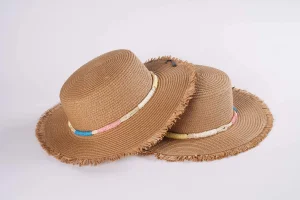
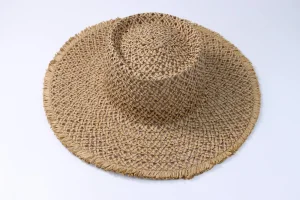
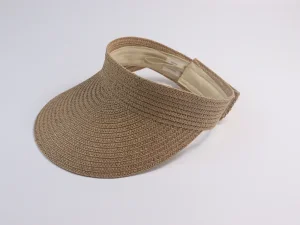
Eight More Styles Available for Wholesale
A single factory can serve an Irish boutique across categories — boater, bucket, cowboy, western, visor and packable sun hats. Consolidating supply reduces your logistics complexity and landed cost.
Buyer FAQ
Questions Irish & EU Buyers Ask Us Most
Straight answers on MOQ, customization, shipping and service for the Ireland market and beyond.
What is the minimum order quantity for custom straw hats?
Our starting quantity for small orders is 50 to 100 pieces per design, depending on material and craftsmanship. This lets boutiques, emerging Irish brands and importers test new styles before scaling up. Traditional wholesale in this category often begins at 500+ pieces, so a 50-piece minimum is a meaningful advantage for a boutique buyer or a hotel gift shop.
Can you produce private-label boater hats with our logo?
Yes. OEM and ODM production is our core business. We customize shape, material, color, size and hat bands, and add branding such as woven labels, patches and hang tags. Our designers can also develop new styles from your mood board or reference samples — useful for Irish boutiques building a distinctive house line.
Where is your factory and how do you ship to Ireland?
We are located in Linyi City, Shandong Province, China, close to Qingdao Port. Bulk orders to Ireland are typically shipped by sea as FCL or LCL, with 35–45 day transit to Dublin Port; samples and urgent small orders can go by air or express courier.
Do you provide REACH and material compliance documentation?
Yes. For EU-bound orders, including Ireland, we can provide material declarations, azo-dye compliance notes and, where required, third-party test reports. We recommend buyers make this requirement explicit in their PO so the correct documents are prepared before shipment.
What are your payment terms and lead times?
Payment is typically 30% deposit and 70% before shipment, with alternative structures negotiable for repeat buyers. Sampling takes 7–14 days; production for volume orders is 45–60 days depending on material and finishing complexity.
Which markets do you export to?
Most of our products go to the United States, Canada, Australia, Mexico, Western Europe and Japan. We serve customers in more than 60 countries and work with over 25 global distributors — including buyers in Ireland and across the UK.
How fast will your team respond to my request?
We respond and take action within 8 hours — covering product questions, sampling, order follow-up and after-sales service.
What do you make besides straw hats?
Alongside straw hats, we manufacture paper hats, straw bags, paper bags, children's straw hats, toy hats, lifeguard hats, sun visors, winter hats and other bags. This lets you consolidate an entire seasonal assortment with a single supplier.
Start a Programme
Build Your Irish Boater Hat Collection With Us
Whether you operate a single boutique in Galway or a multi-channel operation across Dublin, Cork and Limerick, we can support a boater hat programme scaled to your order reality. Send your brief today.
Contact Details
- +86 136 8639 8175
- [email protected]
- WhatsApp: +86 178 6505 3218
- Linyi City, Shandong Province, China