
Top Pick
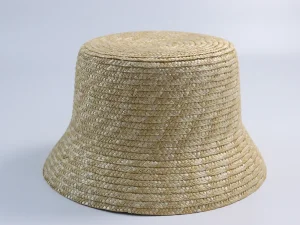
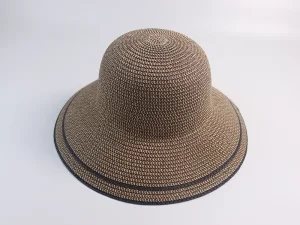
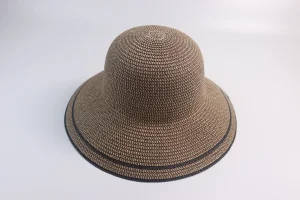
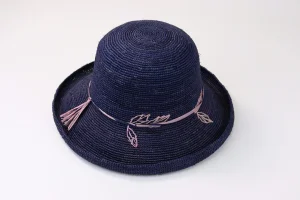
These four shapes cover the strongest demand signals we see from Moroccan souvenir shops, beach resorts in Agadir and Essaouira, and Marrakech medina wholesalers. Every style is available in raffia, paper straw or natural grass straw with custom bands, labels and packaging.
Morocco has quietly become one of North Africa's most attractive sourcing and retail markets for headwear. A tourism economy that recorded roughly 15.9 million international arrivals in 2024 and is targeting 26 million by 2030, a young and urbanising population of more than 37 million, and a retail sector that is formalising quickly together create a durable, year-round demand curve for summer accessories — and bucket hats sit at the intersection of all three.
Unlike Western European markets, where bucket hats are largely a fashion statement, Moroccan demand is driven by three overlapping use cases: sun protection in a climate that regularly exceeds 35 °C in Marrakech, Agadir and Ouarzazate; tourism souvenir retail around the medinas, riads and coastal resorts; and value-driven fashion for a young demographic aged 15–35 that consumes global trends through social media.
This white paper is written for importers, distributors, hotel and resort procurement teams, and private-label brands who plan to source wholesale bucket hats for Morocco. It combines our factory-side production data with market observations from buyers across Casablanca, Tanger, Fès and Marrakech to give you a practical sourcing playbook — from fibre selection to customs classification, right through to a five-year technology roadmap.
Understanding where a bucket hat travels — from a factory floor in Shandong to a shelf in Marrakech — reveals exactly where cost, margin and risk sit in the chain.
Casablanca, Rabat and Tanger concentrate modern retail — malls, concept stores and boutique chains that favour branded, packaged, seasonal collections with barcodes and hang tags.
Marrakech, Fès and Meknès medinas run on high-velocity, price-sensitive wholesale. Buyers reorder frequently in mixed pallets and prize fast replenishment over deep single-SKU commitment.
Agadir, Essaouira, Taghazout and Saïdia resorts buy curated, photo-ready inventory — wide-brim buckets, raffia finishes and logo-branded exclusives for guest amenities and gift shops.
Young consumers increasingly buy through social commerce and local marketplaces. Lightweight, foldable bucket hats ship cheaply — an advantage for parcel-based fulfilment models.
Morocco's domestic manufacturing base for woven headwear is limited. Artisanal straw weaving exists — particularly around traditional chapeaux de paille and Berber-region crafts — but capacity for consistent, export-grade, colour-matched volume production is constrained. This is precisely the gap that imported Chinese factory production fills: it allows Moroccan distributors to combine local cultural design cues with industrial reliability, consistent sizing and competitive landed cost.
At the same time, Morocco's industrial free zones (notably around Tanger Med and Kenitra) and its expanding ports infrastructure are lowering the friction of importing finished accessories. For a bucket hat programme, this means a shorter cash cycle than five years ago: shipments clear faster, and consolidation into a single container from Qingdao to Casablanca or Tanger Med is highly predictable.
These are the demand signals our product development team tracks when briefing Moroccan buyers for the next two seasons.
Raffia, paper straw and natural grass straw are perceived as authentic and eco-conscious. Buyers increasingly ask for material traceability and low-impact dyeing.
Custom embroidery, woven labels and Morocco-inspired trims convert a commodity hat into a higher-margin tourist souvenir with strong gifting appeal.
Foldable, crush-resistant buckets suit both air travellers and e-commerce parcels. Soft raffia constructions are leading this shift.
Brands want measurable UPF claims and documented weave density so they can legally promote sun protection on shelf and online.
Data-driven retail pushes buyers toward 50–100 piece test runs, then rapid scale-up on winners — impossible without a low-MOQ factory partner.
Buyers expect identical colour and sizing between reorders, across container shipments and between physical and online channels.
Across the 60+ countries we export to, buyer behaviour follows a consistent pattern that Moroccan importers can use to benchmark their own purchasing strategy. The table below summarises the ordering profile we observe from five buyer archetypes, and how each typically maps onto the Moroccan market.
| Buyer type | Typical MOQ | Lead time | Key requirement |
|---|---|---|---|
| Importer / distributor | 500–3,000 pcs | 25–40 days | Mixed-SKU container loading |
| Private-label brand | 100–500 pcs | 20–35 days | Sampling accuracy, branding |
| Resort / hotel | 50–300 pcs | 15–30 days | Logo customisation |
| Souvenir operator | 100–1,000 pcs | 20–35 days | Localised trims |
| E-commerce seller | 50–200 pcs | 15–28 days | Foldable, photo-ready |
Rather than treating every order as a one-off transaction, we structure Morocco-facing programmes around four proven sourcing architectures.
Start at 50–100 pieces per design, validate sell-through in selected medina or resort channels, then scale the winners into a consolidated production run.
Lock 70% of volume into evergreen core shapes and reserve 30% for trend-led fashion SKUs that keep your assortment fresh each season.
Custom labels, hang tags, polybags, barcodes and master carton marking — ready for Moroccan retail shelf standards and modern trade requirements.
Recurring amenity orders with logo embroidery, fixed colour palettes and predictable annual replenishment tied to tourism seasonality.
The fibre you choose determines hand-feel, shape retention, price point and shipping survivability. Our product team advises buyers on four primary options:
| Material | Best for | Landed-cost position | Buyer tip |
|---|---|---|---|
| Raffia | Foldable buckets, premium resort, souvenir gifting | Mid–high | Ideal for "packable" claims and saturated colours |
| Paper straw | Volume retail, seasonal programmes, promo lines | Low–mid | Add "keep dry" care labelling |
| Natural grass straw | Structured shapes, shelf appeal, artisanal look | Mid | Best shape retention on shelf |
| Cotton / knit | Year-round assortment, kids, value segments | Low–mid | Extends a supplier programme beyond summer |
A wholesale bucket hat programme succeeds or fails on documentation, logistics and after-sales reliability. Here is how we support Moroccan buyers end to end.
We prepare commercial invoices, packing lists and origin documentation, and align HS classification for headwear (typically Chapter 65) with your customs broker before shipment.
FOB Qingdao as standard, with FCL and LCL options. We can quote CIF Casablanca or Tanger Med where the buyer prefers a single landed-cost figure.
In-house QC covers weave consistency, stitch integrity, sizing tolerance, trim attachment and colour fastness. Third-party inspection can be arranged on request.
Arabic and French care labels, bilingual hang tags, retail-ready polybags and carton marking tailored to Moroccan retail and modern-trade expectations.
Every enquiry, sampling question and after-sales request is acknowledged and actioned within 8 hours by a dedicated English-speaking account contact.
One contact from sampling through to container loading — no handoffs, no lost context, and full visibility of production milestones.
A four-horizon view of how production, materials and buyer expectations will evolve — and what Moroccan importers should plan for.
Spectrophotometer-verified colour matching and digital approval workflows reduce reorder drift and shorten sampling cycles.
Incremental automation improves dimensional consistency in high-volume shapes while preserving hand-finished detailing where it adds value.
Fibre origin documentation and low-impact dyeing respond to growing buyer demand for verifiable sustainability claims.
Retail-ready packing and carton-level data integration shorten the path from factory floor to Moroccan shelf.
For Moroccan buyers, the practical implication is straightforward: build your supplier relationship around documentation and consistency now, because the programmes that win in the next five years will be the ones that can prove — not just claim — colour accuracy, fibre integrity and on-time replenishment.
Send Inquiry NowStraight answers on MOQ, customisation, shipping and support. Need more detail? Our team replies within 8 hours.
Send Inquiry NowEvery item below can be produced in your chosen fibre, colourway and branding configuration. Request samples to validate hand-feel and shape retention before committing to bulk.
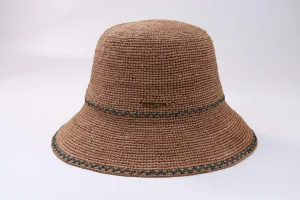
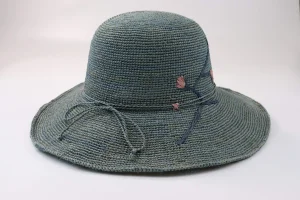
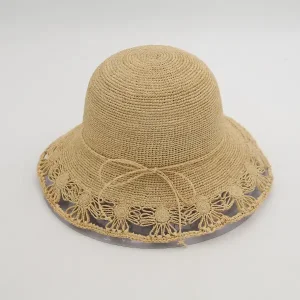
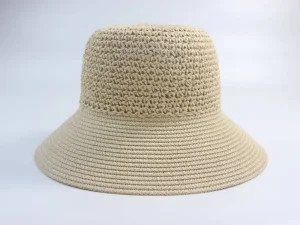
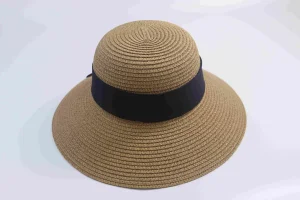
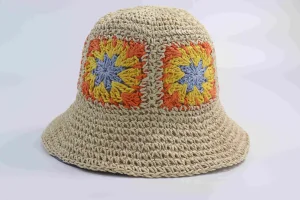
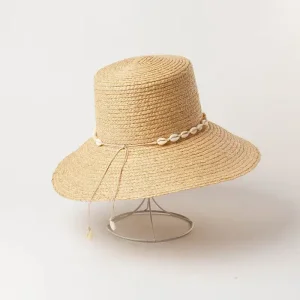
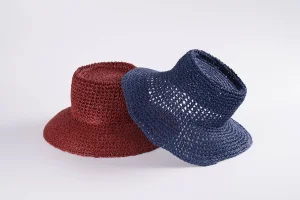
Send us your style references, target quantity and destination city. Our team replies within 8 hours with material recommendations, a sampling plan and a production timeline aligned to your selling season.