
San Francisco Market Context
Why Floppy Hats Sell Differently in San Francisco
San Francisco is not a single climate — it is a micro-market cluster. Fog belts along Ocean Beach, sun-drenched retail corridors in Union Square, and Napa-adjacent travel wardrobes create three distinct demand curves for floppy sun hats. Suppliers who understand this granularity win shelf space.
Marine Layer Retail Reality
Ocean Beach, Outer Sunset and the Presidio see persistent fog and wind. Buyers here favor packable, crush-resistant straw blends with chin straps and mid-depth brims over ultra-wide silhouettes that catch wind.
Tourism & Hospitality Channel
Union Square, Fisherman's Wharf and Napa tour operators resell bundled travel accessories. High color-fastness and shape recovery matter more than raw price — a floppy hat that flattens in a suitcase still has to open cleanly.
Boutique & DTC Brand Density
Hayes Valley and Mission District are DTC incubators. Young brands need low MOQ (50–100 pcs) private label runs with custom bands, woven labels and hang tags to test styles before seasonal buy-in.
Global Industry Landscape
The Global Floppy Hat & Straw Headwear Supply Curve
The woven straw headwear category has shifted from a commodity seasonal item to a design-led accessory segment. Three structural forces are reshaping sourcing decisions for West Coast importers.
1. Material Tiering & Price Stratification
Raffia, paper straw and natural grass straw now occupy clearly separated price tiers. Premium resort lines specify Madagascar-origin raffia for dye depth and flexibility; volume retail programs lean on twisted paper straw for color consistency and unit economics; heritage and western-adjacent styles stay with structured grass straw for crisp brim memory.
2. Sustainability as a Purchase Gate
US and EU buyers increasingly require material provenance documentation and reduced plastic in packaging. Natural palm-leaf and paper-based fibers align well — but the operational burden sits in traceable batch records and dye compliance, not marketing language.
3. Freight-Led Sourcing Geography
For San Francisco importers, transit reliability now matters as much as FOB price. Chinese factories shipping via Qingdao to Oakland or Long Beach offer mature FCL consolidation, while LCL programs allow small brands to bundle multiple SKUs without container commitment.
4. Design Velocity
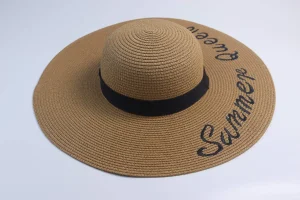
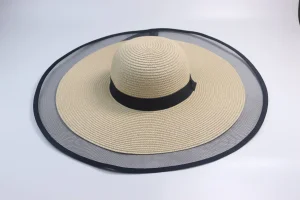
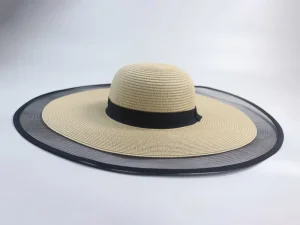
Seasonal micro-trends (the "old money" aesthetic, organza overlays, western-adjacent silhouettes) compress development cycles. Factories with in-house sampling and pattern teams can move from mood board to approved sample in weeks, not quarters — a decisive advantage for DTC brands.
A floppy hat is technically the simplest silhouette in the category and commercially the hardest: it must drape without collapsing, fold without creasing permanently, and dye without fading under California UV. Material engineering, not labor, is the moat.
Development Trends
Five Trends Shaping Floppy Hat Demand Through 2027
Quiet Luxury Silhouettes
Unstructured wide brims with neutral tones and minimal trims — matching the "old money" travel aesthetic visible across SF lifestyle retail.
UPF-Rated Construction
Buyers increasingly request documented UV blocking performance, driven by dermatology-led consumer awareness in sun-intensive California markets.
Flat-Pack Logistics Design
Fold-flat brim engineering reduces carton volume — a direct lever on landed cost for importers shipping LCL to the Bay Area.
Modular Trims & Bands
Removable, swappable ribbon bands let retailers merchandise one silhouette as multiple SKUs — expanding assortment without expanding inventory.
Compressed Sampling Cycles
Digital mood-board-to-sample workflows cut development time, letting DTC brands respond to micro-trends within a single retail quarter.
Gender-Neutral Unisex Lines
Shared silhouettes with adjustable sizing simplify SKU counts for multi-channel SF retailers serving mixed tourist and local demographics.
Material & Technical Route
Technical Route Map: From Fiber Selection to Landed Cost
A wholesale floppy hat program succeeds or fails on four technical decisions. This is the roadmap our product team uses when briefing San Francisco buyers before sampling begins.
01
Fiber Selection & Hand-Feel Target
Raffia for flexibility and saturated dye depth; twisted paper straw for uniform color and volume pricing; natural grass straw for structured brims. Define the "drape profile" first — the fiber follows.
02
Brim Architecture & Shape Memory
Wire-supported, bonded or heat-set brim edges determine whether a collapsed hat returns to form. For SF travel retail and Napa wardrobe programs, heat-set or wire-edge construction is typically specified.
03
Dye, Finish & UV Performance
Color-fastness under California sun exposure is a real commercial risk. Dye bath consistency, post-treatment and — where specified — UV additive finishes are validated at the sample stage, not at final inspection.
04
Packaging, Carton Density & Freight
Flat-pack brim engineering, tissue interleaving and carton nesting directly reduce freight cost per unit. For LCL shipments routed Qingdao to Oakland, carton density is often the single largest controllable variable.
Macro Sourcing Solution
A Factory-Direct Sourcing Framework for Bay Area Buyers
San Francisco buyers typically operate across three purchasing modes: boutique test buys, seasonal wholesale programs, and DTC private-label launches. One supplier relationship should be able to serve all three without renegotiating terms each season.
Boutique Test Mode
50–100 pcs per design, mixed-SKU sampling, quick approval cycles for Hayes Valley and Mission District retail floors.
Seasonal Wholesale Mode
Volume production with locked material batches, consolidated FCL shipping to Oakland, and staged delivery windows.
Private Label Mode
OEM/ODM with woven labels, patches, hang tags, custom bands and packaging — branded end-to-end from the factory line.
Consolidated Supply Mode
Straw hats, straw bags, paper bags and children's hats from one factory — reducing supplier count and QC overhead.
Applied Local Scenarios
Where Floppy Hats Actually Sell in the Bay Area
Coastal & Beach Retail
Ocean Beach, Baker Beach and Half Moon Bay surf shops need wind-tolerant constructions — chin cords, denser weaves, mid-brim profiles.
Hospitality & Resorts
Napa and Sonoma winery tours, spa retail and hotel gift shops favor premium raffia and organza floppy hats with branded trims.
Festival & Event Merch
Outdoor concerts, Pride events and street fairs drive short-run branded floppy hats — low MOQ and fast sampling are decisive.
Golf & Country Club
Wide-brim floppy styles with UPF claims serve Peninsula and Marin golf retail, often co-branded with club crests.
Airport & Travel Retail
SFO travel accessory kiosks require packable, fold-flat hats with hang-tag branding and durable packaging.
Farmers Markets & Pop-Ups
Weekend markets across SF and Oakland support small-batch artisan positioning — natural fibers and visible weave texture sell best.
Supply Chain Deep Dive
From Linyi Workshop to Oakland Container: What Buyers Should Audit
Shandong Lige Import & Export Co., Ltd. operates from Linyi City, Shandong Province, within reach of Qingdao Port — a mature container gateway for US West Coast routing. For San Francisco importers, the practical audit checklist is narrower than it looks.
Verical integration: confirm that raw material sorting, weaving or braiding, blocking, finishing and final inspection happen under one roof. Factories that outsource blocking lose control over brim symmetry — the most common complaint in floppy hat import programs.
Sampling discipline: request a physical pre-production sample in the exact fiber and colorway, not a reference sample from a different batch. Dye lots shift between seasons and material sourcing regions.
Carton engineering: ask for carton weight, dimensions and units-per-carton before confirming FOB. For LCL consolidated shipments to Oakland, a 15–20% improvement in carton density can offset meaningful freight cost.
Compliance documentation: California buyers increasingly request fiber composition statements, dye compliance records and packaging material declarations. Suppliers who can produce these on request reduce customs and retail onboarding friction.
After-sales protocol: define the response window in writing. Lige's stated standard is action within 8 hours, covering product questions, sampling and order follow-up — a reasonable benchmark to hold any factory to.
Buyer FAQ
San Francisco Wholesale Floppy Hat Questions Answered
What MOQ applies to wholesale floppy hats for San Francisco boutiques?
Starting quantities are 50 to 100 pieces per design, depending on fiber and trim complexity. This is deliberately structured for Hayes Valley and Mission District boutiques and emerging DTC brands that need to test silhouettes before committing to a seasonal buy.
Can I get private-label branding on floppy hats?
Yes. OEM and ODM production is the core business. Customization covers shape, fiber, color, size and band, plus branding elements such as woven labels, patches and hang tags. In-house designers can develop new silhouettes from a mood board or reference sample — relevant for SF brands building a distinct visual identity.
How are orders shipped to the San Francisco Bay Area?
Production is based in Linyi, Shandong, near Qingdao Port. Bulk orders typically move by sea as FCL or LCL to West Coast gateways including Oakland and Long Beach. Samples and urgent small orders can ship by air or express courier. Carton density optimization is recommended for LCL programs to control landed cost.
Which floppy hat styles suit the San Francisco climate best?
Mid-depth brims with denser weaves and chin cords perform better in coastal fog and wind zones. Wider brims in raffia and organza work well for Napa and Sonoma hospitality retail, airport travel kiosks and inland sunny corridors. A mixed assortment by micro-location typically outperforms a single silhou
What documentation should I request before placing a wholesale order?
Request fiber composition statements, dye lot consistency confirmation, packaging material declarations, a physical pre-production sample in the exact colorway, carton dimensions and units-per-carton. These reduce customs friction and retail onboarding delays, particularly for California retail compliance.
How quickly does the factory respond to buyer inquiries?
Lige Hats responds and takes action within 8 hours, covering product questions, sampling, order follow-up and after-sales service — a useful benchmark for any supplier evaluation, particularly when coordinating across US Pacific and China time zones.
Can I source straw hats, bags and children's hats from the same supplier?
Yes. Beyond floppy hats, the factory produces straw bags, paper bags, children's straw hats, toy hats, lifeguard hats, sun visors and winter hats — enabling a consolidated accessory program with reduced supplier count.
Complete Wholesale Catalog
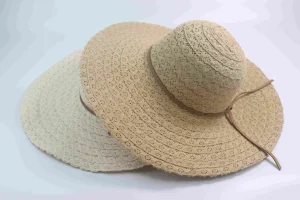
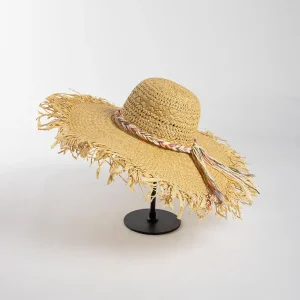
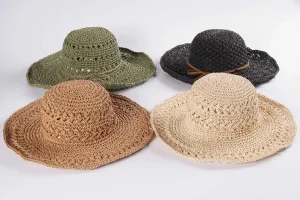
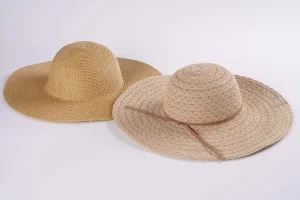
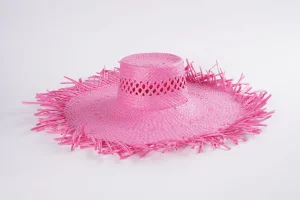
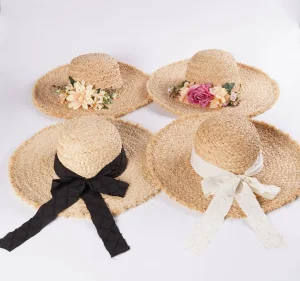
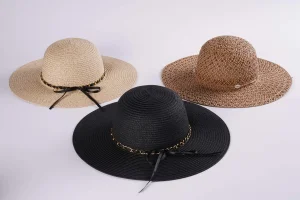
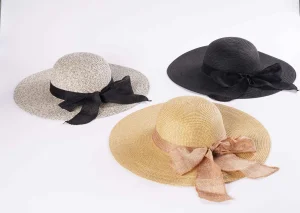
Floppy, Wide Brim & Western Hat Lines for SF Buyers
Every silhouette below is factory-direct, customizable in fiber, color and trim, and available from 50–100 pcs per design. Product URLs link directly to live specification pages.
Sourcing note: specifications, MOQs and transit timelines should always be reconfirmed in writing against a physical pre-production sample before a wholesale purchase order is issued.