
Beach & Resort
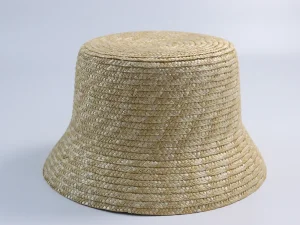
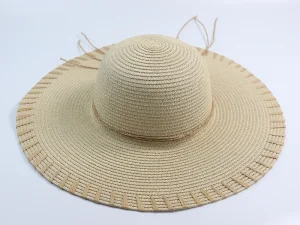
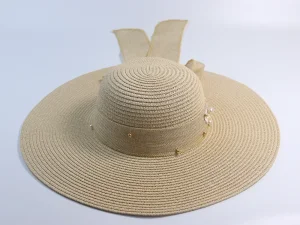
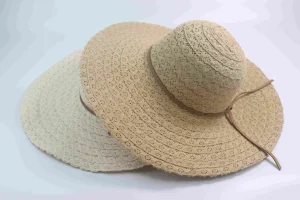
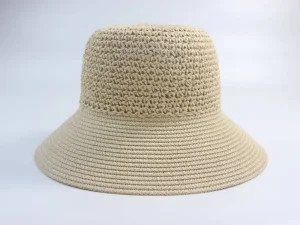
These four silhouettes match the highest-velocity categories in Greece: island beach boutiques, hotel resort shops, cruise-terminal gift retail and family tourism assortments. Each can be sampled in 7–10 days and shipped via Piraeus or Thessaloniki.
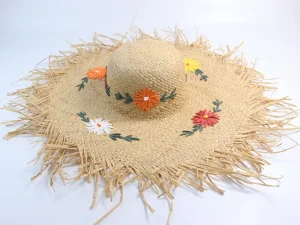
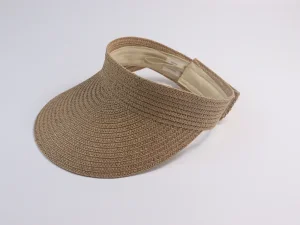
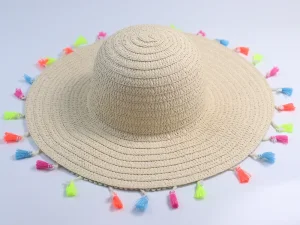
Greece is not a single retail market — it is a fragmented archipelago of seasonal retail micro-markets. Mainland city stores, island boutiques, five-star resort gift shops, cruise terminal kiosks and ferry-port souvenir stands all buy differently, at different times, in different quantities. Understanding that structure is the difference between a stocked season and dead inventory.
Tourism is the engine. Greece consistently ranks among the top ten global destinations by international arrivals, and the sector contributes a substantial share of national GDP. The practical consequence for a hat or bag buyer is that demand concentrates into a 14–18 week window between May and early September, with a secondary shoulder season stretching into October on Crete and Rhodes.
| Greek Channel | Peak Order Window | Typical Basket | Priority Attribute |
|---|---|---|---|
| Island boutique | Jan – Mar | 50–300 pcs / style | Design differentiation |
| Resort gift shop | Feb – Apr | 100–500 pcs | Branded trims & packaging |
| City retail chain | Oct – Feb | 300–2,000 pcs | Unit cost & consistency |
| Cruise / ferry kiosk | Mar – May | 500–3,000 pcs | Rotation speed |
| Hotel amenity program | Nov – Feb | 200–1,000 pcs | Custom label / eco story |
| Online & marketplace | Nov – Mar | Variable | Packability & photos |
Figures shown are directional planning ranges compiled from seasonal buyer briefs, not a published statistical series. Use them to structure your own forecast, then confirm against your sell-through history.
Every style below can be produced in raffia, paper straw or natural grass straw, with custom bands, woven labels, hang tags and Greece-appropriate packaging. Click any card to open the product page and request a quotation in EUR.
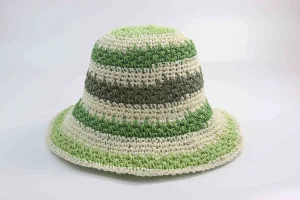
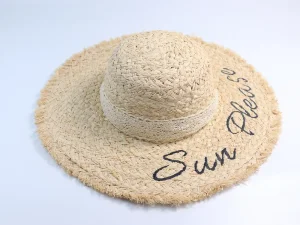
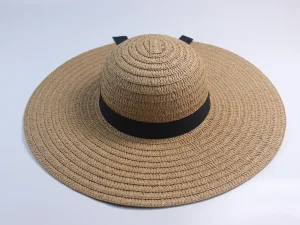
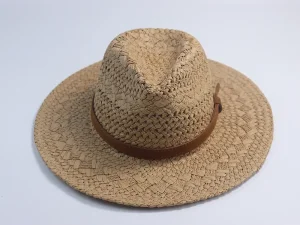
Selling into Greece means selling into the European Union. That carries obligations that do not apply to US or Australian shipments. Our Greece-desk workflow is built around those obligations from the first sample, not retrofitted after the container lands.
Regulation (EU) No 1007/2011 requires accurate fibre composition in the official language of the destination member state. We supply Greek-language composition labels and care labels, verified against the actual bill of materials — not copied from a template.
Under the current General Product Safety framework, the EU importer is the responsible economic operator. We prepare the technical file, safety documentation and traceability data your Greek entity needs to hold on record for market surveillance.
If you appoint an EU Responsible Person for your brand, we print their name and address on the label and pack the required conformity documentation with the shipment — a practical requirement many Asian factories still cannot deliver.
Greek consumers respond strongly to natural materials — but vague "eco" claims invite regulatory risk. We help you phrase sustainability messaging around verifiable facts: natural palm fibre, paper-straw construction, recyclable packaging, and traceable origin.
Carton marks, packing lists, item descriptions and barcode labels can be produced in Greek and English, matching the wording your warehouse team and your retailers actually use on the shelf.
Greece and China sit within a workable overlap window. A dedicated Greece-desk contact answers in English with Greek-market context, and every inquiry receives a response and action plan within 8 hours.
Generic "China is cheap" arguments are useless to a serious buyer. What matters is whether a factory's structure lines up with your shipping lane, your order cadence and your cash-flow cycle. For Greece specifically, three structural advantages stand out.
| Supply-Chain Factor | What It Means for a Greek Importer |
|---|---|
| Qingdao → Piraeus | Direct and transhipment ocean services; FCL for volume, LCL for test orders. |
| Qingdao → Thessaloniki | Practical for northern Greece and onward Balkan distribution. |
| Mixed container loading | Combine hats, bags and kids' sets into one booking and one customs entry. |
| MOQ 50–100 pcs | Test colourways on individual islands before national rollout. |
| Sampling in 7–10 days | Fits the February–April resort-buying calendar with room for revisions. |
| Pre-shipment inspection | Shape, stitching, sizing and trims checked before the container is sealed. |
| Documentation pack | Commercial invoice, packing list, B/L and compliance files prepared for customs. |
Procurement standards have converged. A buyer in Rotterdam, Sydney or Athens now evaluates a factory against the same shortlist: transparency, documentation, repeatability and responsiveness. If a supplier cannot meet that bar for one market, it will not meet it for yours.
Buyers expect a real production address, named production and QC contacts, and a coherent capability story. Trading desks that cannot name their line are increasingly filtered out at the RFQ stage.
Compliance files, test references and label artwork now rank above a marginal price reduction. A lower FOB price that triggers a customs or labelling problem is a net loss.
Golden samples mean little if batch three arrives with a different brim stiffness. Buyers audit consistency across reorders, and they reward factories that hold tolerances.
An 8-hour reply window is now treated as a baseline service level, not a favour. Slow communication is read as a proxy for slow production.
These are the movements we see across buyer briefs from Europe, North America and Australia — and each one has a direct read-across to how a Greek assortment should be built.
Raffia and natural grass are moving upmarket. Buyers are willing to pay more when the fibre story is specific and the hand-feel is evident — moving the category away from pure price competition.
Retailers are reducing first commitments and relying on fast replenishment. Factories that can hold a 50-piece MOQ and still reorder in weeks are winning share from volume-only suppliers.
UPF claims have moved from marketing flourish to purchase driver. Verified UPF 50 constructions on wide-brim and foldable styles now command shelf preference in sun-intensive markets like Greece.
Packability is now a specification, not an afterthought. Foldable brims, crush-recoverable raffia and compact packing are explicitly requested by resort and cruise buyers.
As EU market-surveillance activity increases, suppliers who arrive with proper technical files and correct labelling are being preferred over cheaper alternatives that leave compliance to the buyer.
Hotel groups, resort chains and multi-store retailers increasingly want their own branding on seasonal accessories. Low-MOQ private label is now a standard request, not a premium service.
The same factory line can serve very different Greek buyers. What changes is the trim, the packaging, the label language and the order cadence.
Mykonos, Santorini, Paros and Corfu boutiques need photograph-ready premium silhouettes. Priority: raffia floppy hats, western hats with embroidery, custom woven labels and dust bags.
All-inclusive and boutique hotels buy branded accessories for poolside retail and guest gifting. Priority: consistent colorways, hotel logo application, individual polybag or kraft-box packaging.
High-footfall, price-sensitive channels. Priority: visors, paper-straw floppy hats, kids' hat-and-bag sets, barcode-ready cartons and rapid reorder capability mid-season.
Greece's UV intensity and coastal humidity reward certain fibres over others. This is the guidance our product team gives Greek buyers before sampling begins.
A natural palm fibre with inherent resins that make it soft, flexible and highly dye-receptive. Brims recover shape after packing — ideal for travellers who fold a hat into a suitcase.
Twisted paper yarn woven into a lightweight, uniform fabric. It delivers clean, repeatable colours and a competitive unit cost, which is what volume channels need.
Braided natural stems with inherent stiffness, producing crisp, structured silhouettes. Shape retention on the shelf is the strongest in the category.
Cotton, polyester and knitted constructions extend an assortment beyond the summer window and into children's, visor and shoulder-season categories.
Every Greek order follows the same documented sequence, so you always know which stage your program is in and what happens next.
Style references, material preference, sizes, colorways, branding, quantity and destination port.
Our designers recommend fibres and develop samples within 7–10 days, with revisions where needed.
Confirm golden sample, Greek-language labels, packaging artwork and delivery schedule in writing.
Material sorting, weaving, blocking and finishing in-house, followed by pre-shipment QC.
Individual polybags, kraft boxes or dust bags; carton marks in Greek and English as required.
FCL or LCL booked from Qingdao to Piraeus or Thessaloniki, with documentation issued ahead of cut-off.
Commercial invoice, packing list, B/L and compliance files prepared so your broker has everything at arrival.
Reorder specifications held on file, with an 8-hour response window for any post-delivery question.
Direct answers on MOQ, compliance, shipping and service for the Greek market. If your question is not covered here, our team replies within 8 hours.
Send us your style references, target quantity and destination port. Our Greece desk replies within 8 hours with material recommendations, a sampling plan, EU labelling guidance and a production timeline.