
Costa Rica Core
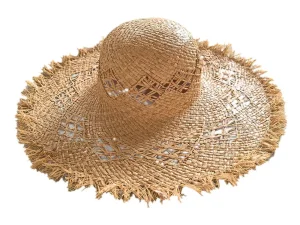
These shells anchor most beach-patrol, resort-waterfront and tour-operator quotes we build for Guanacaste, Puntarenas and Limón. Each is available in natural grass straw, raffia or paper straw with custom branding.
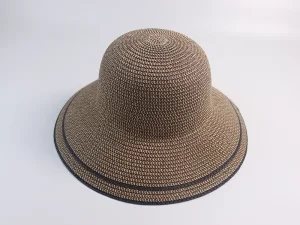
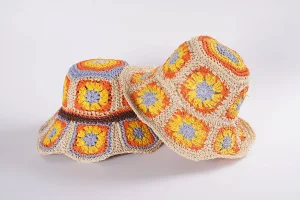
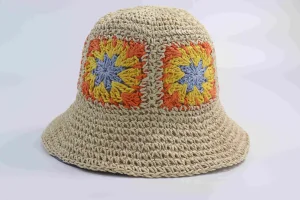
Procurement for Costa Rican beach operations cannot be copied from a U.S. or European program. The country's latitude, microclimates, institutional structure and tourism seasonality create a distinct demand profile.
 Pacific & Caribbean dual-season demand
Costa Rica sits between roughly 8° and 11° north latitude — closer to the equator than any U.S. state and most of the Caribbean. That geography compresses the sun angle all year: the UV index routinely reaches the extreme 11+ band between December and April on the Guanacaste coast, the exact window when North American and European visitor volumes peak.
The Pacific province of Guanacaste is hot and dry from November to April, while the Caribbean province of Limón stays humid and wetter for much of the year. A single lifeguard hat specification shipped country-wide will therefore fail somewhere. Buyers increasingly request two variants: a breathable, high-airflow shell for the humid Caribbean and a dense, high-UPF shell with a wider brim for the dry Pacific beach season.
Employment structure matters as much as climate. Professional lifeguard staffing in Costa Rica is split between municipal comités de playa, national park and conservation-area ranger programs, private hotel-and-resort waterfront teams, and surf-school operators at hubs such as Tamarindo, Jacó, Santa Teresa, Nosara and Puerto Viejo. Each group buys differently: municipalities tender in small annual batches, resorts reorder seasonally with embroidery, and surf schools buy low volumes with strong color identity.
Finally, the tourism calendar is asymmetric. The high season for foreign visitors is roughly December through April, but domestic and regional travel peaks around Semana Santa and mid-year school holidays. A supplier that understands this rhythm can help Costa Rican buyers stage shipments in two waves instead of absorbing one large pre-season inventory risk.
Lifeguard headwear sits at the intersection of three mature industries — occupational safety apparel, natural-fiber millinery and outdoor leisure accessories. Understanding their convergence explains where pricing and specification pressure will come from over the next decade.
Practical implication for Costa Rican buyers: the global consolidation described above means fewer, larger suppliers control straw capacity. Locking in a specification and a delivery window six to eight months ahead of the December high season is no longer optional — it is the single largest determinant of whether your patrol team is wearing the right hat on opening day.
The same hat family performs very differently depending on who wears it, for how long, and in what humidity. Below is how we map specification choices to real Costa Rican operating environments.
Guanacaste and Puntarenas municipal lifeguard committees need high-visibility, uniform-consistent headwear that survives salt spray, repeated wash cycles and daily UV exposure. Wide-brim straw with a reinforced sweatband and heat-transfer or embroidered committee crest is the standard configuration.
Properties in Papagayo, Conchal, Manuel Antonio and Santa Teresa typically issue headwear as part of a uniform program with the hotel's brand palette. These buyers value finish quality, consistent color across reorders and the ability to add a woven label or hot-stamp logo.
Surf and adventure outfitters in Tamarindo, Nosara, Jacó and Puerto Viejo buy in modest volumes but demand strong brand identity and packability. Lightweight paper-straw or fine raffia shells that fold into a backpack are preferred, with bold trim and a printed logo.
Conservation-area staff working coastal sectors of national parks often require institutional headwear that reads as official and holds shape through a full field shift. Structured natural-grass straw with a grosgrain band and embroidered insignia is the conventional choice.
Crew aboard catamaran and dive excursions face constant wind and spray. Headwear needs a secure fit — chin cords, adjustable inner bands or elastic sizing — plus a brim that does not collapse when wet.
Specialty retailers and souvenir shops in tourist corridors buy assortment rather than uniformity. A mixed pallet — floppy, bucket, cowboy and visor shapes in complementary naturals — supports retail price variation and shelf variety.
We treat lifeguard headwear as a performance product, not a costume accessory. This is the four-horizon technology path we are pursuing for the Costa Rica and broader tropical coastal market.
Density-grading of natural grass and raffia braids to raise measured UPF, reduce see-through weave gaps and standardize brim stiffness across production lots.
Moisture-wicking inner bands, ventilation eyelets and washable removable sweat liners that extend service life in high-humidity Caribbean operations.
Per-batch documentation of fiber origin, dye chemistry and tested UPF, delivered as a scannable record for institutional procurement teams.
Take-back and re-braiding programs for worn institutional headwear, converting end-of-life straw into secondary fiber for non-wear applications.
Three changes are likely to affect Costa Rican procurement decisions more than any other factor. First, UV labeling will become contractual rather than voluntary — institutional buyers will expect a tested UPF value on file. Second, replenishment cycles will shorten, favoring suppliers who can hold stock of neutral shells and apply branding locally on short notice. Third, material provenance will be requested, particularly by international hotel groups and conservation-adjacent employers whose own reporting obligations cascade down to their suppliers.
Suppliers that invest in documented specifications and flexible order structures will take share from suppliers that compete only on unit price.
Rather than quoting a single hat, we structure programs. Below is the framework we use with Costa Rican municipal, resort and operator buyers to align specification, budget and delivery.
| Program Layer | What It Covers | Typical Costa Rica Application | Buyer Decision Factor |
|---|---|---|---|
| Shell specification | Fiber type, weave density, brim width, crown shape, target UPF | Pacific dry-season patrol vs. Caribbean humid-season crew | Measured sun-blocking performance and airflow |
| Branding layer | Embroidery, woven label, patch, hot-stamp, custom band color | Municipal crest, hotel palette, surf-school identity | Reorder consistency of color and placement |
| Comfort layer | Sweatband material, ventilation, chin cord, sizing system | Catamaran crews, long-shift beach patrol | Wearer compliance — staff actually keep it on |
| Logistics layer | Batch size, shipment splitting, packing format, lead time | Two-wave delivery around high season and Semana Santa | Working capital impact and stockout risk |
| Documentation layer | Material declaration, UPF record, care labeling, labor standards | International resort groups and conservation employers | Approval speed with compliance teams |
| Lifecycle layer | Repair, replacement parts, end-of-life handling | Multi-year uniform contracts | Total cost of ownership across seasons |
Why a framework beats a price list: a Costa Rican municipality and a Papagayo resort can both ask for "100 lifeguard hats" and need completely different products. Structuring the conversation by layer prevents the most expensive outcome in institutional headwear — a low unit price attached to a specification nobody actually approved.
 Linyi, Shandong · Qingdao Port gateway
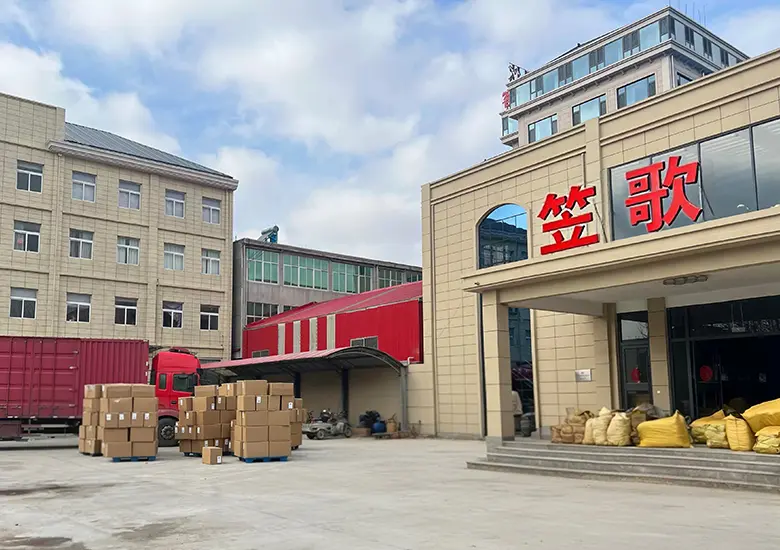
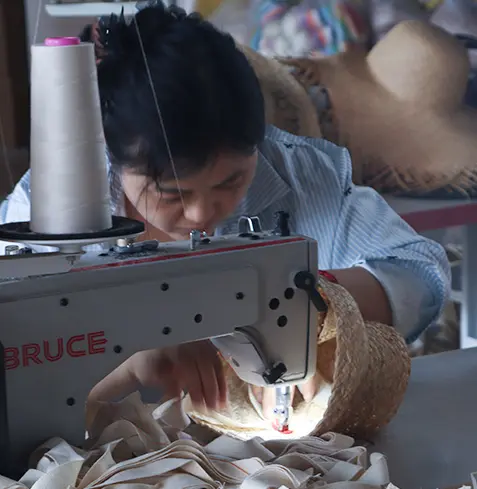
Shandong Lige Import & Export Co., Ltd. has manufactured straw hats, paper hats, straw bags and paper bags in Linyi City, Shandong Province, for more than 15 years. The factory sits within easy reach of Qingdao Port, which simplifies FCL and LCL export to Latin America through trans-Pacific and Panama Canal routings.
Our team structure is deliberately senior. The production manager carries 20 years of manufacturing experience; the quality-control manager carries 15 years; and the wider team averages more than five years with the company. That continuity is what allows us to reproduce a specification accurately across multiple seasonal reorders — the single most common failure point for buyers sourcing headwear from unfamiliar factories.
Capability covers the full chain in-house: raw material sorting, hand and machine weaving, blocking, shaping, trimming, branding application, final inspection and export packing. For lifeguard and sun-protection programs specifically, we can produce in natural grass straw, raffia and paper straw, and support woven labels, embroidery, patches, custom bands and hang-tag programs.
Most of our output ships to the United States, Canada, Australia, Mexico, Western Europe and Japan. We serve buyers in more than 60 countries and work with over 25 distributors — and we respond to every new inquiry, including details and practical next steps, within eight hours.
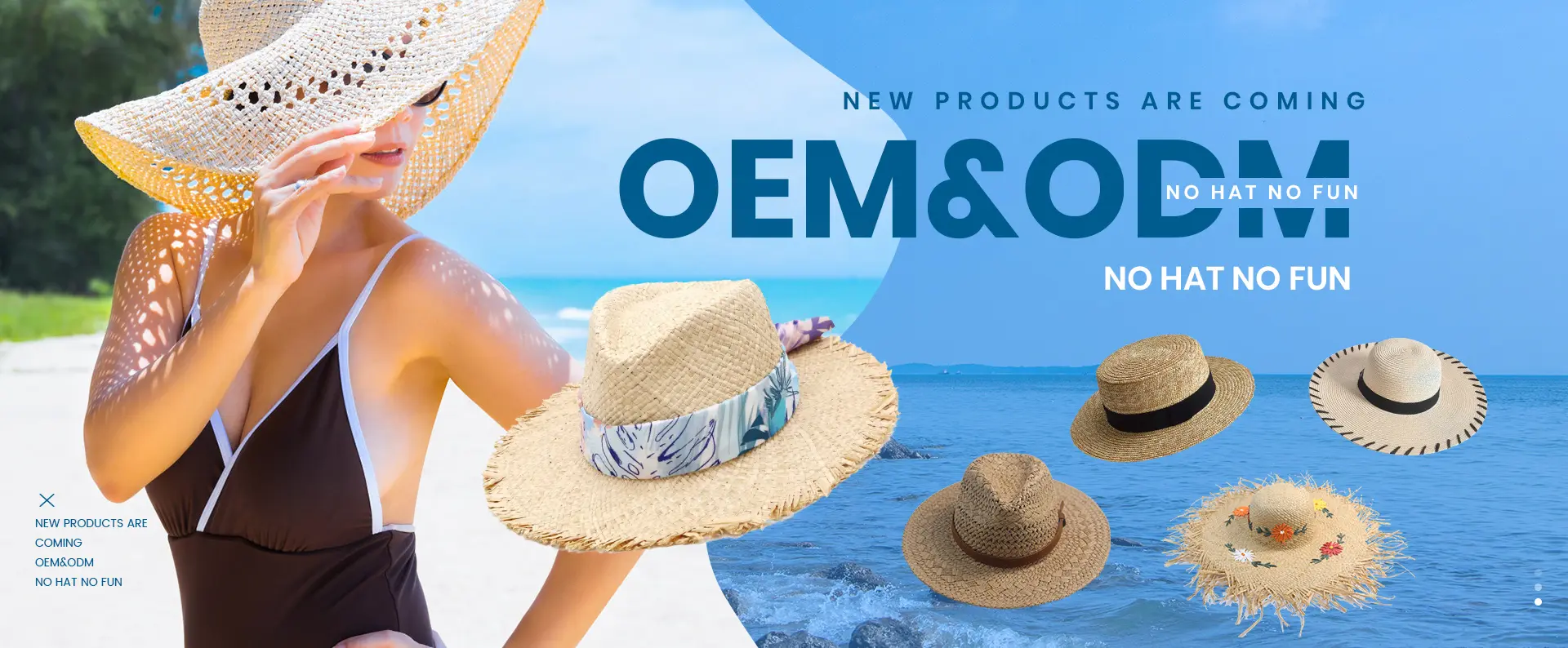
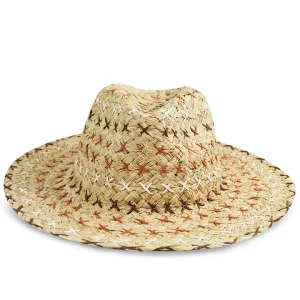
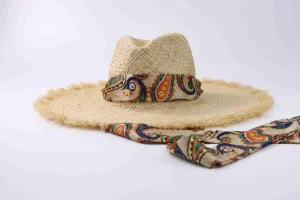
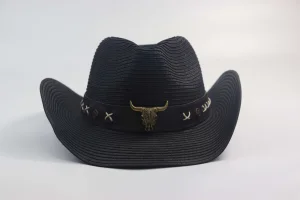
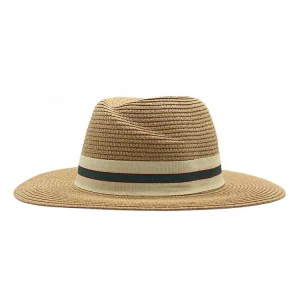
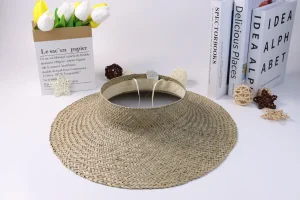
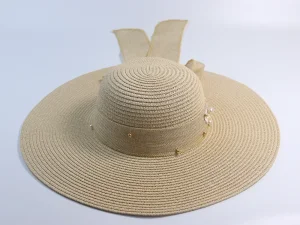
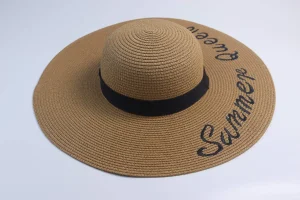
Cowboy, beach, Panama and visor silhouettes that fill out a complete Costa Rican assortment — from high-visibility patrol shells to retail souvenir stock.

Practical answers on specification, sampling, shipping and service for municipal, resort and operator procurement teams.
Send your deployment context — Pacific or Caribbean, patrol or resort, uniform or retail — along with target quantities and branding requirements. Our team responds within eight hours with material recommendations, a sampling plan and a delivery schedule aligned to your high season.