
Beach / Resort
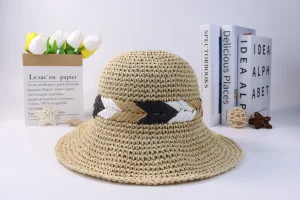
A procurement-grade reference for Turkish importers, brand owners and retail buyers sourcing woven, paper and utility bags — covering Istanbul and Bursa retail demand, Turkey customs and labelling compliance, China factory supply-chain economics, and the localisation decisions that decide whether a program sells through or stalls.
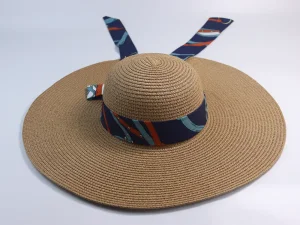
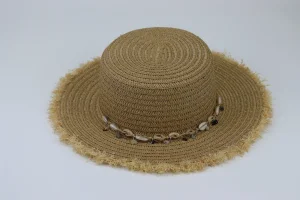
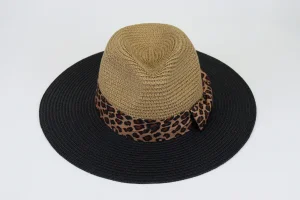
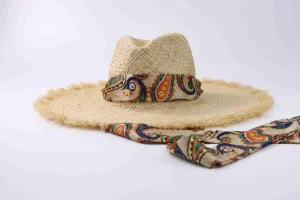
These four styles are the highest-repeat programs in our Turkey-facing book. Each is proven across Istanbul wholesale, Aegean resort retail and multi-brand seasonal drops — the same constructions Turkish buyers validate first before scaling a private-label line.
Before a single sample is cut, a serious Turkey program begins with query interpretation. The phrase in the headline carries at least four distinct search intents, and each one maps to a different buyer, a different document type and a different decision timeline. Treating them as one keyword is the most common reason supplier pages fail to convert qualified Turkish traffic.
In our catalogue architecture, “Other Bags” is a deliberate catch-all entity that sits alongside Straw Bags and covers the non-hat carry category: raffia and straw totes, jute and cotton canvas shoppers, paper gift and retail bags, drawstring pouches, crossbody woven minis, beach carryalls and promotional utility bags. It is the procurement bucket Turkish buyers use when their assortment plan calls for a bag that is adjacent to headwear but not a hat.
Semantically, the term resolves against a cluster of related entities: woven tote, raffia shopper, paper carrier bag, promotional tote, beach bag and gift packaging bag. Google's language models treat these as near-neighbours rather than synonyms, so a supplier page that names each sub-entity explicitly, gives it attributes (material, weave, GSM, handle type, print method, MOQ) and links it to a purchasable product signal will outperform a page that repeats “other bags” ten times.
The practical consequence for a Turkish buyer: when you search this phrase, you are not looking for a definition. You are looking for a qualified factory relationship — one that can absorb your spec, survive a customs audit, and ship into Istanbul or Mersin without surprises.
The same string, typed by four different people, needs four different answers. Here is how the intent splits, and what each searcher is actually trying to close.
Buyers comparing three to six factories before committing to a sampling round. They want capability evidence, not slogans.
Signal that closes: named production stages, years of category focus, verifiable inspection regime.
Ready-to-buy importers with a confirmed assortment slot and a hard delivery window.
Signal that closes: a transparent cost ladder and a realistic calendar.
The buyer who has already been burned by a rejected container and now reads every line about standards.
Signal that closes: recognisable standard names and a documented inspection step.
Brand owners and concept-store buyers checking whether a supplier understands Turkish taste, seasonality and climate.
Signal that closes: evidence of a Turkey-specific SKU plan, not a generic EU plan.
Google's quality framework rewards pages that add something the rest of the result set does not. We model this internally as an Inclusion Score — a weighted estimate of how likely a page is to be retrieved by a semantic search engine for a given buyer query, then cited or entered into a buyer's shortlist. It is deliberately not a ranking guarantee; it is a diagnostic for where a page is thin.
Turkey's bag and accessories market is not a single buyer. Three procurement archetypes dominate inbound enquiries, and each one evaluates a supplier against a different scorecard. Matching page content to archetype is the difference between a reply that gets a sample order and one that gets archived.
Moves volume across a dense network of small retailers. Buys on visual speed and repeatability, not on brand story.
Buys against a planogram. Requires SKU discipline, barcode readiness and a private label that will not embarrass them in audit.
Buys for concept stores, beach clubs and hotel boutiques with a short, high-margin season and no room for a late shipment.
Turkey is not an emerging market for woven accessories — it is an established one with its own manufacturing heritage, its own distribution logic and its own regulatory expectations. Understanding that context is what separates a supplier who ships containers to Turkey from a supplier who actually sells in Turkey.
Turkey is one of Europe and the Middle East's most significant textile and apparel producers, with a deeply developed ecosystem centred on Istanbul and Bursa. That ecosystem is strong in cut-and-sew apparel, denim, knitwear and home textiles. It is comparatively thinner in hand-woven natural-fibre accessories — raffia, paper straw, jute and natural grass bags at volume — where the labour-intensive weaving stage and the raw-material supply chain sit outside Turkey's core strength.
That gap is precisely why Turkish importers search for an Asian woven-bag manufacturer rather than sourcing domestically. Domestic capacity exists for leather goods, synthetic totes and printed cotton bags, but a consistent, spec-stable, large-volume raffia and paper-straw program is more reliably secured from a specialised Chinese factory with an established weaving line.
At the same time, Turkey's own export orientation matters to buyers. Many Turkish trading houses re-export to the Middle East, North Africa and Central Asia. That means a Turkish buyer is often sourcing for two compliance environments at once: the Turkish domestic rulebook and the destination market's expectations. A factory that can supply documentation flexible enough for both is worth more than one that is marginally cheaper.
Everything below comes from patterns we observe repeatedly across Turkey-bound orders — the friction points that show up in sample rounds, in container planning and in seasonal sell-through. It is offered as practical experience, not as market-research statistics.
Price alone no longer explains why Turkish buyers keep sourcing woven bags from China. The real advantage is a vertically integrated chain — raw fibre sorting, weaving or braiding, blocking and shaping, finishing, print or embroidery, inspection and export packing — under one roof, with a fixed port relationship that shortens the tail end of the timeline.
Material sorting, weaving, blocking, trimming, labelling and final QC in one plant removes the multi-vendor handoffs where most quality failures originate. One accountable party, one inspection standard, one shipping date.
Export-ready paperwork — commercial invoice, packing list, bill of lading, certificate of origin, test reports where applicable — treated as a scheduled production stage so freight is not delayed by a missing document.
Located in Linyi, Shandong, close to Qingdao Port — a major container gateway with direct and transhipment routing toward Turkish ports including Istanbul (Ambarli) and Mersin. Shorter inland haul, fewer handoffs, more predictable cutoffs.
Starting at 50–100 pieces per design lets a Turkish importer validate a colourway or a shopper silhouette with a small first order, then scale the winners into a full container on the reorder — without carrying the risk of a full-season commitment on an unproven shape.
Because hats and bags ship from the same plant, a Turkish buyer can consolidate beach bags, shoppers, paper carriers and matching headwear into one mixed container — improving cube utilisation and collapsing freight cost per unit.
Sample questions, artwork approvals and after-sales follow-up answered and actioned within 8 hours — critical in a market where short seasons punish every day of silence.
Compliance is where a cheap quote becomes an expensive lesson. The table below summarises the areas Turkish buyers scrutinise most and how a well-run factory program addresses each. It is a directional procurement reference, not legal advice — always confirm final requirements with your Turkish customs broker and a local compliance advisor before booking production.
| Compliance Area | What Turkish Buyers Ask For | How the Factory Program Responds |
|---|---|---|
| Fibre & composition labelling | Accurate fibre content statements and care instructions on a compliant label, in the language the retailer needs. | Woven label and care label content confirmed at pre-production; composition statements matched to the actual material spec, not a generic template. |
| Chemical & dye restrictions | Assurance that dyes and finishes avoid restricted substances aligned with EU-style frameworks Turkey broadly follows. | Material sourcing tied to suppliers who can provide test documentation; azo-free dye options available on request; retained swatches for traceability. |
| Customs classification | Correct HS classification for woven bags and paper carriers, so duty and VAT are calculated without surprise. | Commercial invoice and packing list prepared with the buyer's broker in mind; classification confirmed against the actual construction, not the marketing name. |
| Country of origin | Clear origin marking and a certificate of origin where the buyer's re-export channel requires it. | Origin documentation prepared as a scheduled export stage; marking applied at packing rather than retrofitted later. |
| Packaging & retail readiness | Polybag warnings where relevant, barcodes, hangtags and carton marking matched to the retailer's receiving standard. | Packing spec agreed with the buyer and applied at final packing; carton labels designed for warehouse scanning at destination. |
| Quality inspection | A documented final inspection before shipment, with a report available to the buyer. | Shape, weave density, stitching, trim attachment, size tolerance and packing all inspected against the approved sample as the reference standard. |
Note: regulatory frameworks evolve. Treat this table as an orientation checklist for your first supplier conversation, and validate final requirements with your Turkish customs broker before committing a production slot.
Turkey's buyers do not operate in isolation. They sit inside a global woven-bag procurement system shaped by sustainability mandates, factory-audit requirements and the consolidation of supplier lists among large retail groups. Understanding that wider demand architecture explains why Turkish buyers ask for the things they ask for.
Large retail groups have spent recent years reducing the number of factories they buy from, favouring suppliers who can cover multiple categories. A factory that makes both hats and bags answers two line items on one audit — a structural advantage over a single-category vendor.
Consumer and regulatory pressure has shifted assortments toward paper straw, raffia, jute and cotton over virgin synthetics. Buyers increasingly ask for material provenance and end-of-life positioning, which favours factories with genuine natural-fibre expertise rather than a generic bag trader.
The seasonal two-drop model is fragmenting into more frequent, smaller orders. This raises the value of low MOQ and fast reorder capability, and it penalises factories that only want full-container commitments.
White-label has become the baseline expectation rather than a premium service. Woven labels, hangtags, barcode-ready packing and custom trims are now entry requirements for a serious buyer conversation, not upsells.
Buyers now evaluate landed cost, not FOB price. Cube efficiency, carton consolidation and documentation reliability can matter more than a few cents of unit price — especially on high-volume, low-margin shopper and paper-carrier programs.
Turkish trading houses increasingly supply Middle East, North Africa and Central Asia. Their suppliers therefore need documentation flexible enough for multiple destination rulebooks — a capability that quietly separates a good factory partner from a merely cheap one.
A specification only makes sense against a selling context. These are the localised scenarios that generate the majority of Turkey-bound bag enquiries, each with the attributes that matter most in that channel.
Coastal Antalya, Bodrum and Cesme properties stocking concept stores and beach kiosks for a short, high-margin season.
Priority attribute: finish quality and on-time landing.
High-turnover wholesale where visual variety and repeatability matter more than brand narrative.
Priority attribute: range breadth and replenishment speed.
A distinct seasonal demand event where small woven bags and paper carriers function as favour packaging.
Priority attribute: customisation flexibility and schedule precision.
Gifting-led retail periods that shift assortment toward presentation and packaging rather than beach utility.
Priority attribute: material quality and print execution.
Ankara, Izmir and Bursa chains buying against a fixed SKU grid with central receiving standards.
Priority attribute: consistency and documentation discipline.
Brands and agencies ordering printed totes and paper carriers for campaigns and events.
Priority attribute: print fidelity and approval speed.
Raffia, paper straw and natural-grass constructions across beach, western, visor and vintage formats. Every listing below is a live product page with the original factory specification — request a sample against any of them and we will match the material and finish to your Turkey assortment plan.
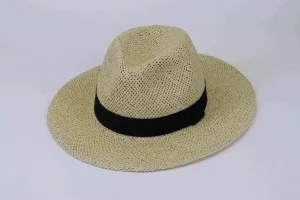
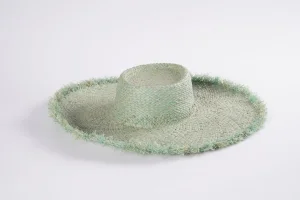
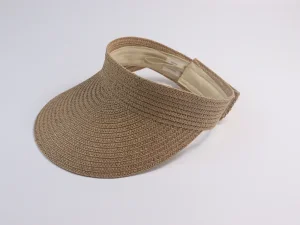
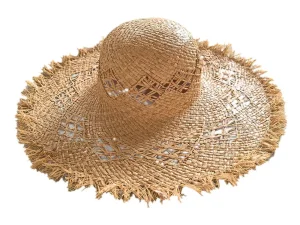
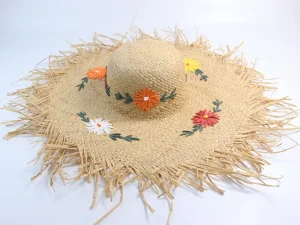
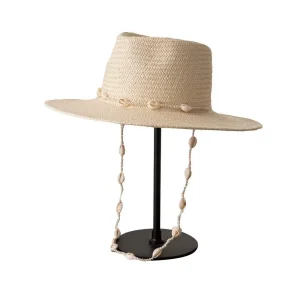
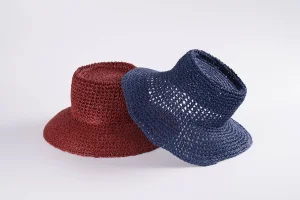
Four structural shifts are reshaping woven-bag supply and will determine which supplier relationships survive the next buying cycles. None of them favour a low-cost-only sourcing strategy.
Paper straw and raffia continue displacing synthetic constructions in gift, resort and promotional segments. Buyers who lock in a natural-fibre supplier now avoid a scramble later.
Seasonal blocks keep shrinking. Low MOQ plus fast reorder is becoming the default expectation rather than a competitive nicety — and it favours vertically integrated factories.
Retail groups are pushing provenance questions down the chain. Factories that can name their fibre sources and retain batch swatches will keep the accounts that matter.
A transparent four-stage path that keeps a Turkish buyer informed from the first brief to the moment the container clears. Each stage has a defined output, so there is never ambiguity about what “in progress” means.
Share silhouette, material, colourway, trim, branding, target quantity and destination port. We return a feasibility note with material options and indicative pricing.
Our designers develop the sample against your brief. Approved sample becomes the written reference standard for bulk — this is the single most important step for avoiding drift.
Weaving, blocking, finishing, labelling and packing all run in-house. Final inspection checks shape, weave, stitching, trim, size tolerance and packing against the approved sample.
Documentation prepared as a scheduled stage, then FCL or LCL sea freight from Qingdao toward Istanbul or Mersin. Samples and urgent small orders can move by air or express.
Direct answers on MOQ, Turkey delivery, compliance documentation and localisation. If your question is not here, the inquiry button below reaches a human within 8 hours.
Send your silhouette references, target quantity, colourway direction and destination port. Our team replies within 8 hours with material recommendations, a sampling plan and a production timeline calibrated to the Turkish selling season.