
Core Sourcing Line
Four Panama Hat Programs Built for Uruguayan Retail
Each silhouette below is produced in our Linyi factory and can be configured for the Uruguayan summer season — January to March resort demand plus the shoulder-season cruise and wedding window. MOQ starts at 50–100 pcs per design.
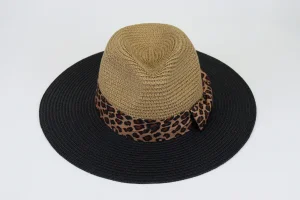
Handwoven Breathable Panama Fedora — Uruguay Wedding & Outdoor Season
View Product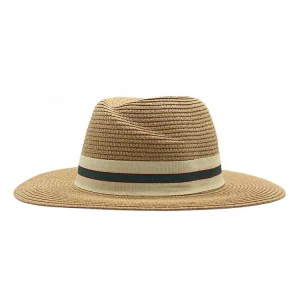
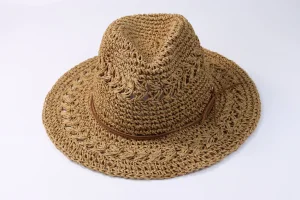
Classic Panama Hat — Stylish Sun Protection for Montevideo Boutiques
View Product
Stylish Country Hat — Uruguay Estancia & Outdoor Adventure Line
View Product
Market Intelligence
The Uruguay Opportunity: A Small Market with a Premium Summer Identity
Understanding the local commercial and industrial reality is the first step toward a profitable Panama hat program.
Uruguay presents a deceptively compact but highly attractive opportunity for wholesale Panama hat manufacturers and factories. With a population of roughly 3.4 million and a metropolitan area concentrated around Montevideo, the addressable domestic retail base is small — but the country's purchasing power, European-style consumer preferences and world-famous summer destination branding make it a high-value market for premium straw headwear. Unlike mass-volume markets such as Brazil or Mexico, Uruguay rewards suppliers who can deliver fewer SKUs, deeper quality and stronger seasonal storytelling.
The local commercial landscape is dominated by independent boutiques, multi-brand fashion retailers and resort-driven concept stores, particularly along the Punta del Este coastline and in Montevideo's Pocitos and Carrasco districts. These buyers rarely purchase in container volumes; instead, they buy in curated capsules of 150–600 pieces per season, mixing 6–14 styles across men's, women's and unisex lines. This profile aligns perfectly with a low-MOQ manufacturing model where flexibility, sampling speed and mixed-container consolidation matter more than raw unit price.
On the industrial side, Uruguay has no significant in-country straw hat manufacturing base. Almost all woven straw headwear is imported, primarily from China, Ecuador (for authentic toquilla-straw "Montecristi" and "Cuenca" hats) and, to a lesser degree, from Italy for finished branded goods. This creates a structural import dependency that a well-positioned factory partner can serve directly — particularly if it can offer OEM/ODM consolidation across Panama, fedora, cowboy, boater and bucket silhouettes from a single production site.
$22K+
Approx. GDP per capita — a premium-retail-friendly consumer base
Dec–Mar
Peak summer window aligned with Punta del Este resort season
~14 SKUs
Typical seasonal capsule size for Uruguayan boutiques
Import-Led
No domestic straw hat manufacturing — full reliance on imports
Global Procurement Context
What Global Buyers Are Actually Asking For in 2025
The behaviours shaping international Panama hat procurement apply directly to Uruguayan importers — with local nuances.
Smaller, Faster Capsules
Global buyers are shifting from two large annual orders toward four to six micro-capsules. Uruguayan boutiques in particular reorder after Punta del Este's peak weeks — flexibility across repeat runs is now a decisive sourcing criterion.
Material Storytelling
Buyers demand documented fiber provenance — raffia, paper straw, natural grass — plus packaging that communicates sustainability. Consumer-facing QR-linked authenticity notes are increasingly requested at the wholesale level.
Mixed Container Consolidation
LCL shipments from Qingdao via Montevideo route are routine. Suppliers who can consolidate hats, bags, visors and children's lines into one mixed container reduce landed cost dramatically for Uruguayan importers.
Traceable Quality Systems
Standardised QC checklists, size-tolerance bands and pre-shipment inspection reports are table stakes. Uruguayan importers facing Mercosur re-export needs benefit from documented batch traceability.
Extended Catalogue
Eight More Styles for Uruguayan Buyers
Mix-and-match these eight SKUs with the four core programs above to build a full seasonal capsule for Montevideo, Punta del Este and Colonia retail floors.
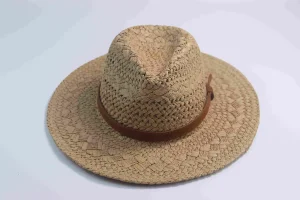
Stylish Women's Fashion Hats — Uruguay Boutique Capsule Line
View Product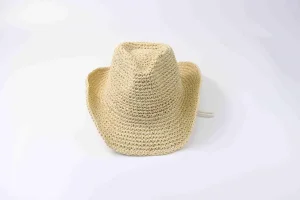
Authentic Panama Cowboy Hat — Uruguay Western & Country Wear
View Product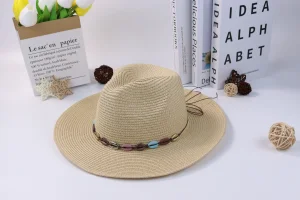
Stylish Ladies Panama Hat — Uruguay Sun Protection Program
View Product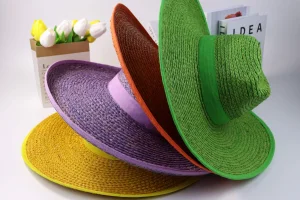
Women's Straw Wide Brim Hat — Uruguay Beach Vacation Range
View Product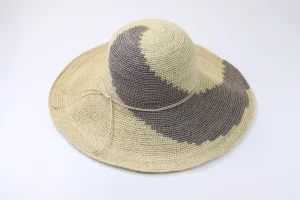
Packable Raffia Beach Sun Hat — Uruguay Resort & Cruise Buyers
View Product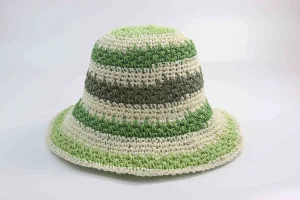
Summer Bucket Hat — 100% Paper Crochet for Uruguay Wholesalers
View Product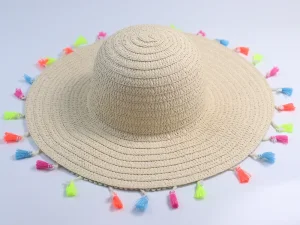
Kids Summer Hat & Bag Set — Uruguay Beach & Gift Retail
View ProductLadies Panama Hat — Repeat-Reorder Program for Uruguay Importers
View Product
Industry Solutions
Macro-Level Sourcing Solutions for the Uruguayan Channel
Panama hats do not sell in a vacuum. Here is how wholesale manufacturers structure programs around the actual commercial channels used in Uruguay.
1. Resort & Hospitality Channel — Punta del Este
Hotel boutiques, beach clubs, marina shops and five-star resorts operate on tight, event-driven cycles from mid-December to early March. The preferred solution is a pre-season branded collection with hotel logos woven into hat bands, delivered in flat-pack master cartons by early November. A 300-piece program across three silhouettes is typical, with an option for a mid-January LCL air replenishment on best-selling SKUs.
2. Multi-Brand Fashion Retail — Montevideo
Independent fashion retailers in Pocitos, Carrasco and the Old City curate small, trend-responsive assortments. Here the winning solution is capsule ODM development: four to eight styles co-designed with the buyer, branded with woven labels, hang tags and grosgrain trims, delivered in mixed pallets with a documented size breakdown per store. The supplier relationship works best when sampling runs 10–14 days and production completes within 35 days from approval.
3. Wholesale Distributor Channel — Mercosur Re-Export
Uruguay hosts a small but strategic group of distributors who reconfigure imported headwear for neighbouring Argentina, Paraguay and southern Brazil. These buyers need bulk volumes (1,000+ pieces per SKU), Mercosur-compliant documentation, Spanish-language labelling and export-grade master carton marking — all of which our factory delivers as standard.
4. Direct-to-Consumer Brand Channel
New Uruguayan fashion and lifestyle brands increasingly launch direct-to-consumer, sourcing a small first run (50–150 pcs) and reinvesting in best-sellers. For these clients, low MOQ, digital-ready photography assets and drop-ship-compatible packaging are the deciding elements of supplier selection.
- Hotel & resort private-label programs with branded bands
- Boutique capsule ODM with mixed pallet delivery
- Distributor-scale bulk production 1,000+ pcs per SKU
- Direct-to-consumer launch kits from 50 pcs per design
- Spanish-language hang tags and care inserts
- Mercosur-ready master carton marking
Technical Roadmap
From Brief to Montevideo Warehouse: A Four-Phase Technical Roadmap
A transparent stage-gated process — designed to compress lead times while maintaining quality consistency across seasonal repeats.
-
01
Material Definition
Select fiber class (raffia, paper straw, natural grass), weave density, crown block and brim stiffness. Buyers receive a specification sheet with measured GSM and dimensional tolerances.
-
02
Sampling & Prototyping
Digital mock-ups within 48 hours; physical samples in 10–14 days. Includes sizing across 55, 57, 59 cm headbands and two brim-width options per silhouette.
-
03
Production & QC Gating
Bulk production in 25–35 working days. Three inspection gates: in-line after crown blocking, mid-line after banding and final pre-pack — each documented with photo reports.
-
04
Export & Logistical Handover
FCL and LCL from Qingdao Port with consolidated container options alongside straw bags, visors and children's lines. Spanish-labelled cartons and Mercosur documentation issued pre-shipment.
| Stage | Key Deliverable | Typical Lead Time | Buyer Sign-Off Point |
|---|---|---|---|
| Material Definition | Specification sheet + fiber report | 3–5 days | Fiber class approval |
| Sampling | Physical proto samples (2–3 variants) | 10–14 days | Sample sign-off |
| Bulk Production | Finished goods with photo QC reports | 25–35 working days | Final QC approval |
| Export | FCL / LCL shipment ready + documentation | 5–8 days (+ transit) | Pre-shipment sign-off |
Localisation & Compliance
Uruguay-Specific Support, Documented End to End
Every shipment destined for Montevideo is prepared with the paperwork, language and packaging expectations demanded by Uruguayan importers — no afterthought.
Spanish Labelling
Hang tags, care inserts and carton markings in Spanish (Rioplatense usage), aligned with Uruguayan consumer expectations.
Mercosur Documentation
Commercial invoice, packing list, certificate of origin and AWB/BL all issued with Mercosur alignment for potential re-export.
Export Carton Marking
PO number, style, size-ratio breakdown, per-carton assortment and weight — readable for Uruguayan customs brokers.
Seasonal Calendar Support
Production planning aligned with Punta del Este's December–March peak and shoulder seasons, with pre-November delivery windows.
Mixed-Container Consolidation
Combine hats, bags, visors and children's lines from one factory into one LCL — reducing freight cost and customs friction.
8-Hour Response SLA
All enquiry, sampling and after-sales correspondence responded to within 8 hours — critical across a 11-hour time difference.
Quality Tolerance Bands
Dimensional tolerances documented per style (headband ±0.5 cm, brim width ±0.3 cm) — removing the guesswork from repeat orders.
Repeat-Order Stability
Same-fiber lots reserved across repeat orders, ensuring that a re-order placed three months later matches the original colorway and weave.
Future Outlook
What the Next Three Years Look Like for Uruguay
Several converging trends will reshape the Panama hat sourcing landscape for Uruguayan importers between 2025 and 2028.
1. Sustainability as a Purchase Gate. Uruguayan consumers are increasingly aligned with European sustainability values. Expect stronger demand for traceable natural-fiber hats, plastic-free packaging and documented fair-labour certifications. Suppliers who invest now in fiber traceability and biodegradable packaging will hold pricing power through the cycle.
2. Digital Sampling and Augmented Reality. Remote-first buyers are already using AR previews to shortlist silhouettes. Factories offering digital twin renderings of every SKU — in three colorways — will compress sampling cycles and win faster decisions from time-constrained Uruguayan buyers.
3. Consolidation of Supplier Bases. Post-pandemic, buyers increasingly concentrate spend on fewer, trusted suppliers capable of delivering hats, bags and accessories together. Factory partners who broaden category depth — visors, children's lines, straw bags, gift sets — will capture disproportionate share of Uruguayan annual budget.
4. Reshoring-Adjacent Sourcing Realism. While nearshoring to Brazil or Argentina is discussed, high Uruguayan labour costs and absence of a weaving ecosystem make reshoring unrealistic for straw headwear in the near-term. Chinese manufacturing — especially optimized LCL logistics via Qingdao — remains the practical back-bone of Uruguay's Panama hat supply for the foreseeable future.
Buyer Q&A
Questions Uruguayan Buyers Ask Us Most
Straight answers on MOQ, shipping, compliance, and how to scale a Panama hat program for the Uruguayan market.
What is the minimum order quantity (MOQ) for custom Panama hats shipped to Uruguay?
Our starting MOQ is 50–100 pieces per design, depending on material and craftsmanship. For a typical Uruguayan boutique capsule, buyers combine 6–14 styles to reach the LCL threshold. For bulk distributors, we can produce from 1,000+ pieces per SKU with a staggered delivery schedule.
How long does shipping from China to Montevideo take?
Sea freight from Qingdao to Montevideo typically runs 35–45 days port-to-port, plus 7–10 days for customs clearance and inland delivery. LCL consolidations with a mixed-container option can save 20–30% on freight cost for smaller programs. Air freight for sampling and urgent top-ups is 5–8 days door-to-door.
Do you issue Mercosur-compliant documentation?
Yes. Every shipment includes a commercial invoice, packing list, certificate of origin, and either Bill of Lading or Air Waybill, all prepared with Mercosur re-export scenarios in mind. Spanish-language hang tags, care inserts and carton markings are standard on all Uruguay-destined orders.
Can I order mixed styles and mixed fiber types in one container?
Absolutely. Our LCL consolidation service combines multiple styles — Panama, fedora, cowboy, boater, bucket, visors, children's hats and even straw bags — into a single mixed container routed to Montevideo. This dramatically reduces landed cost per unit compared to separate shipments.
What support is provided for brand owners launching in Uruguay?
We provide end-to-end ODM support: concept development, 48-hour digital mock-ups, physical sampling in 10–14 days, private-label branding (woven labels, hang tags, branded bands), and ready-to-publish photography assets. We also produce small MOQ launch kits (50 pcs per style) so new brands can test before scaling.
How do you guarantee color and weave consistency across repeat orders?
We reserve same-fiber lots for repeat customers and maintain a style signature card for each SKU — documenting weave density, crown height, brim width, band material and exact colorway references. Repeat orders placed up to six months later receive the same reference standard.
What are the payment terms and are letters of credit supported?
Standard terms are 30% deposit with the balance due before shipment, via T/T. For orders over USD 20,000 we support irrevocable L/C at sight through major banks. New relationships typically begin with a small sample order and one production trial before moving to standard terms.
Can you produce branded hats for hotel and resort programs in Punta del Este?
Yes — hotel and resort private-label programs are one of our fastest-growing channels in Uruguay. We produce hats with woven or embroidered brand bands in a hotel's palette, delivered in layered branded cartons by early November for the December–March peak. Minimum per SKU: 100 pieces.
Are your fibers traceable and packaging sustainable?
Yes. We document fiber origin (raffia, paper straw, natural grass) per batch, and offer plastic-free packaging options including paper band wraps and recycled cartons. A fiber traceability certificate can be requested during sampling for brands whose positioning depends on sustainability claims.
How fast does your team respond to a Uruguay-based enquiry?
Within 8 hours — covering product questions, sampling, order follow-up and after-sales. We assign a dedicated account contact for each Uruguayan account and align to Montevideo working hours for routine communication.
Ready to Build Your Next Uruguay Collection?
Share your style references, target quantity and destination channel. Our team replies within 8 hours with material suggestions, a sampling plan and a production timeline tailored to the Uruguayan market.