Core Wholesale Program
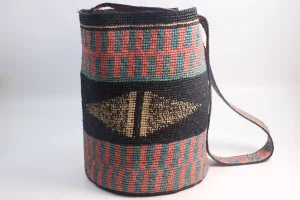
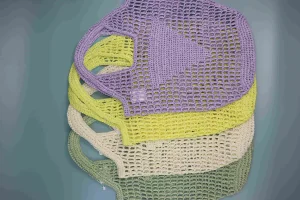
Four Raffia Straw Bags Ready for Pakistan Import
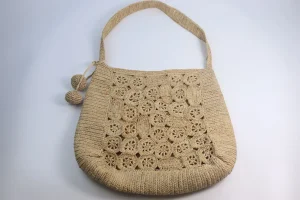
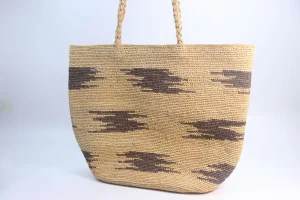
These four silhouettes are our highest-volume wholesale references for Pakistani importers and private-label brands. Every style is available in natural raffia, paper straw or blended construction, with custom trims, lining, logo tags and packaging.
Executive Summary
Why Pakistan Is the Next High-Growth Frontier for Wholesale Straw Bags
Pakistan's retail landscape is changing faster than most sourcing analysts expected. A population of over 240 million, an expanding urban middle class, and one of the youngest consumer demographics in Asia are converging on a category that was once considered strictly seasonal: handwoven straw bags. The country's coastal belt — Karachi, Port Qasim, and the emerging Gwadar corridor — sits on top of one of the world's most active summer-accessory supply routes, and domestic distributors are increasingly bypassing local traders in favour of factory-direct Chinese manufacturers who can deliver consistent MOQs, private-label branding, and reliable packaging.
This white paper sets out to answer the practical sourcing question that Pakistani importers ask us most often: “How do I build a profitable straw bag category without drowning in MOQ risk, freight surprises, or compliance snags?” Drawing on more than 15 years of OEM and ODM production experience at our Linyi factory, near the Port of Qingdao, we break down the commercial realities of the Pakistan market, the technical specification choices that matter most, and the roadmap for scaling a handbag program from pilot order to full container season.
- Category ownership opportunity: the organized straw bag segment in Pakistan is still fragmented — early movers can lock in retail shelf space before larger regional chains react.
- Landed-cost compression: direct-from-factory MOQs of 50–100 pcs per design allow trial shipments without committing to a full 40HQ container.
- Customs clarity: straw and raffia bags typically classify under HS heading 4202 or 4602 depending on construction — our documentation team pre-validates classification with every shipment.
Pakistan Market Snapshot
A consolidated view of the retail dynamics shaping straw bag demand across Karachi, Lahore, Islamabad and the coastal resort belt.
0M+
Population base
0%
Under age 30
0+
Export countries served
0h
Avg. response time
Industry Landscape
The Straw Bag Business in Pakistan: Trade, Retail & Culture
Straw bags are not a new idea in Pakistan — they are a familiar domestic craft, with hand-woven palm leaf baskets, dhaki work, and chatai mats carried in local markets for generations. What is new is the commercial format: a branded, retail-packaged, private-label straw tote and crossbody bag sold through modern trade channels and online marketplaces.
Modern Trade Expansion
Organized retail in Pakistan has grown steadily through chains such as Imtiaz, Metro, Hyperstar, Al-Fatah, and Daraz's online marketplace. Seasonal accessories aisles — a mainstay in Gulf and Southeast Asian chains for years — are now being built out in these formats, creating shelf-based demand for straw bags with consistent spec, barcodes, and hang tags.
Coastal & Resort Economy
Karachi's Clifton and Seaview, along with emerging resort developments near Gwadar and the coastal belt toward Sonmiani, have created a niche for leisure-focused straw bags: beach totes, oversized shoulder bags, and packable crossbody styles sold through hotel boutiques, gift shops, and lifestyle retailers.
Festive & Wedding Season
Eid, mehndi, and wedding season drive a concentrated burst of demand for decorative accessory bags, especially in Lahore and Islamabad. This is where premium raffia bags with metallic trims, beads, pearls, or embroidered overlays carry a meaningful price lift over plain summer totes.
Online Resale & Social Commerce
Instagram, TikTok, and Daraz have created a fast feedback loop for private-label sellers. A boutique can launch a straw bag program with 50–100 pcs per design, test it online for two weeks, then reorder winning styles within 30–45 days of landed stock — a rhythm that suits our low-MOQ production model.
Local Craft Heritage
Pakistan's own artisans produce beautiful hand-braided baskets and chatai. Rather than competing directly, factory-direct wholesale straw bags from China often complement this tradition by offering retail-ready finishes, consistent sizing, and scalable volume — while local craft lines remain premium, limited-edition anchors.
B2B & Corporate Gifting
Hospitality groups, bank loyalty programs, cosmetics brands, and event organizers increasingly commission branded straw tote bags for seasonal gifting. Because these orders often land in the 200–2,000 pcs range, a flexible MOQ partner is critical to winning the account.
Typical Pakistan Import Window
| Stage | Lead Time |
|---|---|
| Brief & sample approval | 10–15 days |
| Bulk production (500–5,000 pcs) | 25–40 days |
| Inland transport to Qingdao | 2–3 days |
| Sea freight Qingdao → Karachi | 18–24 days |
| Customs clearance at Karachi / Port Qasim | 4–7 days |
| Total door-to-door (small order) | ~60 days |
Global Procurement Context
What International Buyers Are Looking For — and What Pakistan Importers Can Leverage
Global sourcing demand for wholesale straw bags has shifted meaningfully over the past three years. A 2024 review of import data from Australia, the US, the EU, and the Gulf states shows three dominant procurement patterns that Pakistani importers can borrow directly:
- Sustainability-led sourcing. Buyers increasingly request natural raffia, unbleached paper straw, and low-plastic packaging. Certification documentation — even a simple material declaration — has become a common pre-order requirement.
- Small-batch seasonal drops. The 5,000-piece single-order era is over for many smaller brands. Retailers now prefer 4–6 mini-collections per year at 300–800 pcs per style, which suits our 50–100 pcs per design starting point.
- Private-label differentiation. Buyers want their own hardware, logo patches, custom lining, and retail-ready polybag or dust bag. Commodity straw bags shipped without branding are increasingly hard to sell at premium price points.
Information gain for Pakistani buyers: the same mini-collection cadence that global brands use is now affordable at Pakistani retail scale. By ordering 4–6 SKUs at 100–300 pcs each per season, an importer can create visual variety at shelf level while keeping working capital under control.
Macro Industry Solutions
Four Procurement Models for the Pakistan Market
Every Pakistani importer we work with fits into one of four buying models. Understanding which model applies to your business determines MOQ, sampling strategy, freight planning, and how quickly you can respond to seasonal demand.
Pilot / Test Order
Volume: 50–300 pcs total
Best for: new importers, boutique owners, online-first brands.
Small batch sampling with 2–3 SKUs to validate design and price point before committing to seasonal inventory.
Seasonal Program
Volume: 1,000–5,000 pcs per season
Best for: regional distributors, modern trade suppliers.
4–6 SKUs ordered together, loaded as LCL or consolidated container through Qingdao. Branded hang tags and packaging applied in-house.
Private Label Brand
Volume: 3,000–15,000 pcs per year
Best for: retail chains, brand builders, gifting divisions.
Custom trims, hardware, lining, and packaging. Full ODM design service from mood board to retail-ready sales kit.
Full-Service OEM
Volume: 15,000+ pcs per year
Best for: importers replacing multiple suppliers with a single partner.
Dedicated account manager, quarterly development cycle, annual capacity lock-in and priority production scheduling.
Localisation & Compliance
Shipping to Pakistan: Documentation, Duty & Quality Assurance
Crafting a beautiful straw bag is only half the work. The other half is getting it through Pakistan customs cleanly, with all paperwork aligned to HS classification, valuation, and any applicable regulatory requirements. Here is how our team handles the Pakistan-specific leg of the journey.
- HS classification: handwoven straw bags generally fall under HS 4202.29 (outer surface of textile/plastic) or 4602.19 (articles of plaiting materials). We provide a pre-shipment classification note for your customs broker.
- Commercial invoice & packing list: bilingual English/Urdu-friendly format available; clear line-item descriptions, unit values, and material composition on every document.
- Certificate of Origin: issued via CCPIT (China Council for the Promotion of International Trade) or CIQ where required for preferential tariff treatment or WeBOC documentation at Karachi.
- Phytosanitary pre-check: for natural raffia and grass products, we provide material treatment declaration on request — some Pakistani importers find this helpful for WeBOC-related queries.
- Inspection & QC: AQL 2.5 inspection before loading, photo report at packing, and retained sample archive for reference on reorders. Third-party inspection (SGS, BV, Intertek) can be arranged on request.
Our Compliance Guarantee
Every Pakistan-bound shipment is prepared with:
- Commercial invoice, packing list, and bill of lading
- Certificate of Origin as required
- Material declaration for natural fibres
- Pre-loading inspection report with photos
- Sample retention for reorder match
Technical Specification
Choosing the Right Material for Pakistan's Climate & Market
Pakistan's coastal humidity, dry inland heat, and long summer season all affect how a straw bag ages in the hands of a retail customer. Material choice is not cosmetic — it is a durability decision.
Premium Hand-Feel
Soft, flexible, dye-receptive. Ideal for coastal resort lines and premium boutique inventory. Excellent for hand-dyed colourways that command higher retail prices.
Beach totesCrossbodyGifting
Consistent & Cost-Effective
Uniform weave, clean colour reproduction, strongest landed-cost economics. Best for volume modern trade orders and consistent-season reorders.
Volume ordersModern tradeTest batches
Structured & Durable
Crisp silhouette, retains shape in dry inland heat. Ideal for shoulder totes that need to hold their form on shelf through the full season.
Shoulder totesStructured bagsSeason-long
Hybrid for Fashion Lines
Raffia body with leather-look PU handles, or grass weave with embroidered overlays. Supports premium pricing and seasonal collection differentiation.
FestiveWeddingBrand differentiation
Interior Ready
Optional interior lining for higher-end positioning — protects contents from straw dust and adds a premium retail signal without meaningful cost impact.
BoutiquePremiumGifting
Brand-Forward Details
Metal clasps, engraved buckles, logo-embossed handles, custom woven labels, and branded dust bags — the small details that separate a $9 shelf bag from a $29 private-label item.
Private labelBrand buildingRetail ready
Technical Roadmap & Future Outlook
Where Wholesale Straw Bags Are Headed
The handbag manufacturing segment is quietly modernizing. At our Linyi facility, we are investing in three areas that will change how Pakistani importers source straw bags over the next 3–5 years.
- Material traceability. A shift toward certified raffia and grass sources, with documentation that follows the fiber from origin to finished bag. This will become an expectation for European and Gulf re-exporters within 24–36 months.
- Digitised sampling. 3D previews and digital sample approvals via video call — reducing lead time on custom style development by 30–40% for Pakistani importers who cannot easily travel to China for factory visits.
- Small-batch automation. Semi-automated weaving stations now support 100–300 pcs mini-batches without the cost penalty of a traditional mould-based factory — a model tailored to Pakistan's fragmented, fast-moving retail base.
Year 1 — Category Foundation
Pilot orders, 4–6 SKU range, brand identity development. Focus on winning the small-format retailer and online-first channel.
Year 2 — Seasonal Rhythm
Two collections per year, modern trade shelf entry, in-store packaging standardized. Add a full container per season.
Year 3 — Brand Program
Private label launch, custom hardware, dedicated packaging. Move from commodity shelf to branded positioning.
Year 4+ — Category Leadership
Full ODM design service, exclusive styles, licensing, and re-export opportunity to Gulf and Southeast Asia through Karachi as a regional hub.
Buyer Q&A
Frequently Asked Questions from Pakistani Importers
Practical answers on MOQ, shipping, compliance, and private-label branding — from our Pakistan-facing sourcing team.
What is the minimum order quantity for wholesale straw bags to Pakistan?
Our standard starting MOQ is 50–100 pieces per design, depending on the material and complexity. This allows Pakistani boutique owners, online sellers, and pilot programs to test styles before committing to a full seasonal order.
How long does shipping from China to Karachi take?
Sea freight from Qingdao Port to Karachi typically takes 18–24 days in transit. Combined with production, inland transport, and customs clearance, total door-to-door time for a small order is usually around 60 days. Air freight and express courier options are available for samples and small urgent orders.
Do you provide HS codes and documentation for Pakistan customs?
Yes. Handwoven straw bags generally classify under HS 4202.29 or 4602.19 depending on construction. We supply a commercial invoice, packing list, and certificate of origin as required, and can pre-validate classification with your customs broker before shipment.
Can you produce private label straw bags with our own brand logo and packaging?
Absolutely. OEM and ODM production is our core business. We customize hardware, lining, inner labels, hang tags, dust bags, and retail polybags. Our in-house designers can also develop original styles from a mood board or reference sample.
What payment methods do you accept for Pakistan-bound orders?
We work with standard B2B payment terms including T/T (bank transfer), and we can discuss letters of credit (L/C) for larger volume shipments. Terms are agreed at order confirmation and documented in the proforma invoice.
Can you match Pakistani market pricing for modern trade suppliers?
Yes. Our factory-direct model removes trading-company and middleman margins, which typically saves 12–22% on landed cost. For volume orders we can propose material substitutions (such as paper straw for select SKUs) to hit specific retail price points without losing the aesthetic.
Do you offer sample development before a bulk order?
Yes. Sampling is a core step in our workflow. Buyers can submit reference images, sketches, or mood boards, and our design team returns a sample within 10–15 working days. Sample fees are typically refunded against the first bulk order.
How do you handle quality issues after shipment?
Every shipment is inspected pre-loading (AQL 2.5 standard) with a photo report. If a defect is identified after arrival, we review the retained sample archive and work with the buyer on resolution — replacement, credit, or adjustment on the next order depending on the case.
Can you supply other straw accessories alongside bags?
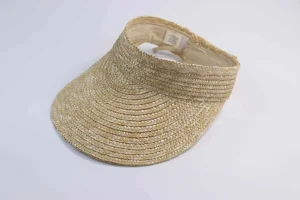
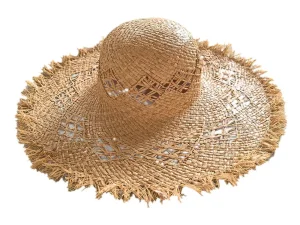
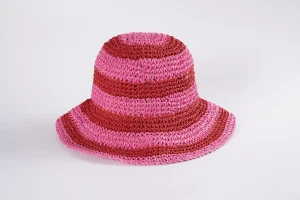
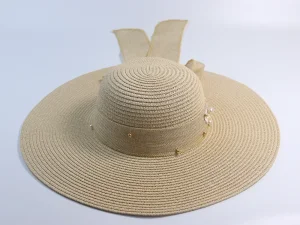
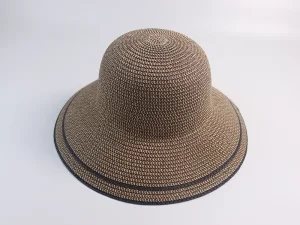
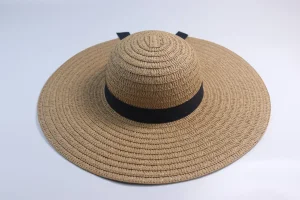
Yes — a single supplier for your whole summer accessories program reduces freight cost and simplifies ordering. Alongside straw bags we manufacture straw hats, sun visors, floppy hats, bucket hats, boater hats, and other woven accessories. See our straw bags category for the full range.
Build Your Pakistan Straw Bag Program with a Factory-Direct Partner
Send us your target retail price, style references, and quantity per style. Our Pakistan-facing team will respond within 8 hours with material recommendations, sampling plan, and a landed-cost estimate for Karachi or Port Qasim.
Complete Product Range
Full Accessory Range for Pakistani Distributors
Beyond bags, we supply the complete summer accessories program — hats, sun visors, and woven headwear — all from the same factory, on the same shipment, from the same low MOQ.