
Core Beanie

These are the request patterns we see most often from Singapore importers cross-merchandising warm headwear into airline amenity kits, Orchard Road fashion retail and year-end corporate gifting. Each SKU is produced in-house and can be private-labeled from a small first order.

Singapore is not a cold-weather country — yet it is one of Asia's most sophisticated buying desks for winter hats. Understanding that paradox is the difference between a supplier that wins the account and one that loses it on the first sample round.
Singapore sits 1.3 degrees north of the Equator. Average daytime temperatures hover between 30°C and 33°C year-round, and there is no winter season in the meteorological sense. So why do Singaporean companies buy thousands of knitted beanies, cuffed rib-knit caps and thermal headbands every year?
Because Singapore is a redistribution and travel-retail capital, not purely an end-consumer market. Demand flows through four channels:
The practical consequence is that a Singapore buyer evaluates a winter hat factory differently from a Toronto or Oslo buyer. They care less about "warmest possible" and far more about consistency across multi-country deliveries, low MOQ per colorway, label and packaging compliance for several end markets, and total landed cost into a compact warehouse.
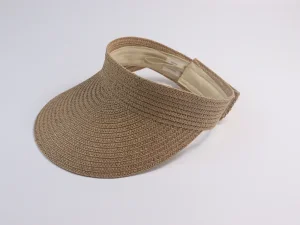
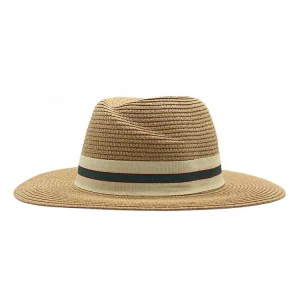
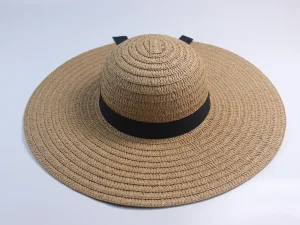
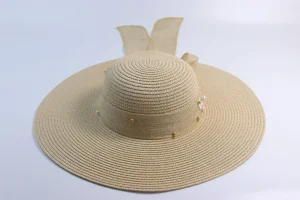
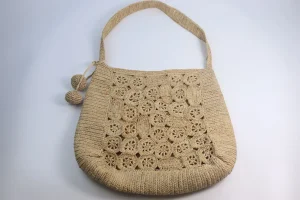
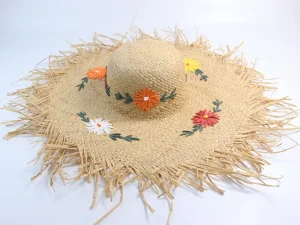
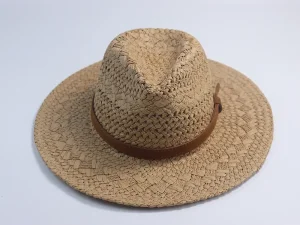
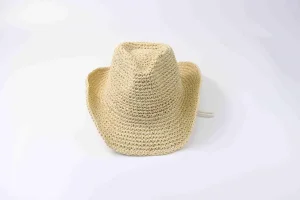
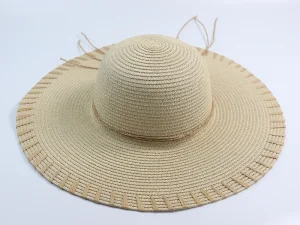
Singapore buyers rarely order a single season. They build one supplier relationship that spans resort sun protection and cold-weather headwear. The styles below let you consolidate both categories into a single container, a single QC standard and a single set of shipping documents.

What a factory needs to know about how Singapore actually buys, stores and redistributes knitwear — and how localization support changes the specification.
Industrial rents in Jurong, Tuas, Changi and the western logistics belt are among the highest in the region. Buyers optimize for cartons per pallet position, not per container. Flattened packaging, poly-bag compression and carton dimension optimization are frequently more valuable than a 5% unit price reduction.
Singapore's zero-rated duty treatment on most textiles and its bonded warehouse infrastructure make it an efficient consolidation point. Goods can be held, re-labeled or re-packed for onward shipment to Malaysia, Indonesia or Australia without clearing into Singapore's domestic market.
Singapore retail is demanding. "Enterprises Singapore" consumer protection norms and major retailer vendor agreements typically require fiber content accuracy, care labeling, shrinkage stability after wash and consistent sizing across the production run — not just a good-looking sample.
A single Singapore purchase order may need Japanese, Korean, Malay, English and Chinese care labels across different carton markings for different destination stores. Factory-side label management competence is a genuine competitive differentiator here.
Weather in destination markets (Hokkaido, Seoul, Melbourne, Zurich) determines sell-through, but Singapore HQ decides the reorder. Buyers want a supplier that can hold greige knit blanks or produce a repeat order quickly rather than re-run the full sampling loop.
Q4 gifting windows are immovable. Branded beanies with woven labels, custom poly bags, hang tags and gift boxes must land in Singapore in October–November. Factories that cannot confirm a hard delivery date early lose the RFQ.
Compliance in headwear is not glamorous, but it is where shipments fail. Here is the specification stack we build into every Singapore-bound order.
In practice, Singapore procurement teams rarely ask for a single certificate. They ask whether the factory understands which certificate applies to which end market. A beanie shipped to a Japanese department store, a Malaysian duty-free shop and an Australian outdoor retailer may each trigger a different document set.
Singapore-bound shipments from Qingdao Port typically move as FCL or LCL sea freight with a transit window of roughly two to three weeks depending on routing and transshipment. For urgent replenishment or gifting deadlines, air freight into Changi is viable and we prepare the commercial invoice, packing list, and certificate of origin documentation in the format your freight forwarder requires.
Singapore buyers have alternatives — Vietnam, Bangladesh, Indonesia, Turkey. The China advantage in knitted headwear is not simply price; it is depth of the component ecosystem.
Yarn spinners, knitting mills, dye houses, label weavers, poly-bag and carton suppliers all operate within a short radius. Sampling a new colorway takes days rather than weeks, and a design change does not break the schedule.
China's knitting clusters can run 50–100 pieces per design economically because the machines and finishing lines are already set up for short runs. That supports Singapore brands testing six colorways before committing to a full season.
Qingdao Port offers dense sailing frequency to Singapore and to Southeast Asian transshipment hubs. Consolidation with other China-sourced categories is routine, which reduces effective freight cost per unit for multi-category buyers.
Rib structures, gauge selection, cuff elasticity, lining options, fleece banding and pom attachment methods are well-documented engineering problems in Chinese knitting factories. That depth shows up in how a hat holds shape after ten washes.
Whether you bring a tech pack, a reference sample, a mood board or simply "a beanie like this but slouchier", in-house designers can translate intent into a producible specification. That is a genuine information-gain advantage over trading companies.
Because the same facility produces straw hats, paper hats, straw bags and knit winter hats, Singapore buyers can consolidate resort and cold-weather purchasing into one supplier, one inspection standard and one document set.
Singapore procurement teams often sit inside global organizations. The expectations below are drawn from how international importers and brand owners brief headwear suppliers — and they apply directly to Singapore-managed programs.
| Buyer Requirement | What It Means in Practice | How We Respond |
|---|---|---|
| Sampling speed | Approved sample within a defined window so the season plan holds | In-house sample room, material recommendation at brief stage, structured feedback loop |
| Spec integrity | Bulk matches the approved sample in gauge, hand-feel, color and fit | Retained sealed sample, AQL 2.5 final inspection, dimensional measurement records |
| Traceability | Ability to identify yarn lot and dye batch for a given order | Material sorting and lot tracking through the finishing line |
| Label & packaging accuracy | Correct care labels, hang tags and carton markings per destination | Artwork coordination, label insert verification, carton marking to buyer spec |
| Delivery reliability | Confirmed ship date, container plan, documentation ready on time | Scheduled production, pre-shipment inspection, forwarder coordination from Qingdao |
| Responsiveness | Fast, decision-grade answers, not vague acknowledgements | 8-hour response and action commitment with a dedicated account contact |
| Compliance readiness | Documentation for multiple destination markets from one PO | Multi-language label capability and restricted-substance declaration chain |
These are the shifts we see in buyer briefs and RFQ documents, filtered for relevance to Singapore-based procurement teams.
Procurement is only half the story. Knowing the end-use scenario lets you specify the right construction the first time.
Compact, packable beanies and headbands for premium cabin amenity kits. Specification emphasis: low-bulk packaging, soft hand-feel, neutral colorways and hygiene-safe individual poly bagging.
Singapore-based travel retailers and tour operators serving Hokkaido, Niseko and Korean ski resorts order branded beanies as trip merchandise. Emphasis on warmth rating, colorfastness and multi-size fit.
Year-end client gifts, incentive trip kits and conference merchandise. Emphasis on woven logo labels, custom hang tags, gift box presentation and hard delivery deadlines.
Multi-market operators need one SKU that can ship to several countries with destination-correct labeling. Emphasis on label management, carton marking flexibility and consistent bulk quality.
Distributors servicing Malaysia, Indonesia, Vietnam and the Philippines order mixed containers spanning resort sun hats and cold-weather knits to maximize container utilization. Emphasis on mixed-SKU production planning.
Running clubs, hiking retailers and cycling brands in Singapore order lightweight merino and technical beanies for customers traveling to cold climates. Emphasis on moisture management, stretch recovery and wash durability.
Direct answers on MOQ, customization, compliance, shipping into Singapore and how a China factory program actually runs day to day.
Send Inquiry NowSend your style references, target quantity per colorway and destination markets. You will receive material recommendations, a sampling plan, compliance notes and a production timeline — typically within 8 hours.